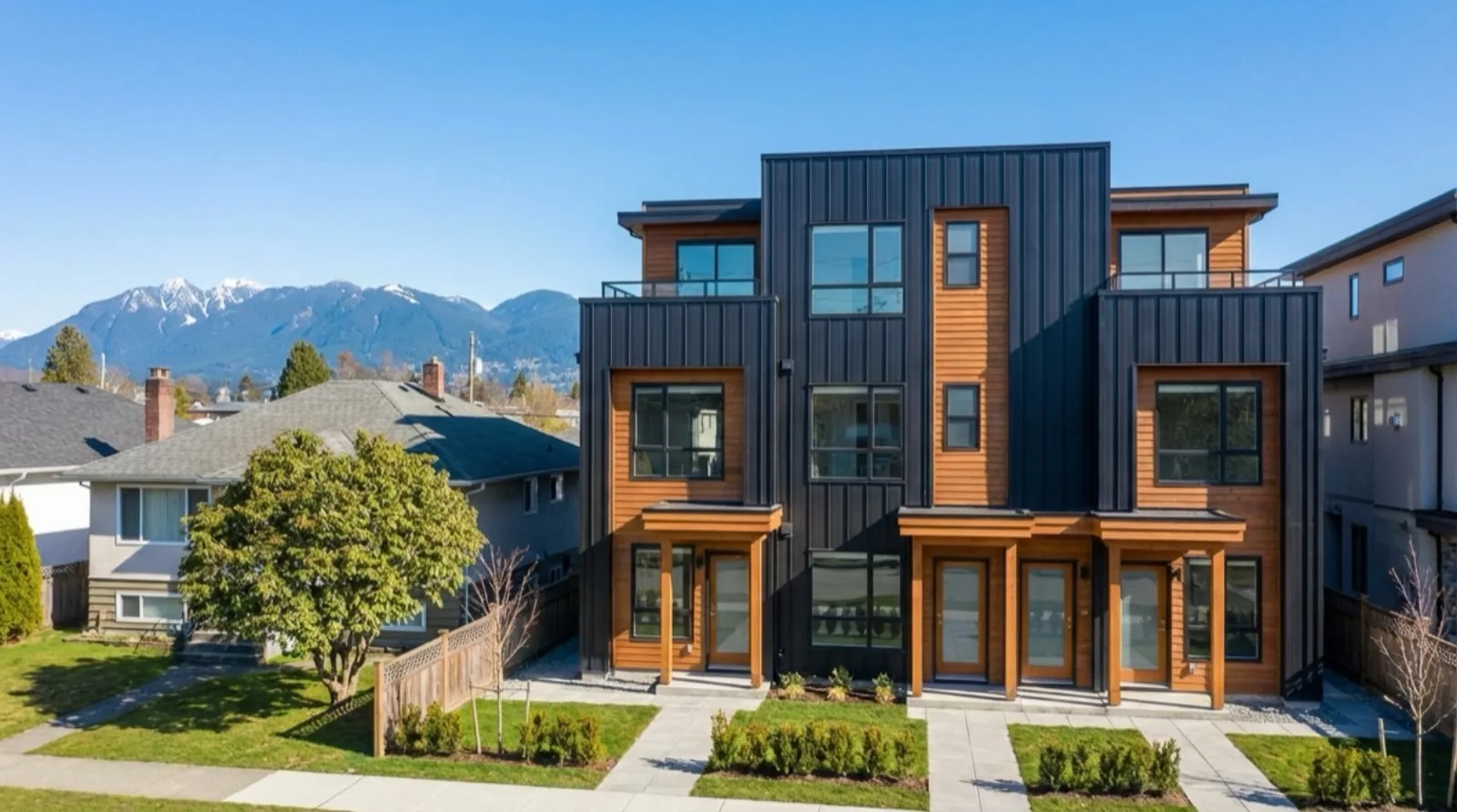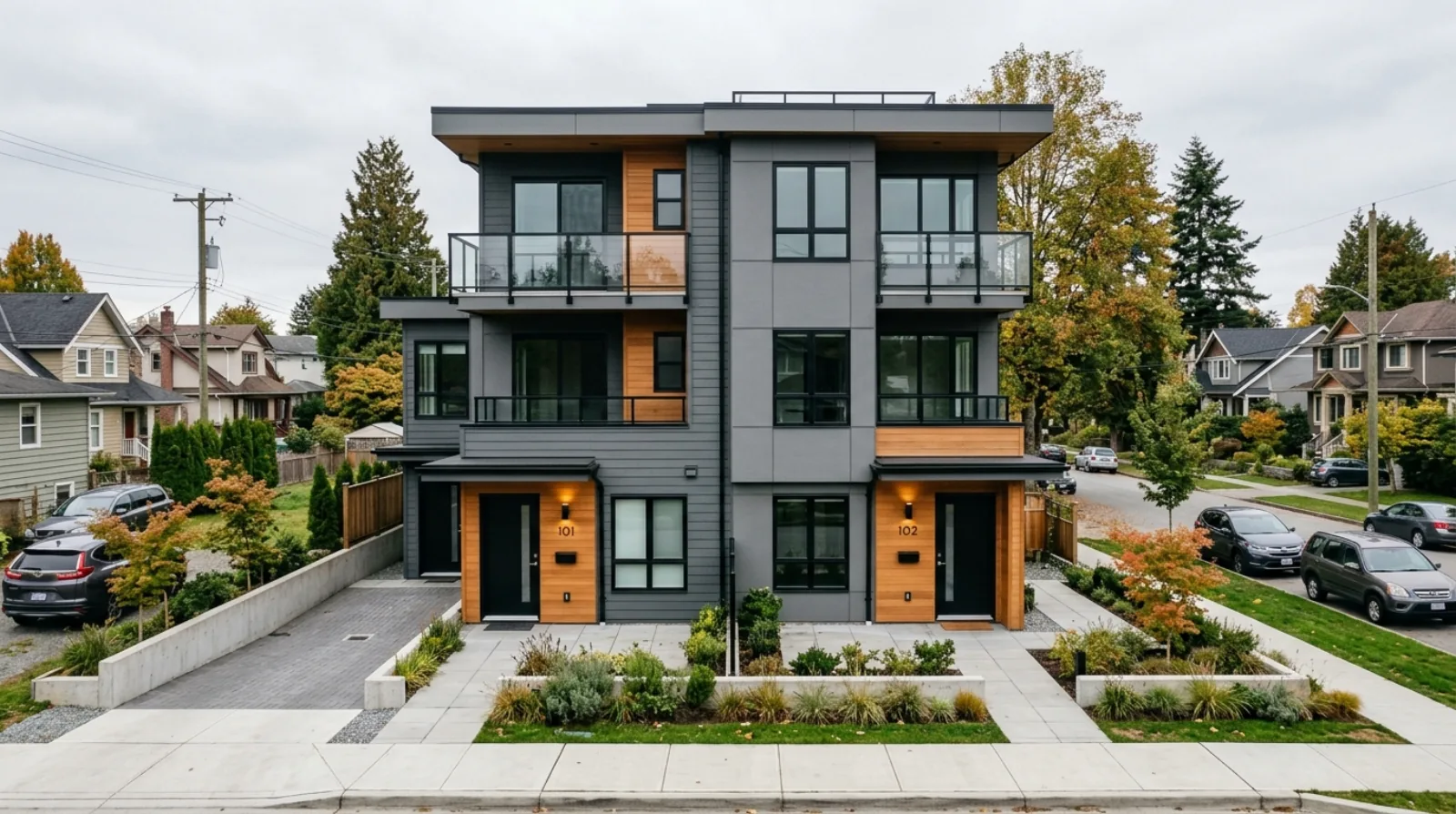

Type “multiplex lot” into a listing portal and you get nothing useful. The category does not exist. Yet since Bill 44 took effect, most single-family lots in BC legally hold 3 to 4 homes, and up to 6 within 400 metres of frequent transit. Those lots are for sale right now in every Metro Vancouver city. They are just disguised as ordinary old houses. That gap between what the law allows and what the listing systems show is why we built the Multiplex Lots for Sale hub: 15 city pages that pull live MLS® listings, filter them to lots the new rules make suitable for a multiplex, and explain the build rules for each city in plain language.
TL;DR (Key Takeaways)
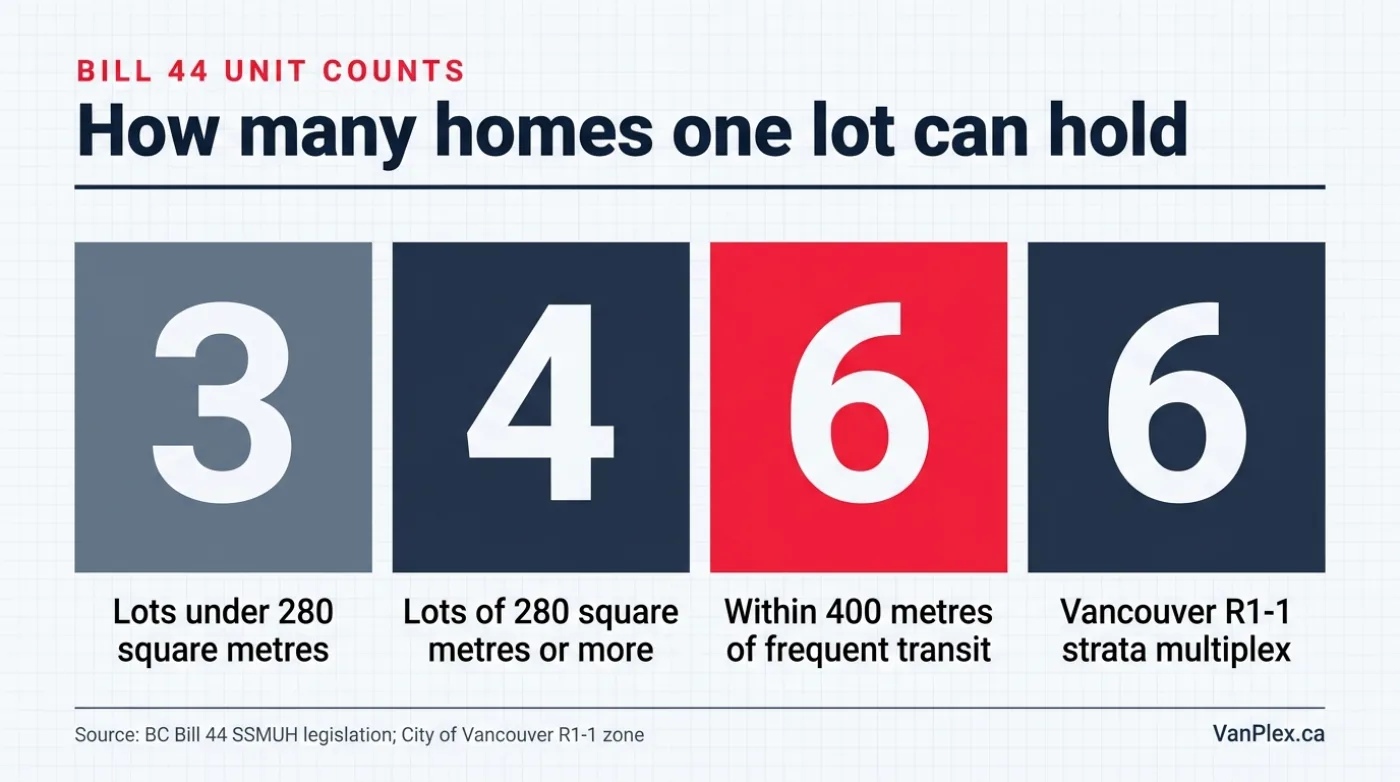
- Bill 44 requires BC municipalities to allow 3 units on lots under 280 m², 4 units on lots of 280 m² or more, and up to 6 units within 400 metres of a frequent transit stop. Bylaws had to comply by June 30, 2024
- Vancouver runs its own R1-1 zone: 3 to 4 units on a standard 33-foot lot, up to 6 strata units on lots of about 557 m² with 15.1 m of frontage, and up to 8 units on the secured rental path
- MLS® has no “multiplex lot” category, so these properties list as detached houses and most buyers never see the development value
- The Multiplex Lots for Sale hub covers 15 Metro Vancouver cities with live MLS® listings, city-specific build rules, and a 10-part buyer guide. Browsing is free
- PlexPro adds a PlexScore and a return-on-equity figure to every listing, so you can rank lots by the numbers instead of guessing
The lots exist. The category doesn’t.
Bill 44 quietly rewrote what a single-family lot is in this province. The provincial SSMUH rules set minimums: 3 units on lots under 280 m², 4 units on lots of 280 m² or more, and up to 6 units where the lot sits within 400 metres of a bus stop with frequent service. Vancouver went its own way with the R1-1 zone, which permits multiplexes outright, no rezoning: 3 to 4 units on a standard 33-foot lot, and up to 6 strata units once the lot reaches about 557 m² with 15.1 m of frontage, which in practice means a 50-foot lot.
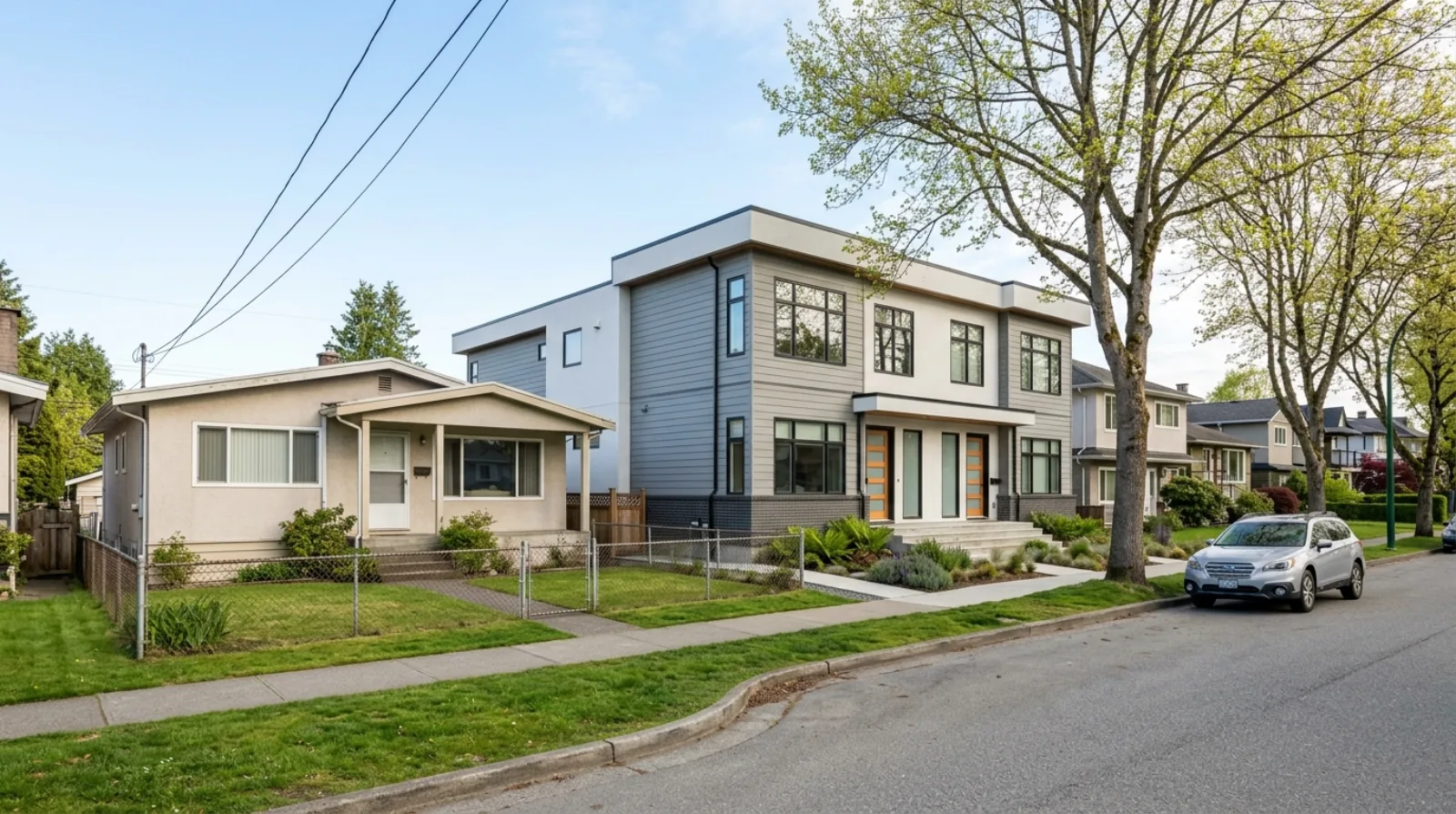
The listing systems never caught up. A 1962 bungalow in Renfrew-Collingwood on a flat 50-foot lot is, legally, a 6-home site. On MLS® it looks identical to the bungalow on the 33-foot lot down the street that supports 4 homes at most. Same photos, same “detached house” label, same search results.
So the buyers who want these lots have been doing archaeology. They pull every detached listing in a city, check each address against the zoning map, guess at the transit distance, and repeat the whole exercise in the next city because every municipality wrote its own bylaw. Most people give up after a weekend of that. Frankly, we don’t blame them.
What we built instead
The hub takes the work buyers were doing by hand and does it once, for everyone. Each of the 15 city pages, from Vancouver to Pitt Meadows, gives you four things:
- Live MLS® listings, pre-filtered. Every lot shown is an active detached listing on a lot the new rules make suitable for a multiplex. You can filter by price, beds, and lot size on the map
- The build rules for that city, in plain language. What the local bylaw allows, and what still needs to be confirmed against the city’s own zoning before you buy
- What makes a good lot there. In Vancouver that means frontage and lot shape. In Burnaby it means the wide, deep lots around Metrotown and Edmonds, and watching for slope and creek setbacks
- Answers to the questions buyers actually ask. Do I have to tear the house down? How do I check if a specific lot qualifies?
Behind the city pages sits a 10-part buyer guide covering the decisions in order: how to find a multiplex lot, what makes a lot pencil, return on equity explained, and a due diligence checklist for the week before you write an offer.
One rule we hold across the whole hub: no invented numbers. Live prices and counts come from the listings themselves, unit rules are stated as the provincial framework, and every page tells you to confirm the exact count for a specific lot against the city’s zoning. A wrong unit count is a wrong deal, and we would rather send you to the bylaw than round up.
What makes it powerful
The short answer: it collapses a multi-week research project into a ranked shortlist.
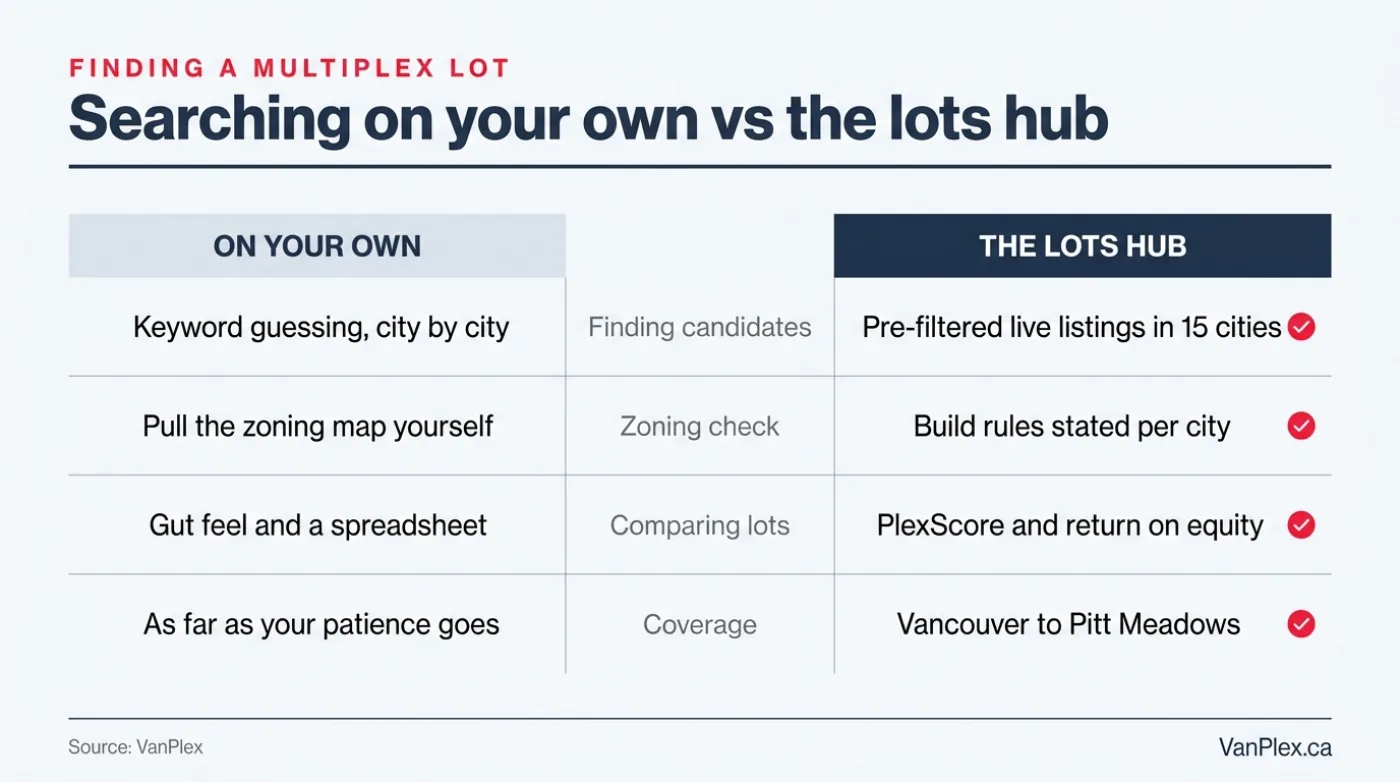
| Searching on your own | The lots hub | |
|---|---|---|
| Finding candidates | Keyword guessing across portals, city by city | Pre-filtered live MLS® listings in 15 cities |
| Zoning check | Pull the zoning map for every address yourself | Build rules stated per city, zoning shown per listing |
| Comparing lots | Gut feel and a spreadsheet | PlexScore and return on equity on every listing with PlexPro |
| Coverage | However far your patience goes | Vancouver to Pitt Meadows, updated as listings change |
The ranking layer is where it gets interesting. VanPlex has analyzed 86,000+ BC properties for multiplex potential, and PlexPro puts that engine on every live listing: a PlexScore for how well the lot suits a multiplex, and a return-on-equity figure from a full pro forma on the build. Two lots can sit on the same street at the same price and produce very different returns because of frontage, slope, or transit distance. The score surfaces that difference before you spend a dime on due diligence.
Browsing every lot is free. The scores and the return figures are the paid layer. That split is deliberate: we want anyone to be able to see the opportunity, and the people acting on it to have the numbers.
Who should be using it
This is not just a builder tool. The people getting value out of it fall into five groups:
| Who | What the hub does for them |
|---|---|
| Homeowners | Shows what lots like yours are listed for, and what the rules let the next owner build. Useful before you sell, and before you decide not to |
| Buyers and small investors | Turns “I’d like to develop something someday” into a shortlist of live lots with rules and returns attached |
| First-time builders | The 10-part guide walks the full decision path, from finding the lot to the due diligence week |
| REALTORS® | A city page you can send a client instead of explaining Bill 44 from scratch on every call |
| Multi-generational families | Finds lots where 3 or 4 homes fit, which is the honest math behind keeping parents and adult kids on one property |
The homeowner case is the one people miss. If you own a detached house in Metro Vancouver, the hub is the fastest way to see what the market is asking for lots like yours, and what a builder sees when they look at your street. That context is worth having even if you never sell.
How to use it in 10 minutes
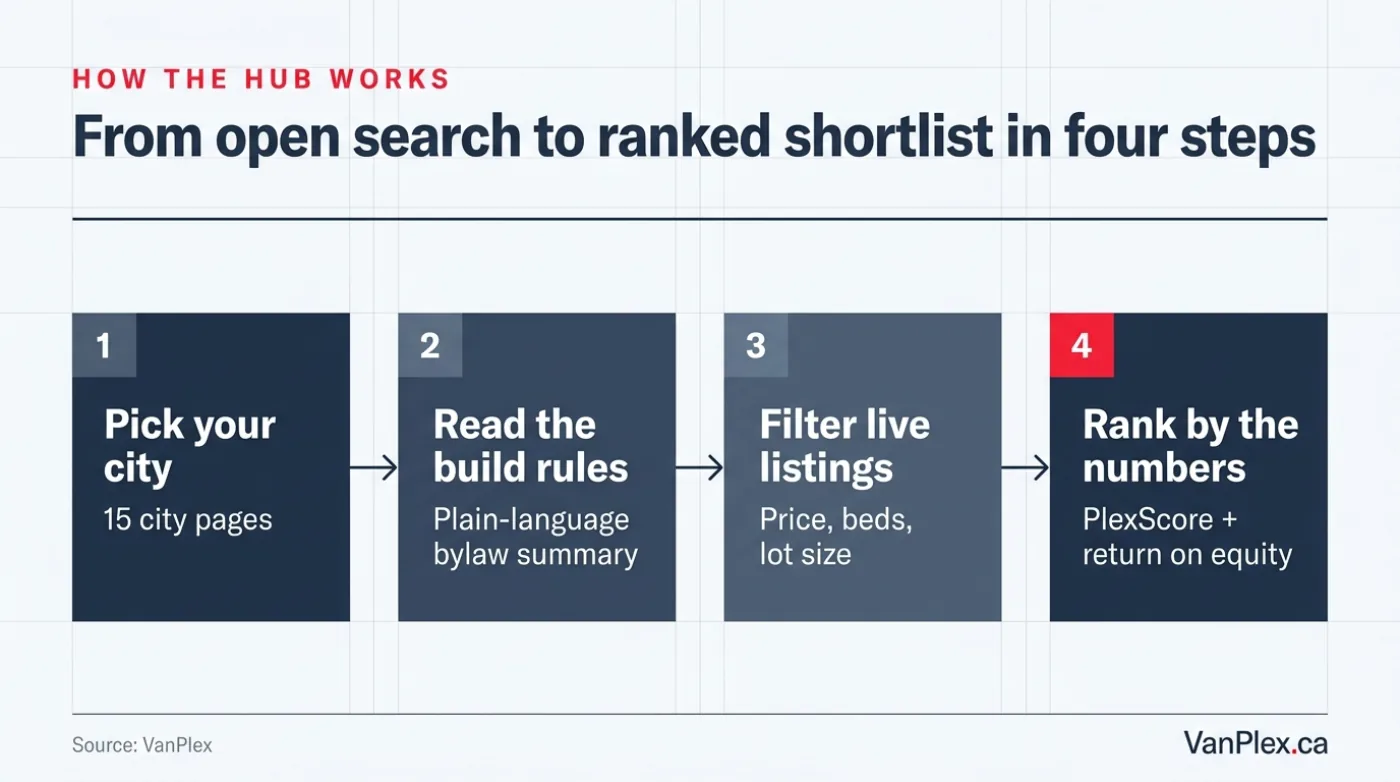
- Open the hub and pick your city
- Read the “what you can build” section. It’s short on purpose
- Browse the live listings and filter by price and lot size
- Shortlist 2 or 3 lots and check each against the city’s own zoning, exactly as the page tells you to
- If you’re serious, get PlexPro and re-sort the same list by PlexScore and return on equity. The order will surprise you
That last point is an opinion, but it’s one we’ve earned: the best-looking house on the list is almost never the best lot. The numbers pick differently than the photos do.
The lots are already on the market. The only question is whether you can see them for what they are.
Start with your city: Multiplex Lots for Sale in Metro Vancouver.
David Babakaiff, Co-Founder VanPlex | PlexRank™ | Profit with Multiplex