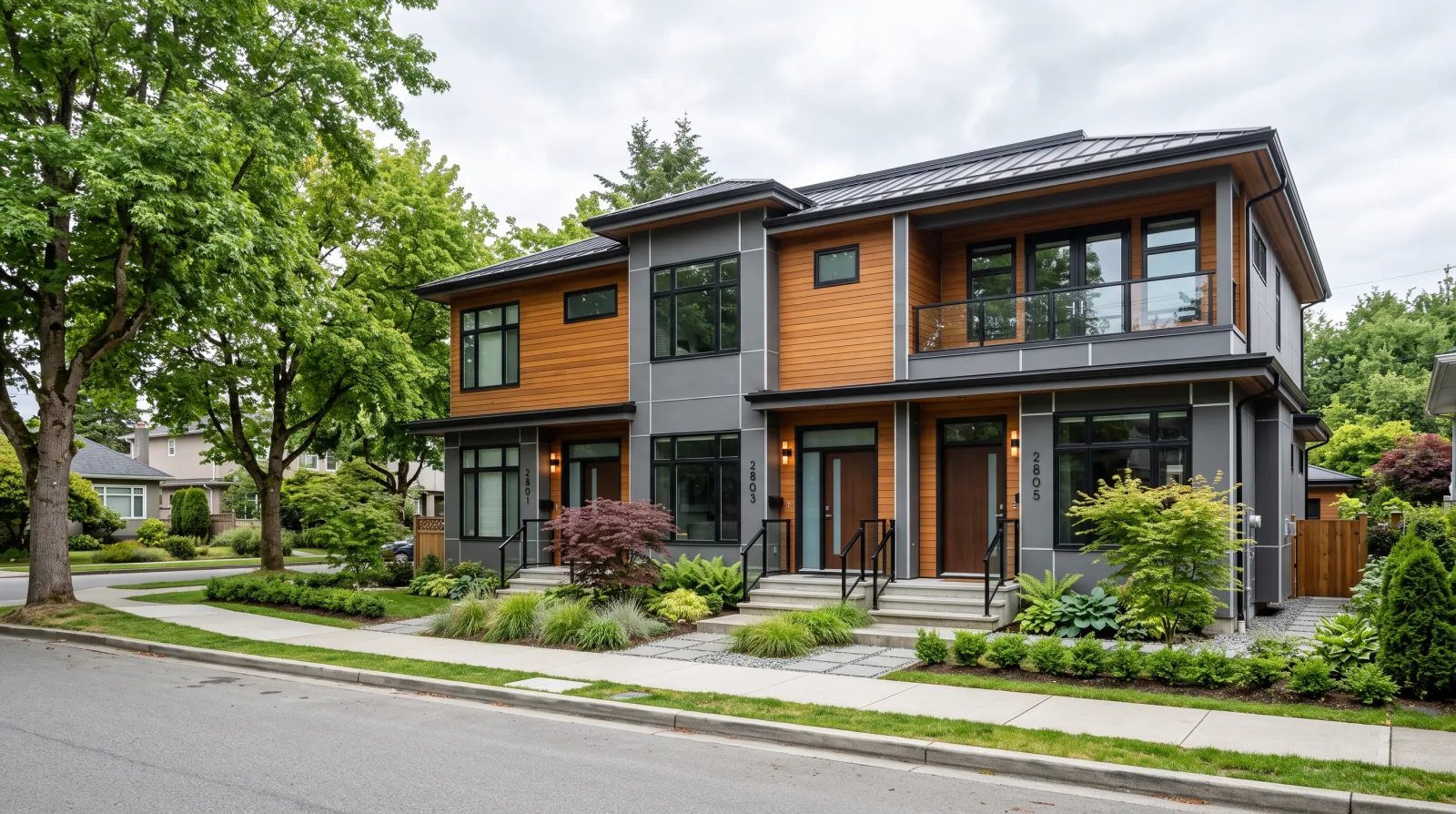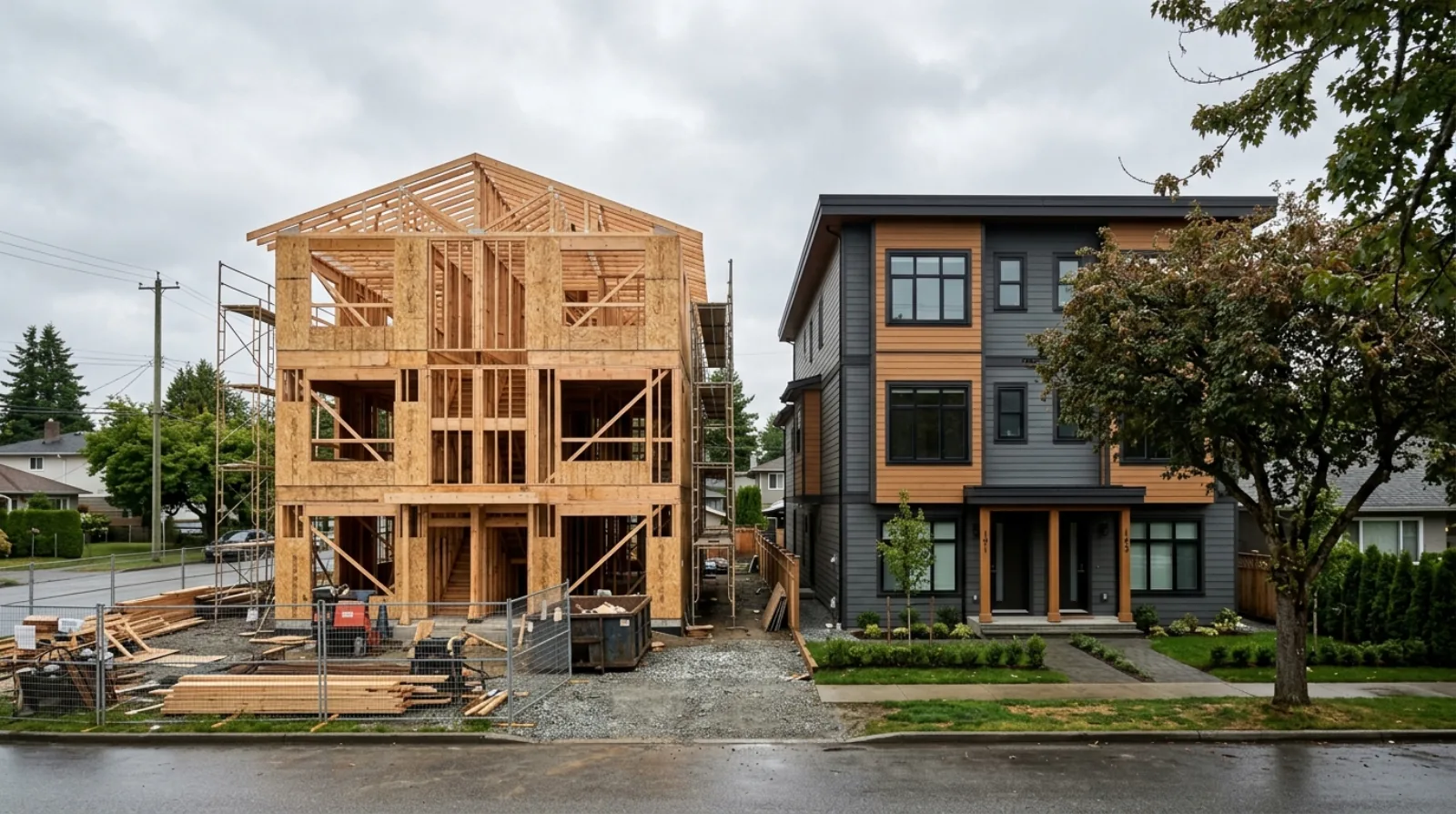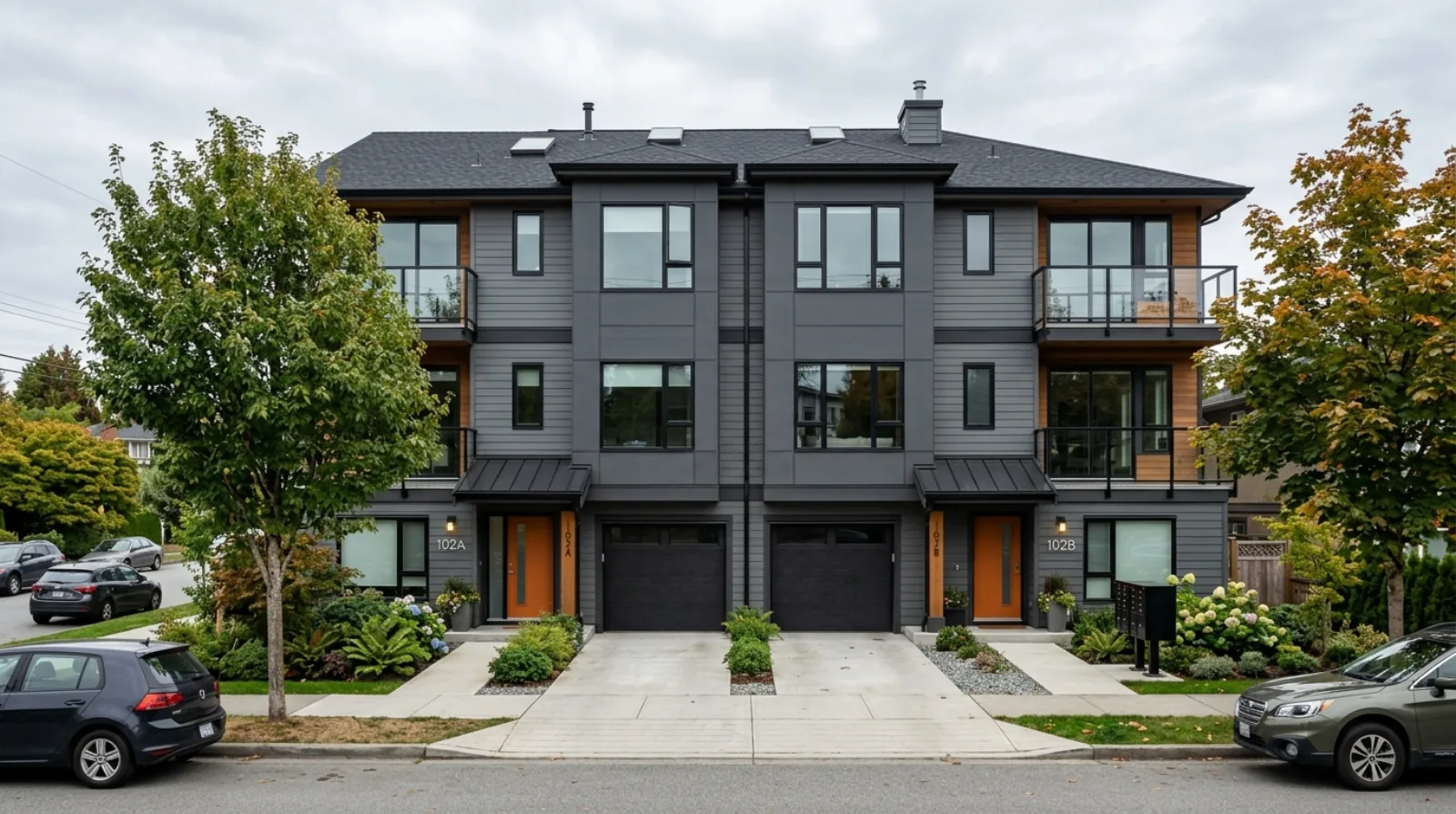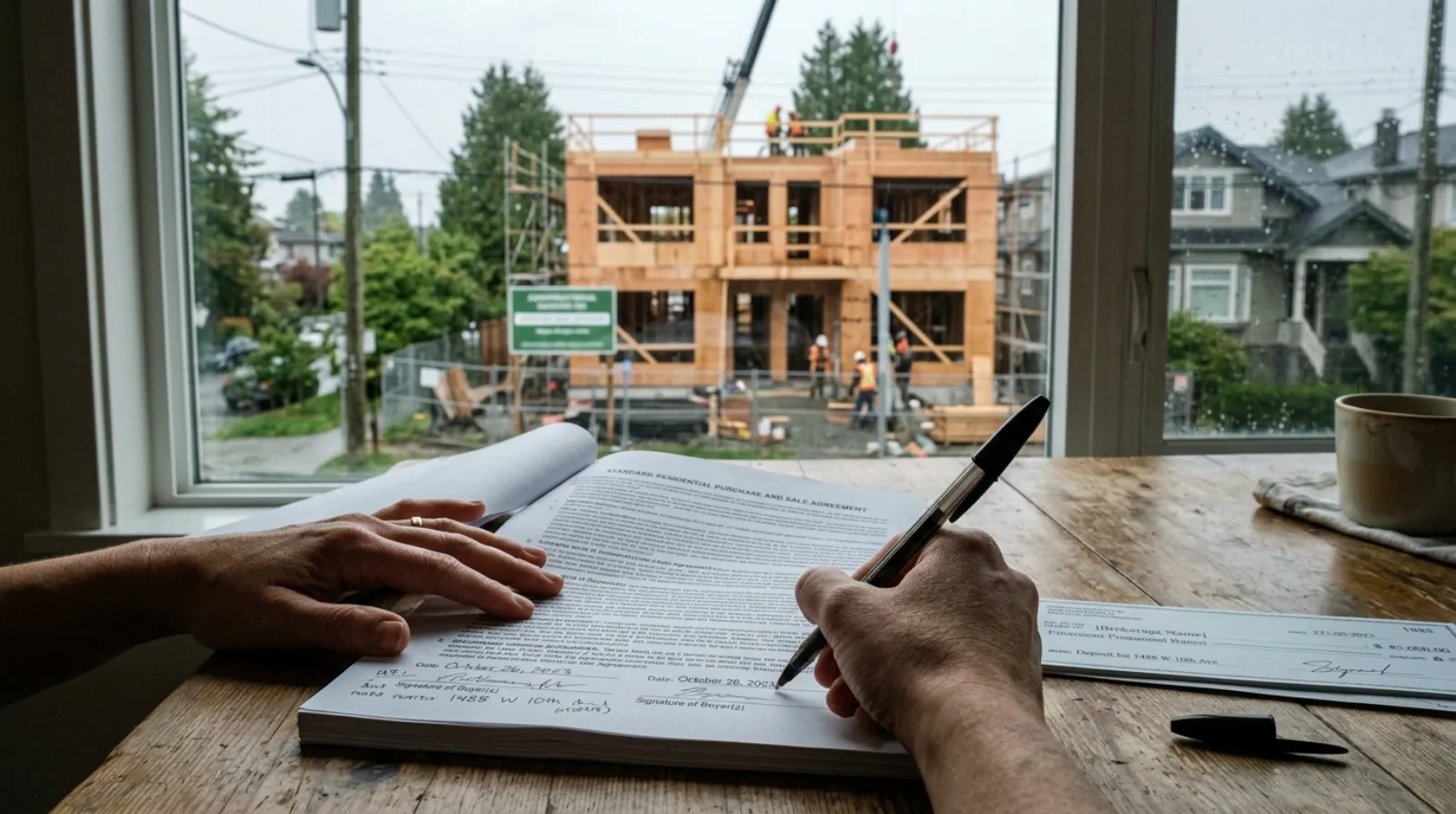

Buy a pre-sale condo in a Vancouver tower and BC law wraps your deposit in protections most buyers never think about: the money sits in a trust account, the developer must hand you a filed disclosure statement, and you get seven days to walk away free. Buy a pre-sale unit in a brand-new fourplex down the street and almost none of that applies. Not because anyone decided fourplex buyers need less protection. Because the law that provides it switches on at five strata lots, and a fourplex has four.
TL;DR (Key Takeaways)
- BC’s pre-sale law, REDMA, defines a “development property” as 5 or more strata lots in a building. A 4-unit strata plan sits below the threshold
- Above the line: deposits held in trust by a lawyer, notary, or brokerage; a filed disclosure statement; a 7-day rescission period with a full refund
- Below the line: the contract decides who holds your deposit and when the developer can spend it. No statutory trust, no disclosure statement
- Your fallback is the general Home Buyer Rescission Period: 3 business days, and using it costs 0.25% of the purchase price
- The two rescission rights never stack. Section 42 of the Property Law Act steps aside wherever REDMA’s 7-day right applies
- Bill 44 is filling BC streets with exactly the building this gap covers: the 3-to-4-unit strata multiplex
The Law Everyone Assumes Applies
The Real Estate Development Marketing Act is why pre-sale buyers in BC feel safe writing large deposit cheques for buildings that do not exist yet. Three of its protections do the heavy lifting:
The deposit goes to a trustee. Section 18 requires the developer to promptly place your deposit with a brokerage, lawyer, or notary public, in a trust account at a BC savings institution. The trustee holds it for both parties. The developer cannot touch it.
Spending it requires insurance. If the developer wants to use deposits to fund construction, section 19 requires a deposit protection contract, a form of insurance that pays you back if the project collapses, and requires that you be told it exists.
Seven days to change your mind. Section 21 gives you 7 days to rescind, counted from the later of signing the agreement or acknowledging receipt of the disclosure statement. Rescind in time and the deposit comes back in full. No fee.
All of it real. All of it, for a fourplex, irrelevant.
The Definition That Decides Everything
REDMA’s first section defines what the Act covers. For stratified buildings, a development property means:
“5 or more strata lots in a stratified building”
A fourplex stratified into four lots is not a development property under the Act. The trust requirement, the disclosure statement, the deposit protection contract, the 7-day rescission: none of it is triggered. The same line runs through the rest of BC’s multiplex rules, and we keep running into it. Strata plans under 5 lots skip the depreciation report. Financing changes programs at 5 units. And pre-sale consumer protection switches off below it.
What You Get Instead: 3 Business Days, For a Fee
Since January 3, 2023, buyers of most residential property in BC have a fallback: the Home Buyer Rescission Period under section 42 of the Property Law Act. You can rescind within 3 business days of acceptance. But there are two catches.
First, it costs money. The regulation sets the rescission fee at 0.25% of the purchase price. Walk away from a $900,000 fourplex unit inside the window and you owe the seller $2,250.
Second, it is short. Three business days against REDMA’s seven calendar days, and the REDMA clock does not even start until you have been handed the disclosure statement and acknowledged reading it. The fourplex buyer gets less time and pays for using it.
The two rights never combine. Section 42(2) says the 3-day right does not apply to a contract covered by REDMA’s section 21. One regime or the other. Lot count picks which.
The Deposit Question Nobody Asks
Here is the practical difference, and it is bigger than the rescission math.
On a REDMA project, “who holds my deposit” has a statutory answer. On a fourplex pre-sale, it has a contractual one. The agreement can name the developer’s lawyer. It can also name the developer. It can let the deposit be spent on construction with no insurance behind it. Nothing in REDMA stops any of that below five lots, because REDMA is not in the room.
So the entire protection question compresses into one clause of one contract, which is why the advice for a sub-5-lot pre-sale is short and unglamorous:
- Ask who holds the deposit, in what kind of account. The answer you want is a lawyer’s, notary’s, or brokerage’s trust account. If the contract is silent or names the developer directly, that is a negotiation point, not a formality
- Ask when the developer can use it. “Never, until completion” is a real answer some developers will give, because it wins them the sale
- Get the contract reviewed before signing. On a tower, the statute catches what your lawyer misses. On a fourplex, there is no statute behind your lawyer
Why This Suddenly Matters
This gap has existed since REDMA passed in 2004. What changed is the number of buildings sitting inside it. Bill 44 made 3-to-4-unit multiplexes legal on most BC residential lots, and the fourplex sold as four strata homes is becoming a standard product on ordinary streets. Every one of those projects that pre-sells units is running a pre-sale outside the pre-sale law.
Developers should read the gap the other way. Selling four strata homes without REDMA filings is administratively lighter, and that is a genuine saving. But buyers’ lawyers know exactly where the line sits. A contract that voluntarily matches REDMA-style handling, trust-held deposits with a named trustee, costs little and reads as credibility at the negotiating table.
For where deposits fit in the bigger funding picture, from equity through construction debt to the take-out loan, see the new multiplex capital stack guide, and the full breakdown of both deposit regimes on the pre-sale deposits page.
This post describes BC statutes in general terms and is not legal advice. Have any pre-sale contract reviewed by a BC real estate lawyer before signing.
Sources: Real Estate Development Marketing Act, SBC 2004, c. 41 | Property Law Act, s. 42 | Home Buyer Rescission Period Regulation, BC Reg 175/2022