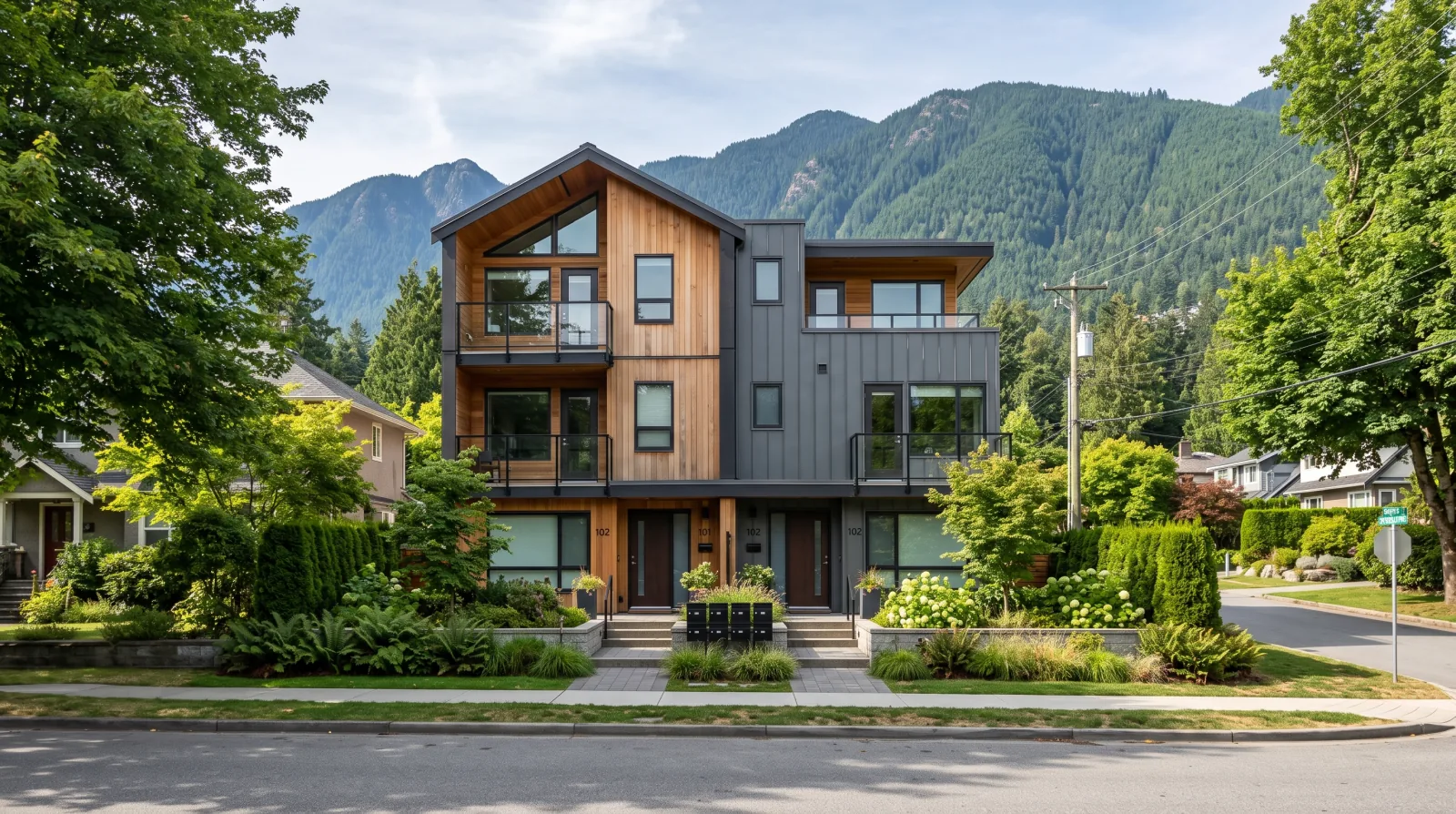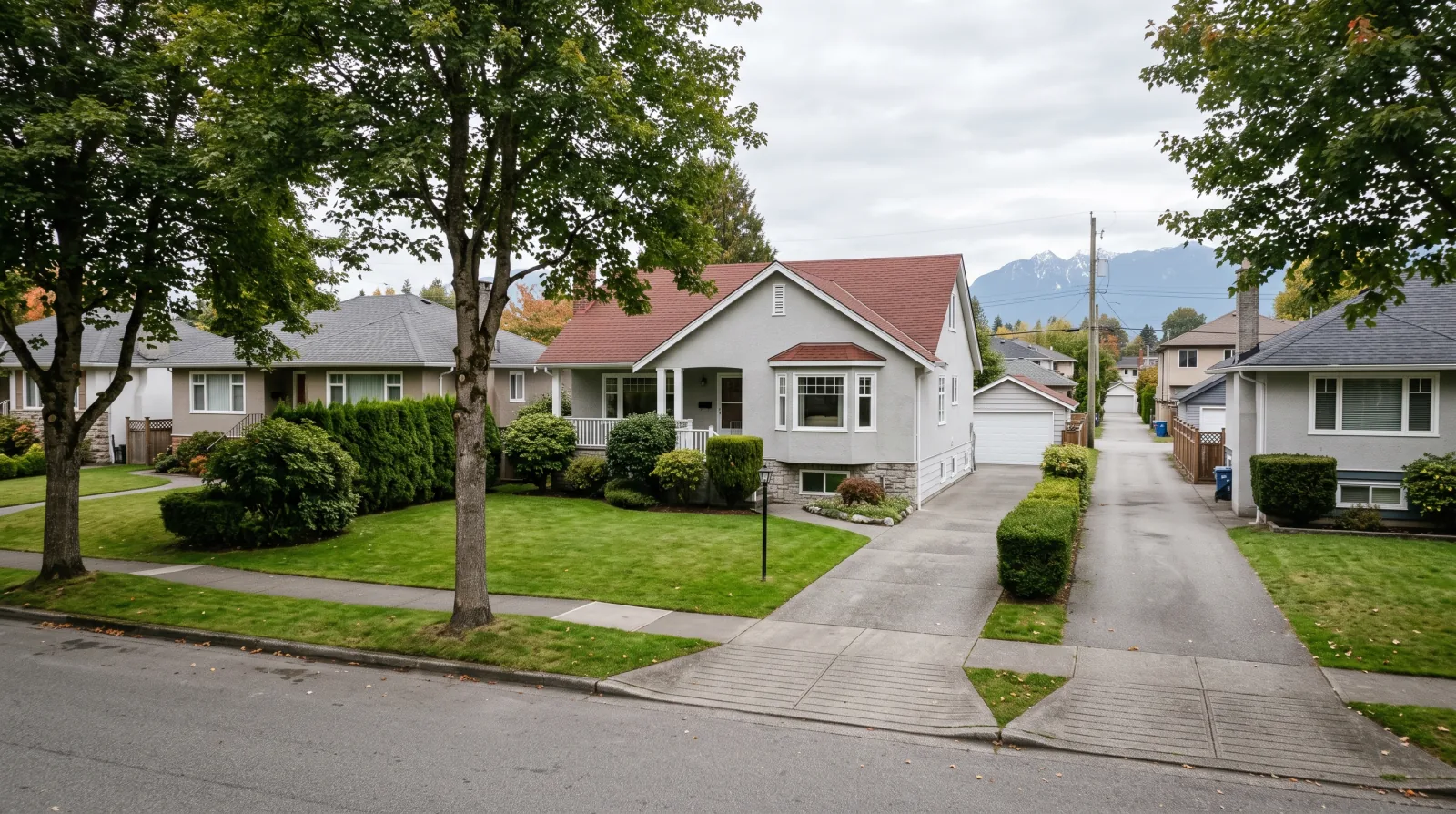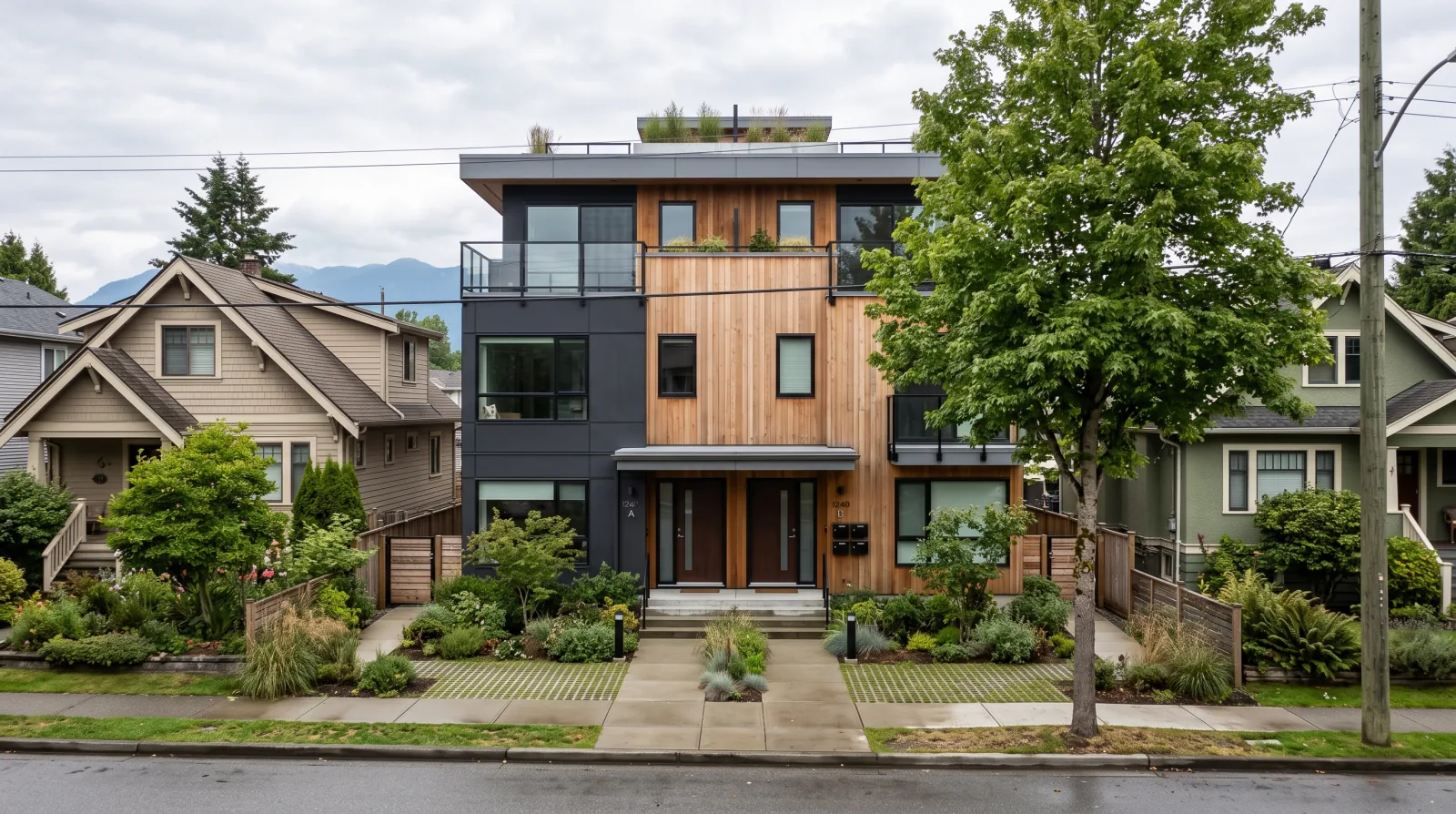

On July 28, 2026, Vancouver City Council voted 10 to 1 to kill the Villages Plan. After a marathon public hearing spread across several dates this month and more than 340 registered speakers, most of them opposed, the plan to add up to eight storeys of housing across 17 select areas is dead. Only OneCity councillor Lucy Maloney voted to keep it.
If you own a single-family lot in Vancouver and you have been thinking about a multiplex, here is the part the headlines missed: this vote does not touch your multiplex. It removes a plan that would have replaced it on hundreds of lots.
TL;DR
- July 28, 2026: Council rejected the Villages Plan in a 10 to 1 vote. Mayor Ken Sim, all six ABC councillors, plus Rebecca Bligh, Pete Fry, and Sean Orr voted no.
- What died: low- and mid-rise density up to eight storeys in 17 areas, mostly single-family neighbourhoods, touching about 13,000 lots, plus roughly one million sq ft of new retail space.
- What did NOT change: citywide multiplex zoning, Small-Scale Multi-Unit Housing (SSMUH) up to six units, Transit-Oriented Areas, and the Broadway Plan all stay fully in force.
- A quiet win passed the same day: Council endorsed an amendment to better enable small multifamily buildings with a single exit staircase in R3 zoning areas.
- What it means for you: the incremental, owner-built multiplex is now the confirmed density model for Vancouver’s house neighbourhoods. Your R1-1 lot economics are unchanged. If anything, the noise just cleared.
What the Villages Plan actually was
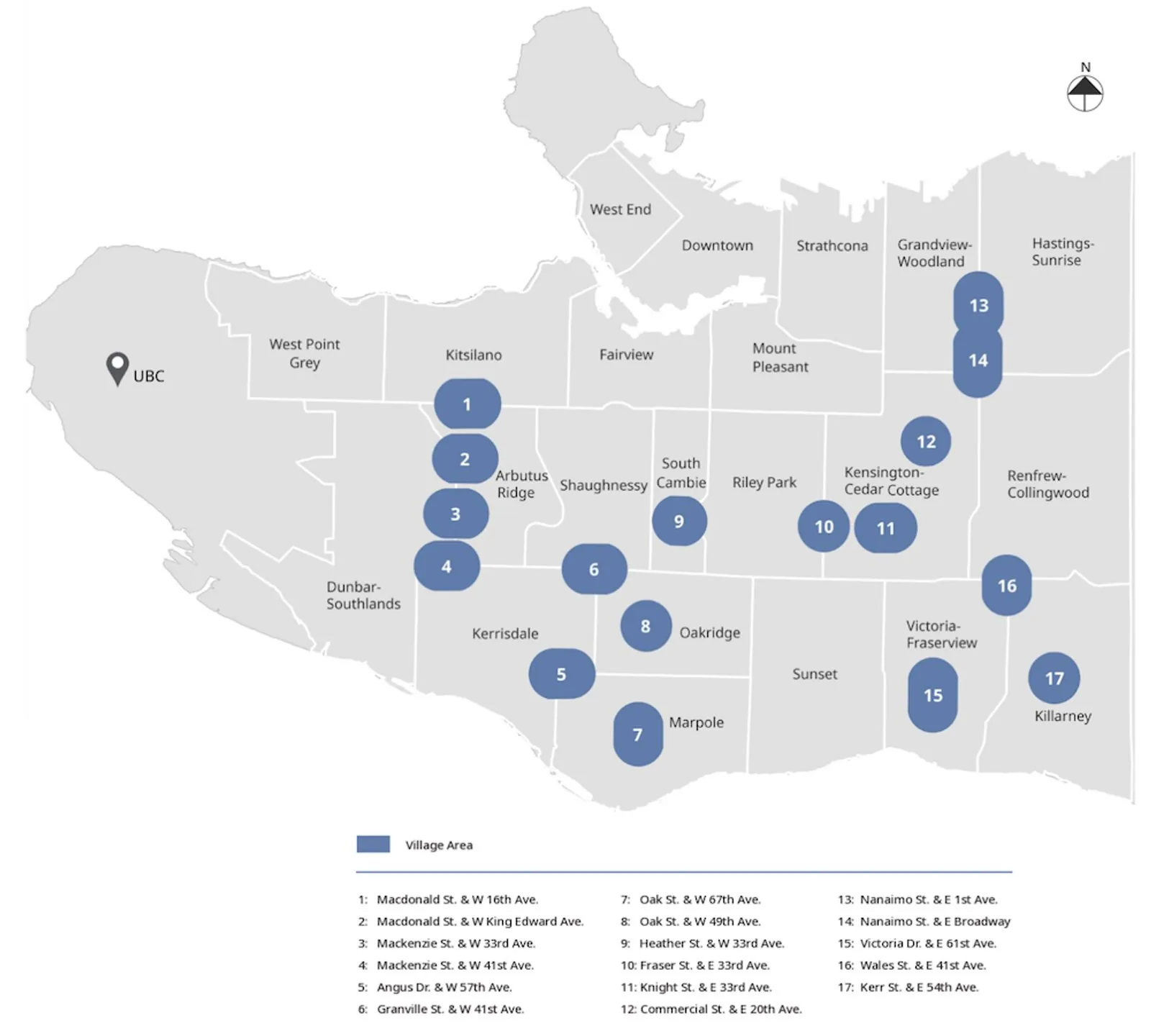
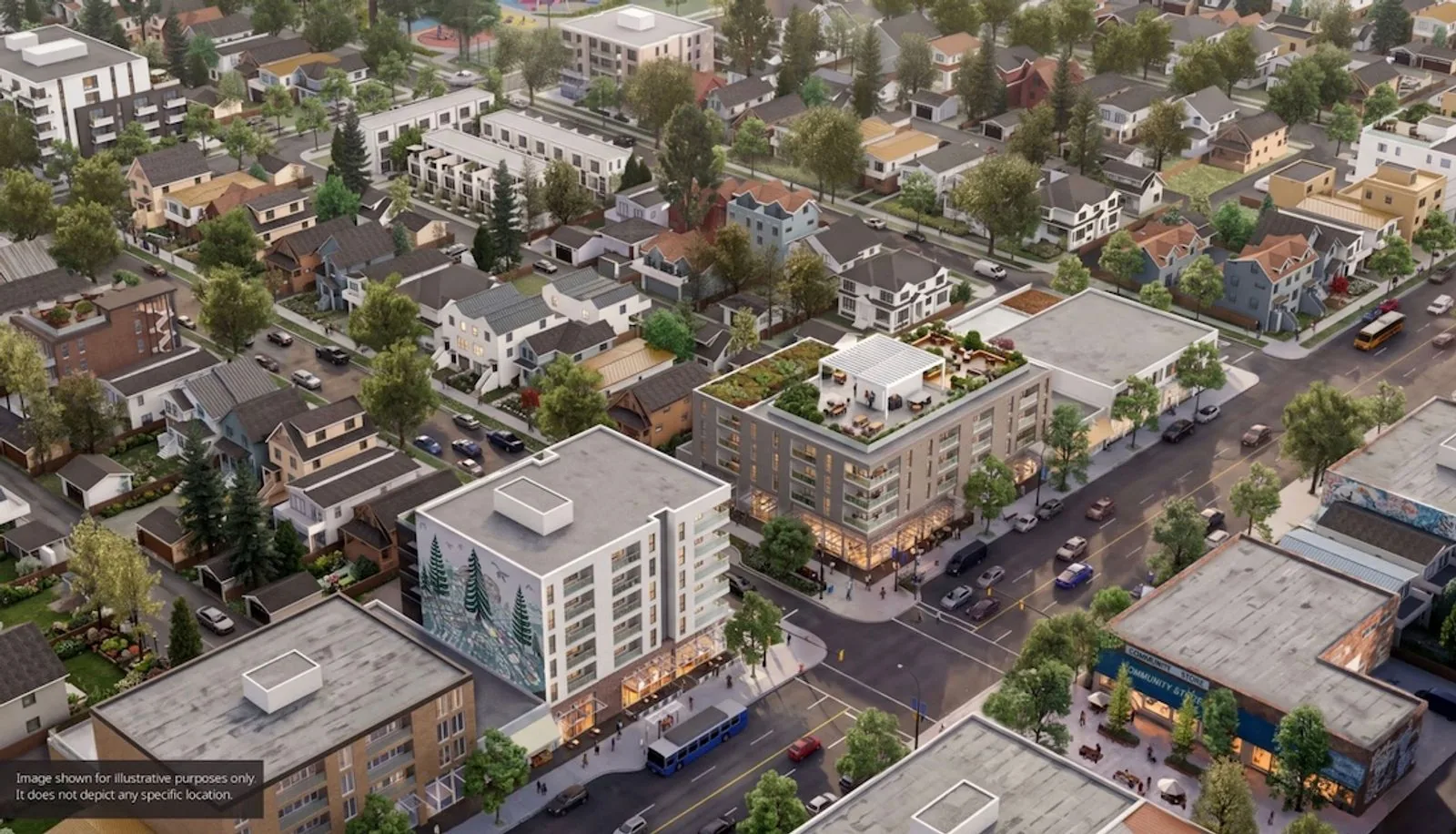
The Villages Plan was City staff’s attempt to concentrate apartment-scale housing and shops into 17 chosen pockets of the city. Think low- and mid-rise buildings up to eight storeys, clustered around a commercial core with ground-floor retail and restaurants. About 13,000 lots sat inside those 17 areas. Business in Vancouver put the exact figure at 13,260 parcels. On top of the housing, it would have created around one million sq ft of new retail and restaurant space across the village cores.
It was never a small idea. Council directed staff to accelerate the work back in October 2023, as a piece of the 2022 Vancouver Plan and the citywide Official Development Plan approved in March 2026. Staff spent nearly two years on it and narrowed the list from 26 potential villages down to 17.
Then the public hearing happened. Councillor Sarah Kirby-Yung, first elected in 2018, said she had never seen opposition like it in a Vancouver land use debate. She called it a “tsunami” and a “landslide.” Mayor Sim said the plan “did not strike the right balance between housing growth, implementation, infrastructure and community confidence,” and added that “no homeowner should feel that city hall is deciding the future of their property without their voice being heard.”
Why this is good news if you want a multiplex
Here is the detail that matters most for VanPlex readers, and it came straight from Kirby-Yung. The City had sent letters to roughly 700 property owners whose lots could have been designated for mixed-use development. Some of those owners read the letter and understood it to mean they would lose the right to renovate, add a laneway house, or build a multiplex, and would instead be pushed toward a large apartment-and-retail project they could never build themselves.
“I understand why people were genuinely upset,” Kirby-Yung said. “I would be upset.”
That is the quiet story here. For hundreds of lots, the Villages Plan was not adding an option. It was trading your buildable, owner-scale multiplex for a developer-scale apartment building. Killing the plan protects the smaller path. Your laneway, your duplex, your six-unit multiplex, all of it stays on the table.
What stays in force after July 28
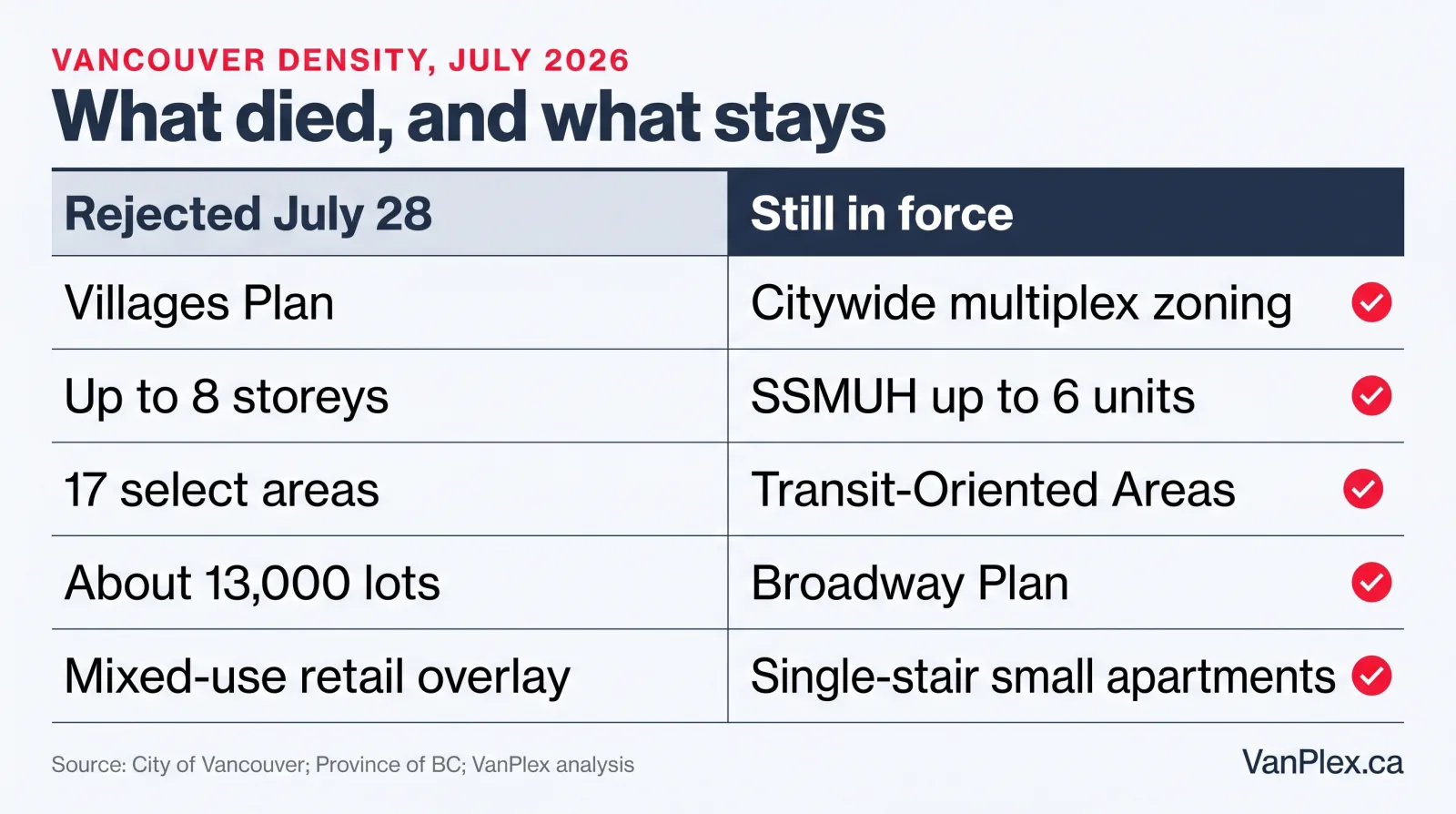
The Villages Plan was one layer on top of a housing system that Vancouver has been building for years. That system did not move. Councillor Lisa Dominato made the point directly: even without the villages, the city already has ample development capacity from policies approved over the past few years.
| Rejected on July 28 | Still fully in force |
|---|---|
| Villages Plan (17 areas) | Citywide multiplex zoning (R1-1) |
| Up to 8 storeys | SSMUH: up to 6 units per lot |
| About 13,000 lots upzoned | Transit-Oriented Areas |
| ~1 million sq ft new retail | Broadway Plan |
| Mixed-use apartment overlay | Single-stair small apartments |
Dominato listed the capacity Vancouver already has: citywide duplex zoning, the Rupert and Renfrew Station Area Plan, the Broadway Plan, the citywide ODP, SSMUH, and Transit-Oriented Areas. Kirby-Yung made the same case, saying this Council has been “very bullish and very supportive of housing,” pointing to record rental approvals and the introduction of multiplex zoning. “That’s what the process of governing is,” she said. “It’s listening and adapting.”
The single-staircase win almost nobody noticed
While the big plan died, a smaller reform survived. A majority of Council endorsed an amendment to better enable small multifamily buildings with a single exit staircase in R3 zoning areas. That sounds technical. It is actually one of the more useful things to happen for small builders this year.
Most small apartment buildings in North America have been forced to use two staircases, which eats the floor plate and pushes you toward a long double-loaded hallway. BC changed its building code in August 2024 to allow single-egress stairs in residential buildings up to six storeys, with sprinklers, smoke detectors, wider stairs, and a cap of 24 people per floor for safety. Vancouver enacted its own building bylaw version on January 20, 2026. The July 28 zoning amendment lines the land-use rules up with that building code, so a smaller lot can actually carry an efficient, European-style small apartment building. For a builder working at multiplex-to-small-apartment scale, that is real buildable value.
What the vote signals about Vancouver density
Read the councillors’ own words and a pattern shows up. Peter Meiszner called the plan “one size fits all” and said the city should start with one or two locations, not 17. Lenny Zhou visited all 17 areas and concluded they were too different to run on one framework. Rebecca Bligh suggested the staff work could still feed a smaller pilot. Even Pete Fry, who voted no, said his objection “is not about the villages, it’s about governance and political expediency.”
Strip away the politics and the message is consistent: Vancouver is backing away from top-down, master-planned apartment overlays dropped onto house neighbourhoods, and leaning into incremental, owner-driven density instead. That is the multiplex model. One lot, one owner, three to six units, built to the rules that already exist.
The timing reinforces it. The civic election is October 17, 2026, just under three months out. No sitting Council majority wants to head into a campaign having forced apartment towers onto 13,000 house lots against a “tsunami” of opposition. The multiplex, by contrast, is the density nobody is marching against, because it keeps the owner in control.
So what should a Vancouver homeowner do now?
If you own a single-family lot and you were waiting to see whether the Villages Plan would change your options, the waiting is over. Nothing about your multiplex math changed. The plan that could have complicated it is gone.
- If your lot is a standard R1-1 house lot: your citywide multiplex rights are untouched. Three to six units, depending on size and transit proximity, are still yours to build. Run the numbers.
- If you got one of the ~700 letters: you are not being pushed into an apartment-and-retail project. Your laneway, duplex, and multiplex options are preserved. Model the multiplex, not the mixed-use tower.
- If you were eyeing a small apartment form: the single-stair amendment plus BC’s six-storey single-egress code make efficient small buildings more viable than they were a year ago. Worth a fresh look.
- If you are a builder or investor: the density thesis for Vancouver house neighbourhoods just got cleaner. The volatile, politically fragile upzoning is off the board. The stable, in-force multiplex framework is what remains.
For the fuller picture on how the SSMUH and multiplex rules interact across Metro Vancouver, see our guides on how many units you can build on your BC lot and Vancouver’s multiplex city fees.
Check what your lot can actually build
The Villages Plan is dead. Your multiplex is not. If you own a Vancouver single-family lot and want real numbers on units, servicing, and returns under the rules that are actually in force, run a PlexRank screen on your address. Two minutes, and it reflects the zoning as it stands today, not the plan that just got voted down.
The apartment overlay was the noise. The multiplex was always the signal.
Author: David Babakaiff, Co-Founder of VanPlex PlexRank™ | Profit with Multiplex
Sources:
- Vancouver City Council kills Villages Plan after fierce public backlash — Daily Hive Urbanized (Kenneth Chan, July 28, 2026)
- Vancouver council votes 10-1 to reject villages plan after ‘tsunami’ of opposition — Business in Vancouver
- Vancouver council decisively rejects villages plan after ‘tsunami’ of opposition — CBC News
- BC now allows six-storey single-staircase residential buildings — Daily Hive Urbanized
- New Vancouver building rules aim to improve safety and housing supply — City of Vancouver