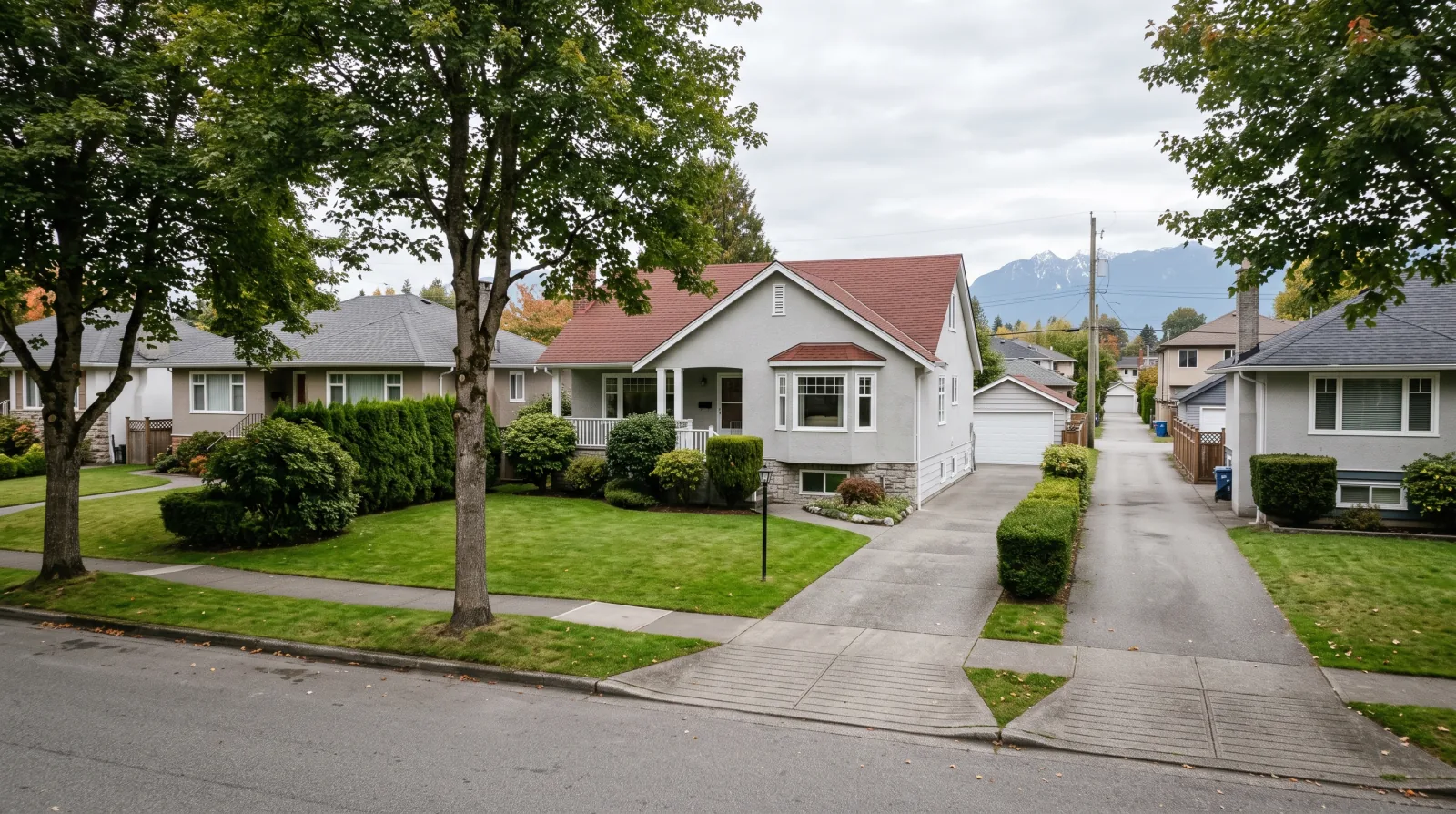

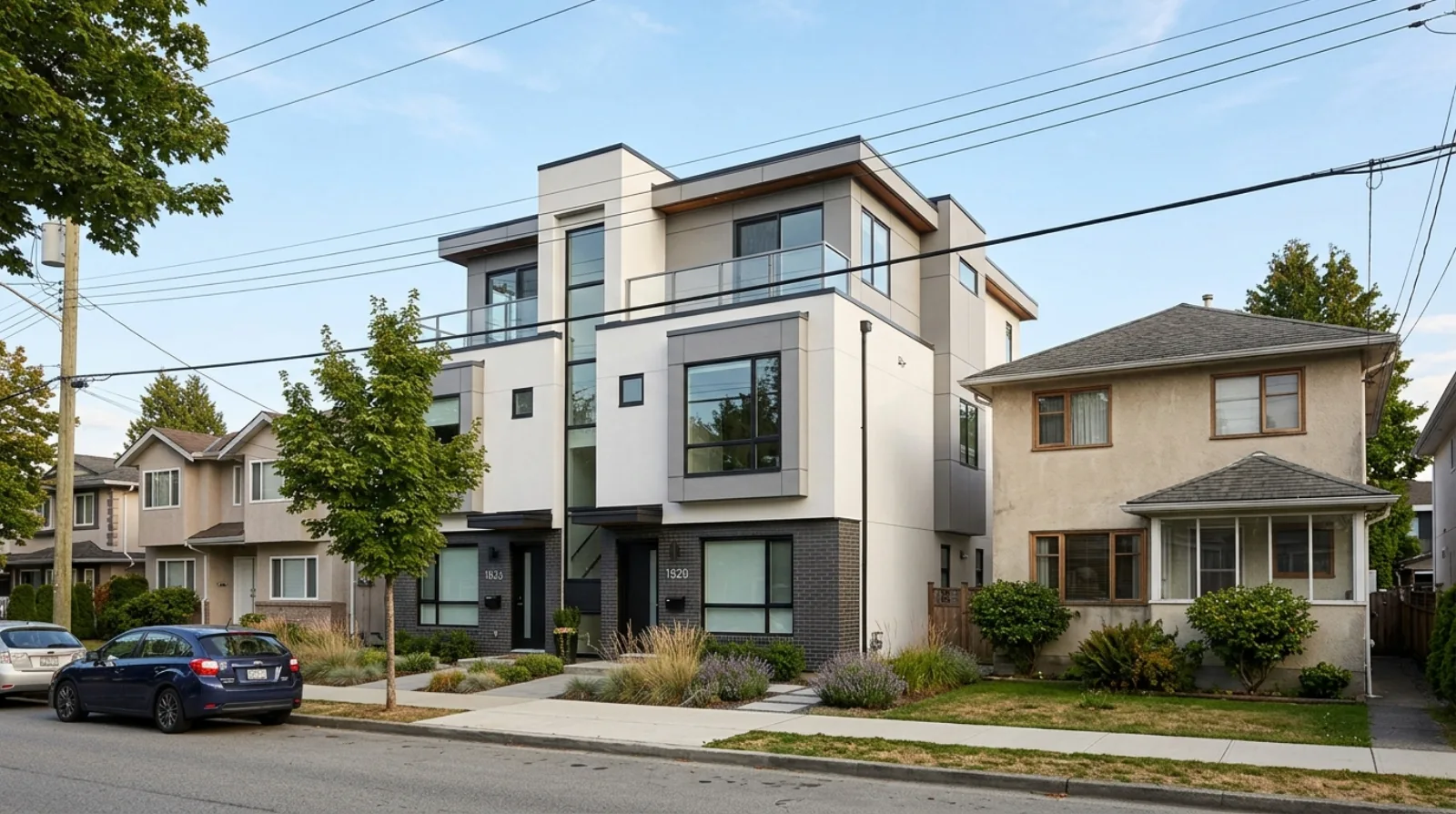
An older detached single-family house on a wide Vancouver lot with lane access and mature trees, the kind of ordinary property a multiplex buyer now evaluates for redevelopment potential
Homeowner Guide

How Multiplex Buyers Read Your Lot Before You Sell

7 min read

If you own a detached home in a multiplex zone, your property is now read two ways. A traditional buyer prices the house. A multiplex buyer prices what the land can produce. VanPlex has scored more than 205,000 lots so homeowners can see the second reading before they build, sell, partner, or wait.

Key takeaway

A first-person homeowner guide by VanPlex co-founder David Babakaiff explaining that a detached home in a BC multiplex zone is now valued in two different ways.

A traditional buyer prices the house on bedrooms, bathrooms, condition, location, and charm, while a multiplex buyer, builder, or developer prices the land by reading the zone, lot width and depth, lane access, trees, grade, and servicing, then running those inputs through to a likely unit count, construction cost, resale value, and return on equity. The article explains that these two readings can produce very different numbers, that the right lot may be worth more to a multiplex buyer than to a traditional end buyer, but that many multiplex-zoned lots do not deserve a premium because a lot can allow more homes and still fail financially once land basis, construction cost, and site conditions (creek setbacks, steep grade, heritage trees, old sewer laterals) are priced in. Zoning permission is not the same as a profitable project, and two lots on the same street with the same zoning can produce very different returns.

VanPlex has scored more than 205,000 lots across several BC cities and offers tools including Address Lookup, Homes For Sale (active MLS detached homes that may be strong multiplex rebuild candidates), Compare Properties, a Dev Cost Calculator, a Permits Explorer, Zoning Maps, and a Multiplex Glossary, plus guides on SSMUH, missing-middle housing, construction, and financing. The Multiplex Intelligence Principle: before you build, sell, partner, or wait, understand how your lot is being valued by the multiplex market.

What this covers

  • a multiplex-zone lot is valued two ways: the house and the land
  • multiplex buyers read zone, lot dimensions, lane, trees, grade, servicing
  • inputs run through to unit count, construction cost, resale value, and return on equity
  • not every multiplex-zoned lot deserves a premium
  • zoning permission is not the same as a profitable project
  • VanPlex has scored more than 205,000 lots across BC
multiplex vancouver homeowners selling lot-value land-value

If you own a detached home in a multiplex zone, your property is now being read in more than one way. A traditional buyer sees what buyers have always seen: bedrooms, bathrooms, condition, location, charm. A multiplex buyer, builder, or developer sees something else layered on top of that. They see the zone, the lot width and depth, lane access, trees, grade, and servicing, and they run all of it through to a likely unit count, a construction cost, a resale value, and a return on equity.

That does not mean the home stops mattering. It means your property now carries a second layer of value, and a lot of homeowners are still learning how to read it.

Your lot now has two readings

Here is the shift in plain terms. For decades a house was worth what a family would pay to live in it. In a multiplex zone, a second buyer walks the same lot and does completely different math. They are not paying for your kitchen. They are paying for how many homes the land can carry and what those homes will return once built.

The two readings use different inputs entirely.

What a traditional buyer valuesWhat a multiplex buyer values
Bedrooms and bathroomsZone and permitted unit count
Condition and updatesLot width and depth
Kitchen, finishes, charmLane access and grade
Location and schoolsTrees and servicing
Move-in readinessLand basis and return on equity

Neither reading is wrong. They are just answering different questions. The problem is that most homeowners only know the first one, and increasingly it is the second one that sets the ceiling on their property’s value.

What VanPlex.ca has become

We started with a simple idea: a homeowner should be able to enter an address and get a clearer picture of what their property may support. That is still the core of it. Today VanPlex has scored more than 205,000 lots across several BC cities, and the tools have grown to match how many different people now need to read a lot.

You can check an address, review zoning and feasibility, and work through guides on SSMUH, missing-middle housing, construction, and financing. The site now includes:

For a homeowner, this matters in a few practical ways. If you are thinking about building, you need to know whether the property can support a project that makes financial sense. If you are thinking about selling, you need to know whether your property is worth more to a multiplex buyer than to a traditional end buyer. And if you plan to stay, you may still want to understand your options, whether that is multi-generational living, retirement planning, unlocking equity, or simply knowing what the new zoning means before someone knocks on the door with an offer.
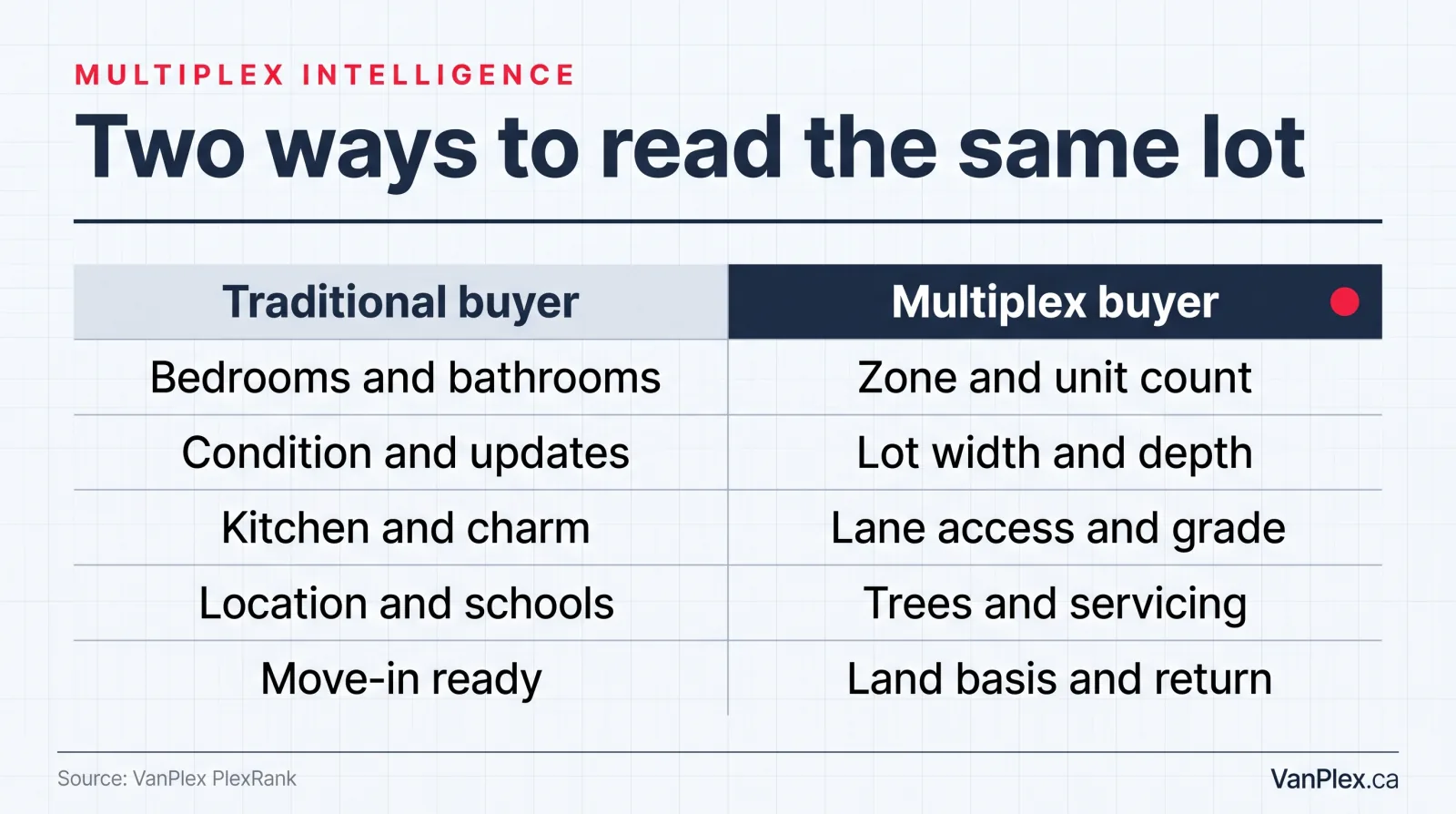
Comparison graphic titled Two ways to read the same lot, showing a traditional buyer column valuing bedrooms, condition, and charm beside a multiplex buyer column valuing zone, lot width, lane access, servicing, and return on equity

How multiplex buyers read a listing

The Homes For Sale section is worth a look even if you have no plans to list. It shows active MLS® detached homes across Metro Vancouver that may be strong candidates for multiplex rebuilds, and in doing so it shows how multiplex-oriented buyers are starting to read the market.

A conventional listing might call a house charming, well maintained, or full of potential. A multiplex buyer reads past that language. They want to know whether the lot is wide enough, whether the zoning supports the right unit count, whether the land basis leaves room for a return, and whether site conditions are likely to create expensive surprises. A creek setback, a steep grade, a heritage tree, an old sewer lateral: any one of those can turn a lot that looks buildable on paper into a project that does not pencil.

That is the reading happening quietly behind a growing share of detached-home offers. The more you understand it, the better you can tell whether an offer reflects your house, your land, or your development potential.
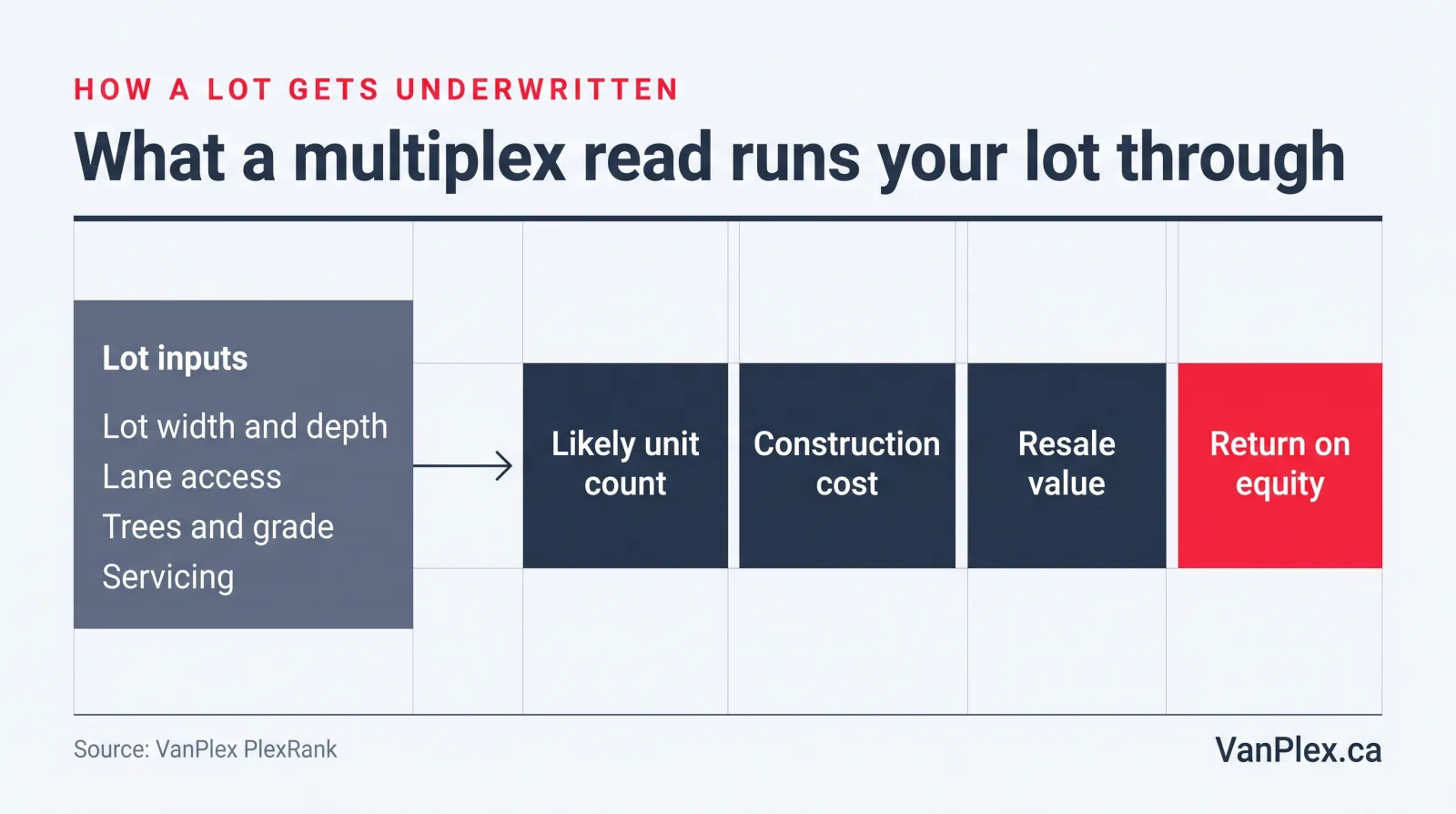
Diagram showing how a multiplex read runs a lot through its inputs of lot width, depth, lane access, trees, grade, and servicing to produce a likely unit count, construction cost, resale value, and return on equity

Not every zoned lot deserves a premium

This is the part I want homeowners to hear clearly, because it cuts against the hype. Multiplex zoning creates both opportunity and risk. The right property may attract a buyer who sees more value in it than the traditional market does. But not every multiplex-zoned property deserves a premium, and many do not.

A lot can technically allow more homes and still fail financially once the full development picture is priced in. Land basis too high, frontage too narrow, servicing upgrades too expensive, unit mix too weak for the neighbourhood’s resale values: the math stops working. Two lots on the same street, with the same zoning, can produce very different returns. That is exactly why a blanket “you’re in a multiplex zone, so you’re worth more” assumption gets people into trouble.

The zoning tells you what is permitted. It does not tell you what is profitable. Those are two different numbers, and the gap between them is where money is made or lost.

Why education comes first

That gap is why education matters before any major decision. It helps to know how your property scores before you spend money on plans. It helps to know how a multiplex buyer is likely to underwrite the lot before you list. And it helps to know whether the person across the table is pricing the house, the land, or the development potential before you accept an offer. It also helps to understand whether building yourself, partnering, selling, or waiting is the better path for your situation.

None of that requires a commitment. It may start with an address check, a guide, or a browse through the active multiplex lots for sale to see how the market is shifting. However you start, the goal is the same: make the decision with more clarity than you had yesterday.

Your property may now be part of a much larger housing shift. It is worth understanding how the market is starting to read it.
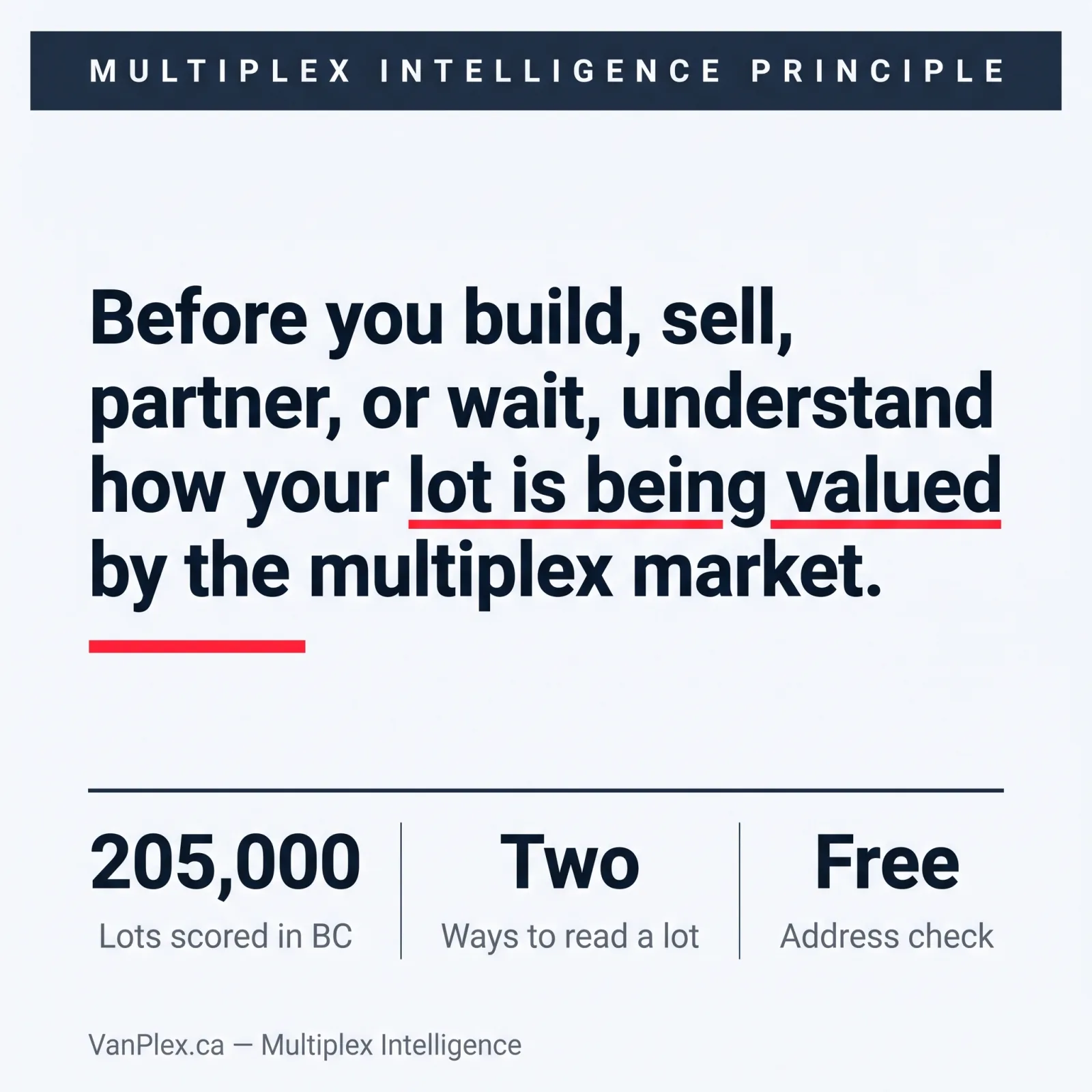
Social card with the pull quote before you build, sell, partner, or wait, understand how your lot is being valued by the multiplex market, above three stats reading 205,000 lots scored, two ways to read a lot, and one free address check

Check how your lot is being read

Before you build, sell, partner, or wait, understand how your lot is being valued by the multiplex market. That is the Multiplex Intelligence Principle, and it is the whole reason we built the tools.

Check your address at VanPlex.ca. It takes two minutes, and it shows you the second reading of your property, the one a multiplex buyer is already doing.


Author: David Babakaiff, Co-Founder of VanPlex PlexRank™ | Profit with Multiplex
Frequently asked questions

How does a multiplex buyer value a house differently than a traditional buyer?

A traditional buyer values bedrooms and bathrooms, condition and updates, kitchen and finishes, location and schools, and move-in readiness. A multiplex buyer, builder, or developer instead reads the zone and permitted unit count, lot width and depth, lane access and grade, trees and servicing, and land basis and return on equity. Both readings can apply to the same property at the same time, and it is increasingly the second reading that sets the ceiling on a property's value.

How many lots has VanPlex scored for multiplex potential?

VanPlex has scored more than 205,000 lots across several BC cities. The site offers tools built around that data, including an Address Lookup to check what a specific property may support, a Homes For Sale section showing active detached homes that may be strong multiplex candidates, a Compare Properties tool, a Dev Cost Calculator, a Permits Explorer, and Zoning Maps.

Does every lot with multiplex zoning sell for a premium?

No. Not every multiplex-zoned property deserves a premium, and many do not. A lot can technically allow more homes and still fail financially once land basis, frontage width, servicing upgrade costs, and unit mix relative to neighbourhood resale values are all priced in, so two lots on the same street with the same zoning can produce different returns.

What site conditions can turn a multiplex-zoned lot into a bad investment?

A creek setback, a steep grade, a heritage tree, or an old sewer lateral can each turn a lot that looks buildable on paper into a project that does not work financially. These are exactly the kinds of site conditions a multiplex buyer checks before offering on a property, in addition to lot width, zoning, and land basis.

What does the Homes For Sale section on VanPlex show?

The Homes For Sale section shows active MLS® detached homes across Metro Vancouver that may be strong candidates for multiplex rebuilds. It is useful even for owners with no plans to list, because it demonstrates how multiplex-oriented buyers read a listing: past words like charming or full of potential, and toward lot width, zoning-supported unit count, land basis, and site conditions that could create expensive surprises.

Is zoning permission the same as a profitable multiplex project?

No. The zoning tells an owner what is permitted, not what is profitable. Those are two different numbers, and the gap between them is where money is made or lost, since a lot can be technically eligible for more homes while the land basis, construction costs, and resale values still fail to support a workable project.

Why should a homeowner check their lot even if they plan to stay?

Understanding the second reading of a property matters for owners planning to stay, not only those planning to build or sell. It helps with decisions around multi-generational living, retirement planning, and using equity in the property, and it means an owner already understands what the new zoning means for their property before someone knocks on the door with an offer based on its development potential.

What should a homeowner do before accepting an offer on a multiplex-zoned property?

A homeowner should understand whether the person making an offer is pricing the house, the land, or the development potential before accepting it. This can start with an address check on VanPlex, reading a guide, or browsing active multiplex lots for sale to see how the market is valuing similar properties, so the decision is made with more clarity than a single offer alone provides.

Free 12-page guide for Vancouver-area homeowners. Build, sell, hold, or partner — side-by-side comparison of the numbers, timeline, and risk on each path.

Verified phone required. We'll text you the link in 60 seconds.

David Babakaiff

David Babakaiff

Co-Founder, VanPlex | 25+ Years BC Construction

David Babakaiff is Co-Founder of VanPlex with 25+ years scaling BC construction. He led Alair Homes Vancouver to the 2024 HAVAN Award for Best Multiplex Unit in the GVRD. VanPlex’s PlexRank™ algorithm scores residential parcels across BC for multiplex conversion potential under Bill 44.

Want insights like this delivered weekly?

Join 2,500+ property owners getting ROI case studies, market data, and exclusive opportunities.

No spam. Unsubscribe anytime.

A Vancouver residential street where an older detached house sits beside a newly completed three-storey multiplex with individual ground-level entries, the density that remains legal after Council rejected the Villages Plan
8 min read

Stop Pricing Density That Is Not Coming to Your Lot

Council voted 10 to 1 against the Villages Plan on July 28, 2026, removing four, six and eight storeys from 13,260 parcels. R1-1 is what is left, and it has been law since October 17, 2023. What that does to land pricing, and how to underwrite a Vancouver lot now.

Investment Analysis
multiplexvancouver+7
By David Babakaiff • Co-Founder, VanPlex | 25+ Years BC Construction
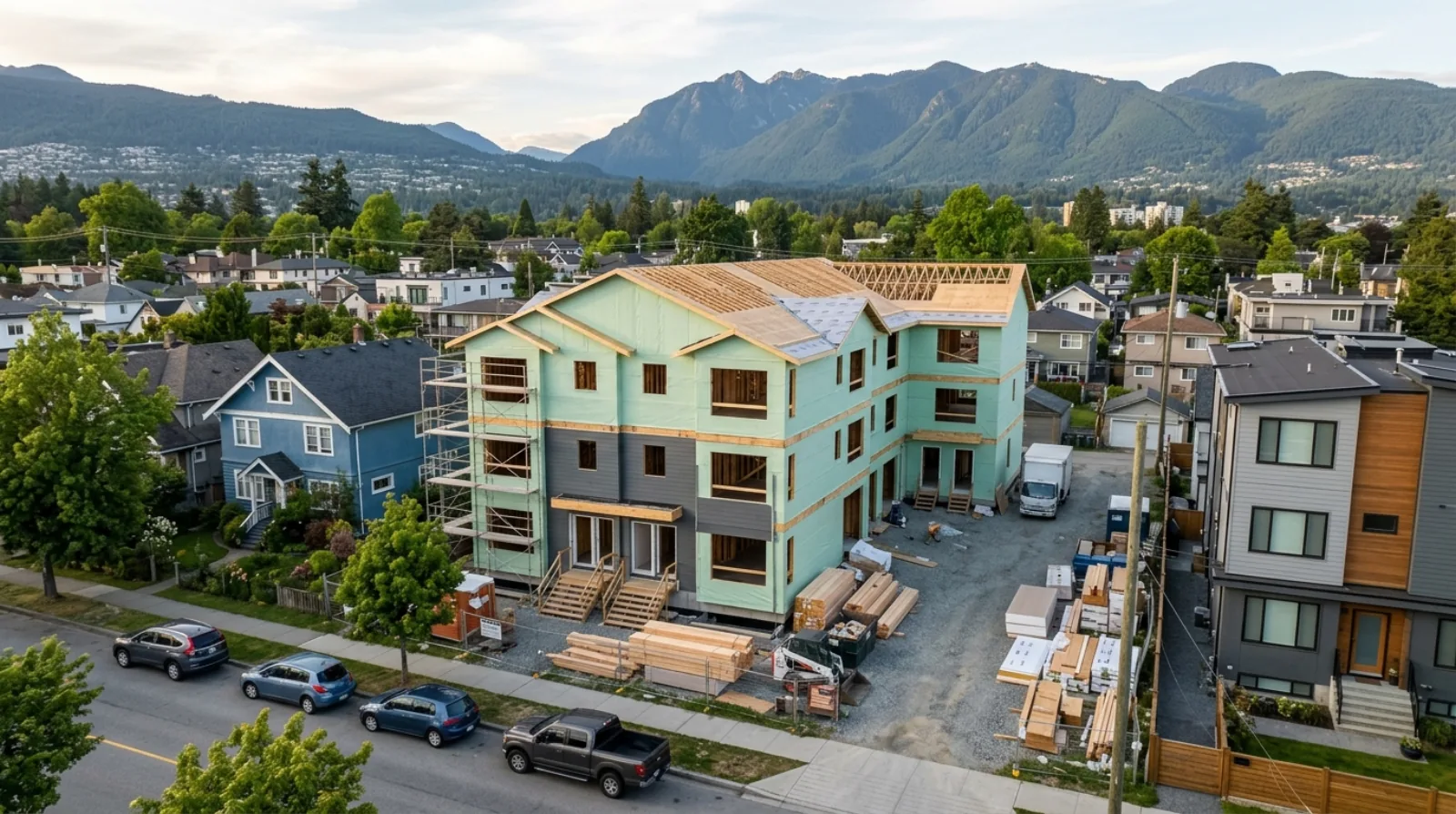
A six-plex multiplex under construction on a Vancouver residential lot, framing sheathed and roof trusses set, with two front entries at grade and the North Shore mountains behind, representing the 18 to 24 months of execution that decide multiplex returns
9 min read

Execution, Not the Lot, Decides Multiplex Returns

Construction filed 208 business insolvencies in Canada in Q1 2026, 17.0 percent of all business filings, while total business insolvencies fell 7.5 percent. Two Vancouver receiverships this spring failed on operations, not on zoning. Multiplex Intelligence Issue #5 looks at the 18 to 24 months of execution between an aligned deal and a profitable completion.

Investment Analysis
multiplexvancouver+9
By David Babakaiff • Co-Founder, VanPlex | 25+ Years BC Construction
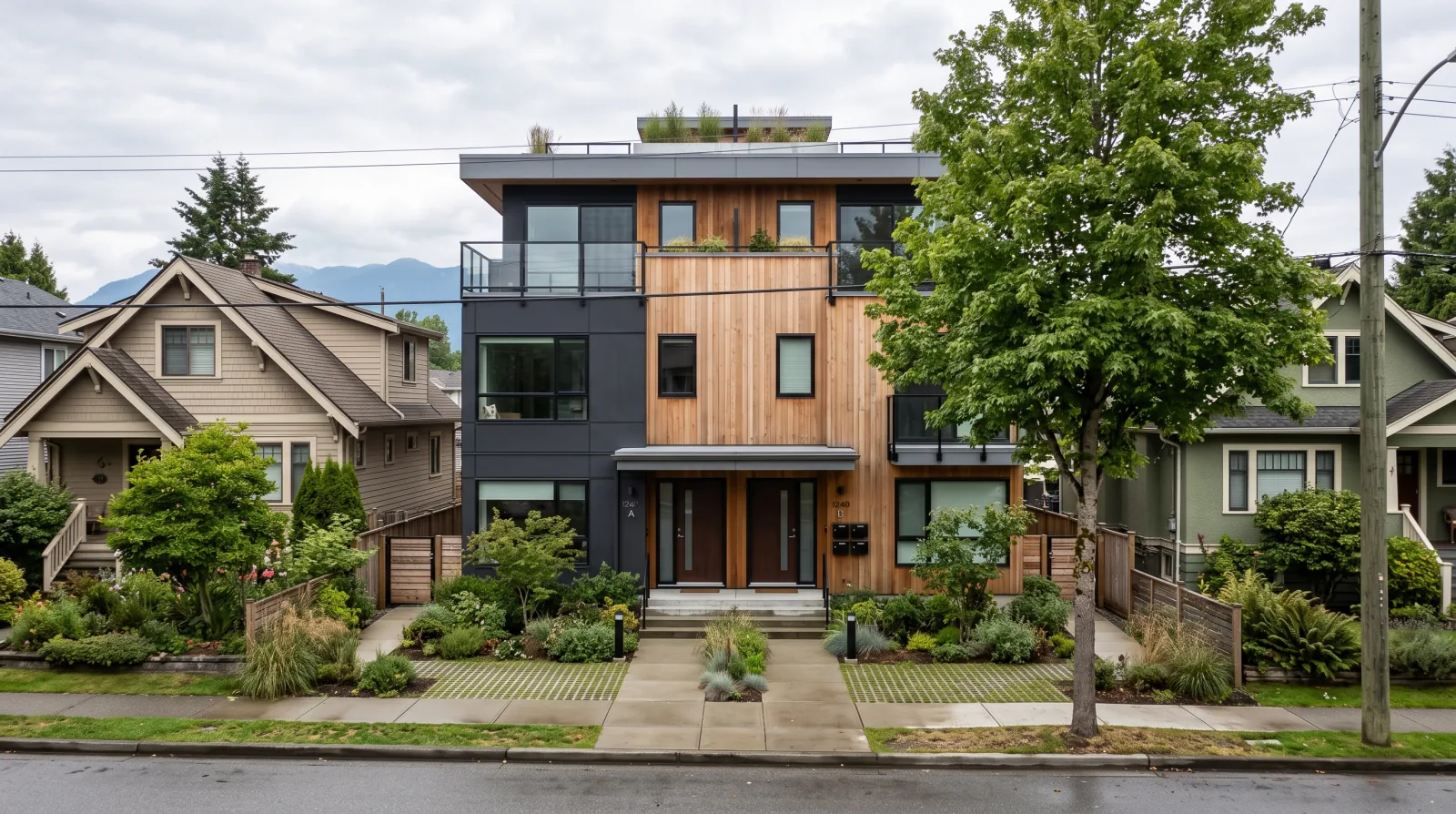
A newly built three-storey ground-oriented multiplex with two front doors on a Vancouver residential street between older single-family houses, the incremental owner-built density that survives after Council rejected the Villages Plan
8 min read

Villages Plan Dead: Your Vancouver Multiplex Lives

Vancouver City Council killed the Villages Plan on July 28, 2026 in a 10 to 1 vote, ending a plan for up to eight storeys across 17 areas and about 13,000 lots. Here is why the rejection leaves every multiplex right untouched, protects the ~700 owners who feared losing their laneway and multiplex options, and confirms the incremental, owner-built multiplex as Vancouver's real density model.

Policy & Regulation
multiplexvancouver+8
By David Babakaiff • Co-Founder, VanPlex | 25+ Years BC Construction