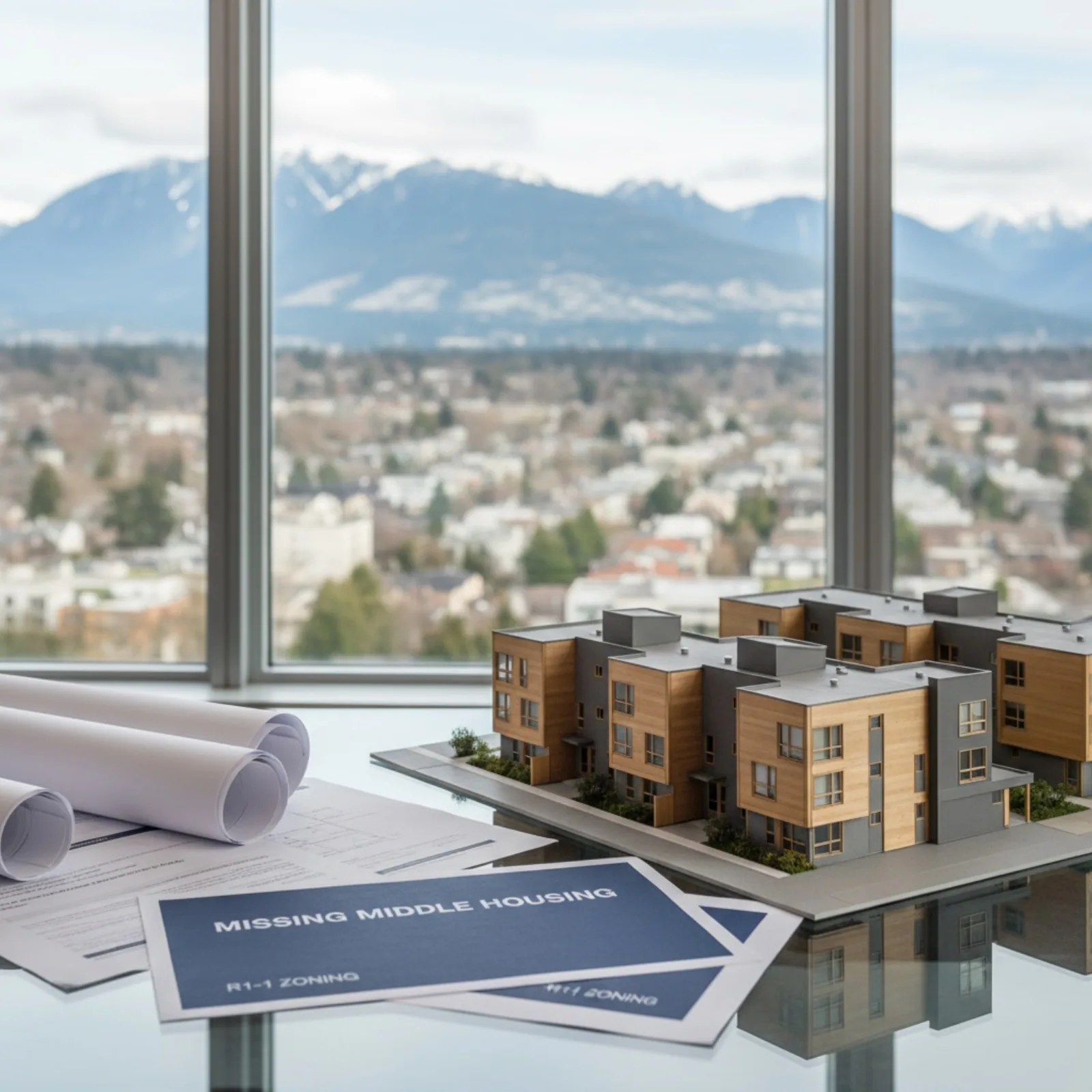

For decades, Vancouver homeowners have relied on long-term property appreciation as the foundation of their retirement strategy. However, demographic shifts, aging housing stock, new provincial density legislation, and changing buyer preferences have reshaped the landscape.
The introduction of Bill 44, which permits three to six units “by right” on most standard lots, has opened a significant but time-sensitive opportunity for longtime owners to reposition their assets for higher value. If you’re a homeowner trying to understand whether this applies to your property, the homeowners overview is the right starting point.
Here are the five strategic benefits that matter most when evaluating whether to convert your property into a multiplex—particularly for those seeking a clean, high-value exit.
1. The Opportunity to Realize a Higher Total Asset Value
A single-family home yields a single transaction.
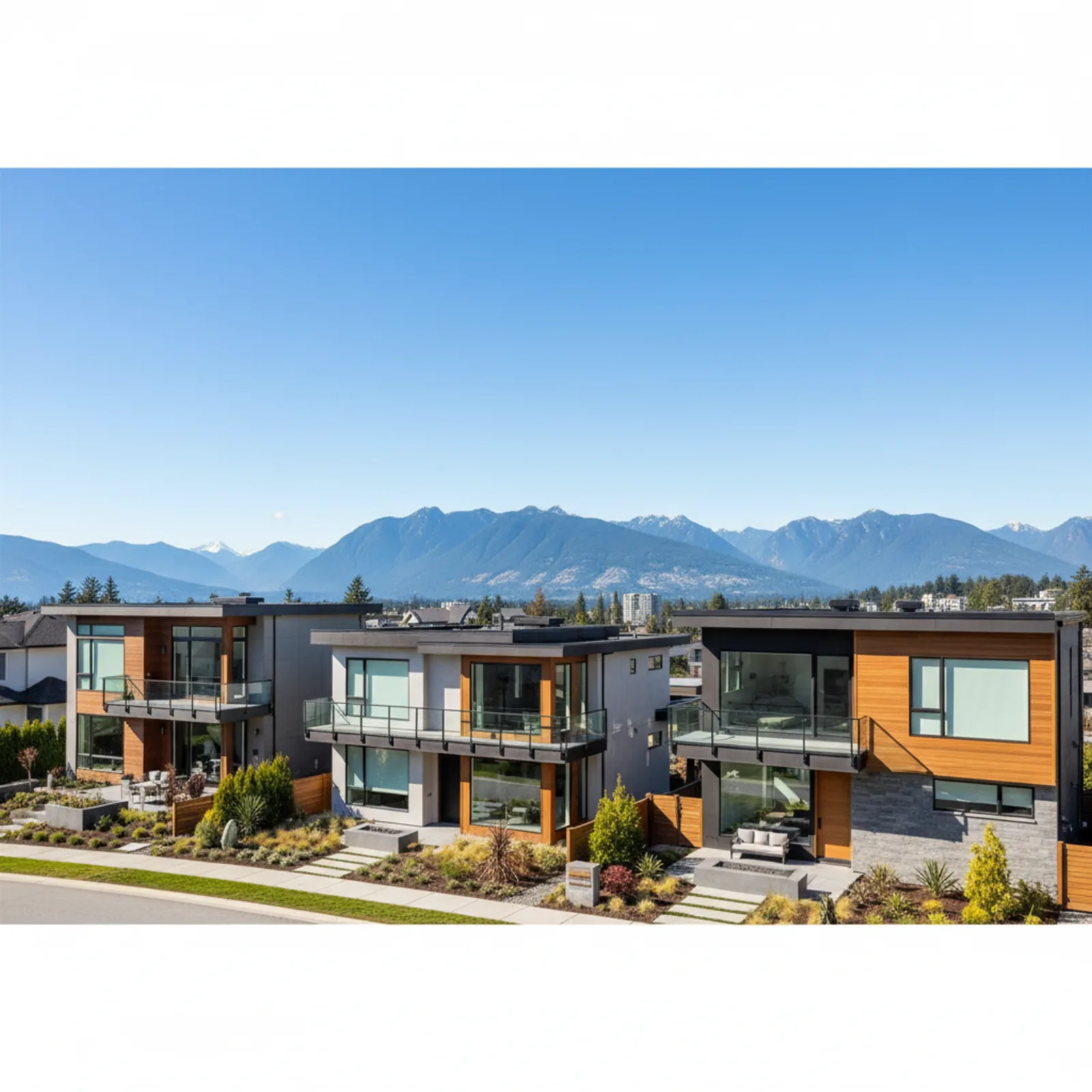
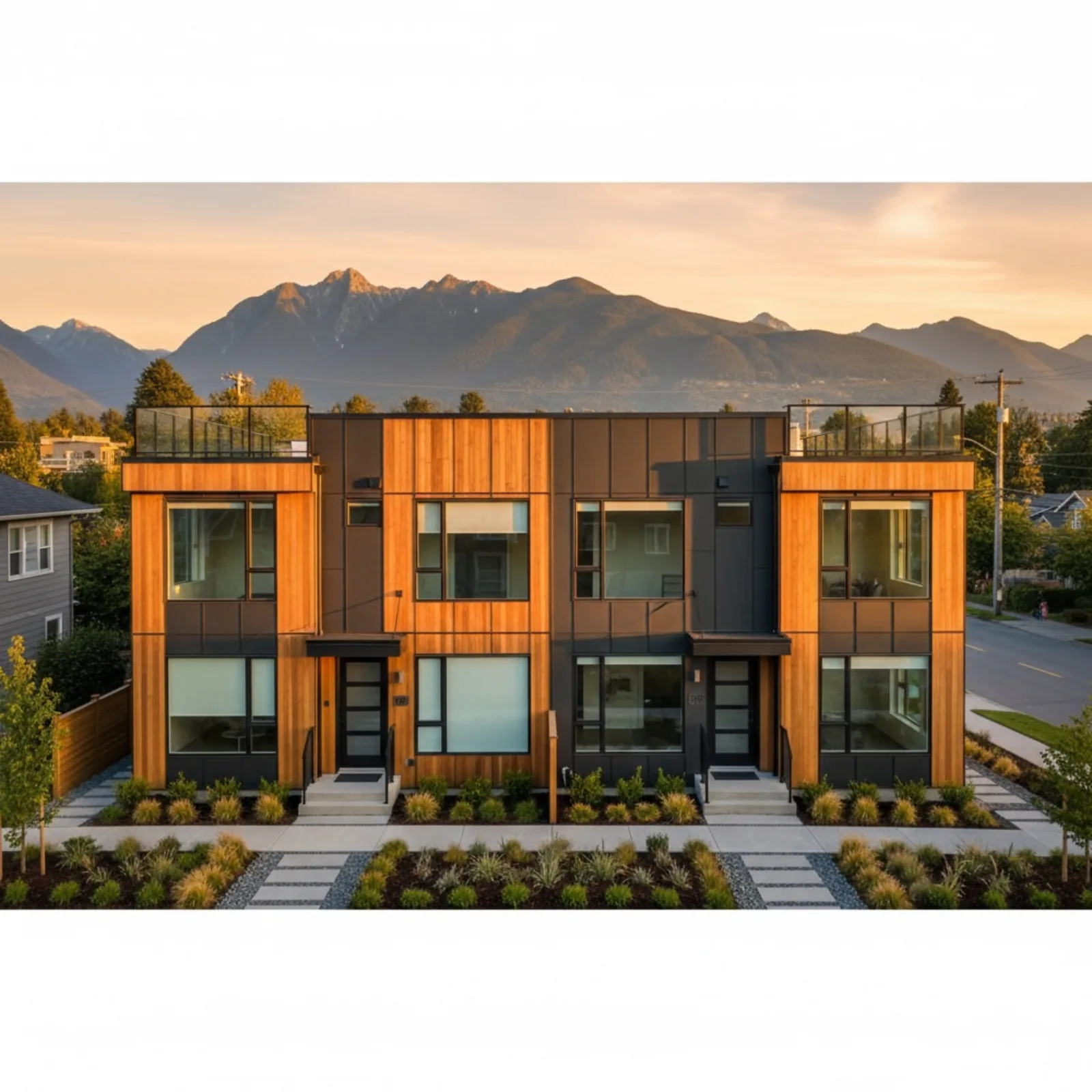
A multiplex produces multiple end products, each tailored to a specific buyer segment—downsizers, young families, and professionals seeking modern homes in established neighborhoods.
From a valuation standpoint, the aggregate sale price of four to six newly constructed units frequently exceeds the market value of the original single-family home. This reflects a broader pattern observed in global urban markets: density unlocks value, and newly built inventory commands a premium over aging stock.
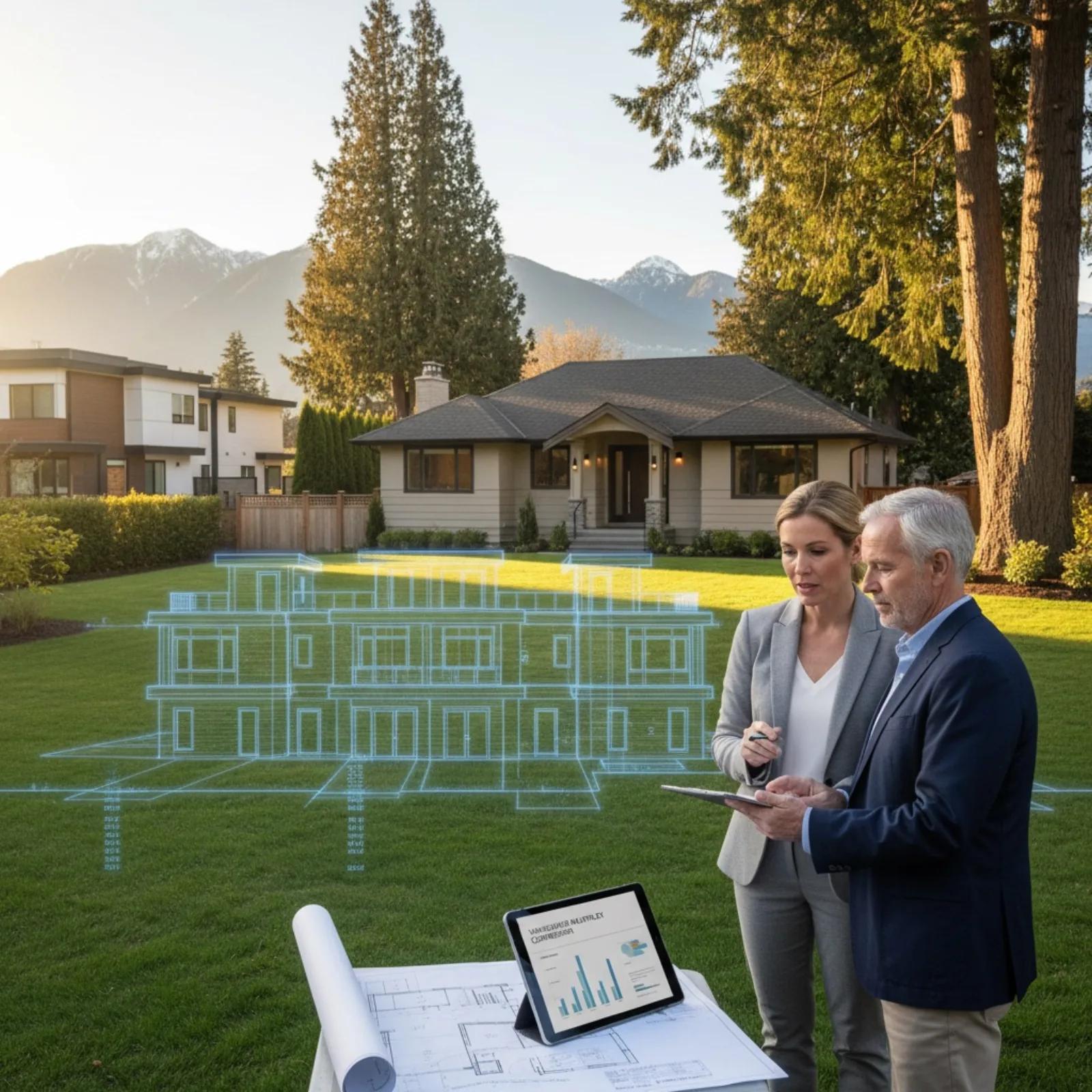
Homeowners can now assess the build potential of their specific lot using site-scanning tools such as VanPlex.ca, which provides a first pass on unit count and development feasibility.
2. A Pathway to Exit Landlording Without Liquidating at a Discount
Longtime landlords often feel trapped between operational fatigue and unfavorable market conditions. Increased regulations, aging buildings, and rising maintenance costs make landlording increasingly unattractive in retirement.
Converting a property into a multiplex and selling the units offers a complete exit from operational responsibilities, without the need to rent, manage tenants, or engage in long-term oversight. It transforms an active asset into a finished product ready for market sale—and allows the owner to step away from day-to-day involvement entirely.
3. The Ability to Capture Policy-Driven Value Before the Market Adjusts
Bill 44 represents one of the most meaningful zoning changes in Vancouver’s recent history — our SSMUH guide explains how the policy is implemented city by city. Yet market pricing has not fully absorbed the implications of expanded multiplex allowances.
This creates a temporary but powerful opportunity:
- Land is still valued largely as single-family stock
- But it now supports significantly more density
- The uplift created by this new density has not yet been capitalized into land values
Owners who redevelop early stand to capture this arbitrage. Over time, land prices will likely recalibrate upward as multiplex development becomes more common and competition for eligible lots intensifies.
Checking a property’s eligibility at VanPlex.ca is often the first step in understanding the magnitude of this policy-driven opportunity.
4. A More Competitive Product in Today’s Buyer Market
Aging single-family homes face growing challenges: dated interiors, inefficient layouts, deferred maintenance, and high operating costs. These deficiencies force sellers to discount or wait for market cycles to improve.
Multiplex redevelopment solves this by delivering new, attractive, energy-efficient homes that align with current buyer preferences:
- Smaller, lower-maintenance homes for downsizers
- Modern units for young families
- Multi-unit options for intergenerational buyers
- A turnkey alternative for investors seeking new product
In many neighborhoods across Vancouver and Burnaby, new multiplex units outsell older single-family homes in both speed and price-per-square-foot.
5. Greater Flexibility in Accessing and Structuring Retirement Liquidity
Perhaps the most overlooked advantage is the flexibility a multiplex provides in orchestrating a retirement exit.
Homeowners can choose to:
- Sell all units individually, maximizing total proceeds
- Sell a portion of the units and retain one for legacy or family use
- Sell the entire completed building to a single purchaser
- Presell units to secure revenue before construction completion
This optionality allows owners to tailor their exit to financial, lifestyle, and estate-planning goals—rather than relying on a single lump-sum sale of an aging home.
Tools like VanPlex.ca offer early feasibility modeling that helps homeowners compare these scenarios with greater clarity. Our services team handles the full process — design, permits, construction, and sales.
Conclusion: A High-Value Exit Aligned With the Needs of Longtime Owners
For homeowners who purchased decades ago, the decision is no longer between continuing as landlords or selling into an uncertain market. The multiplex pathway provides a more strategic alternative: it maximizes asset value, eliminates operational burden, leverages new density allowances, and creates flexible liquidity options aligned with retirement planning.
The first step is understanding the potential of your specific property.
Eligibility and preliminary feasibility can now be assessed in minutes using platforms like VanPlex.ca—offering the clarity needed to determine whether multiplex redevelopment is the right strategic move for your next chapter.
Frequently Asked Questions
Q: How much does it cost to convert a single-family home into a multiplex in Vancouver?
A: Total development costs typically range from $2.5M to $5M depending on lot size, unit count, and design complexity. This includes demolition, construction, professional fees (architect, engineer, surveyor), permit costs, and financing. VanPlex.ca provides preliminary cost estimates based on your specific property characteristics and current construction rates in your neighborhood.
Q: How long does the multiplex conversion process take from start to finish?
A: The complete timeline typically spans 24-36 months, broken down as follows: design and permitting (8-12 months), construction (12-18 months), and final inspections and occupancy permits (2-4 months). Recent improvements to Vancouver’s permitting process under Bill 44 have reduced approval times for compliant multiplex projects compared to traditional rezoning applications.
Q: Can I live in one unit and sell the others, or must I sell all units?
A: You have complete flexibility in your exit strategy. Many homeowners choose to retain one unit for personal use or family members while selling the remaining units to recover development costs. Others sell all units to maximize liquidity. The stratification process allows for individual unit ownership, giving you optionality throughout the project lifecycle—including the ability to presell units before construction completion.
Q: What are the tax implications of converting my principal residence into a multiplex?
A: Tax treatment depends on your specific situation and timing. If you’ve continuously occupied the property as your principal residence, the principal residence exemption (PRE) may shelter capital gains up to the point of conversion. Once converted to income-producing or development property, different rules apply. It’s critical to consult with a qualified tax accountant or tax lawyer who specializes in real estate development before proceeding, as proper structuring can significantly impact your after-tax proceeds.
Q: Is my property eligible for multiplex development under Bill 44?
A: Most single-family lots in Vancouver are now eligible for 3-6 unit multiplexes under Bill 44, provided they meet minimum lot size requirements (typically 280-450 sq m depending on unit count) and are not subject to heritage or view cone restrictions. VanPlex.ca offers an eligibility check that analyzes your property’s zoning, dimensions, and development potential in under 60 seconds—providing a clear starting point for your feasibility assessment.