

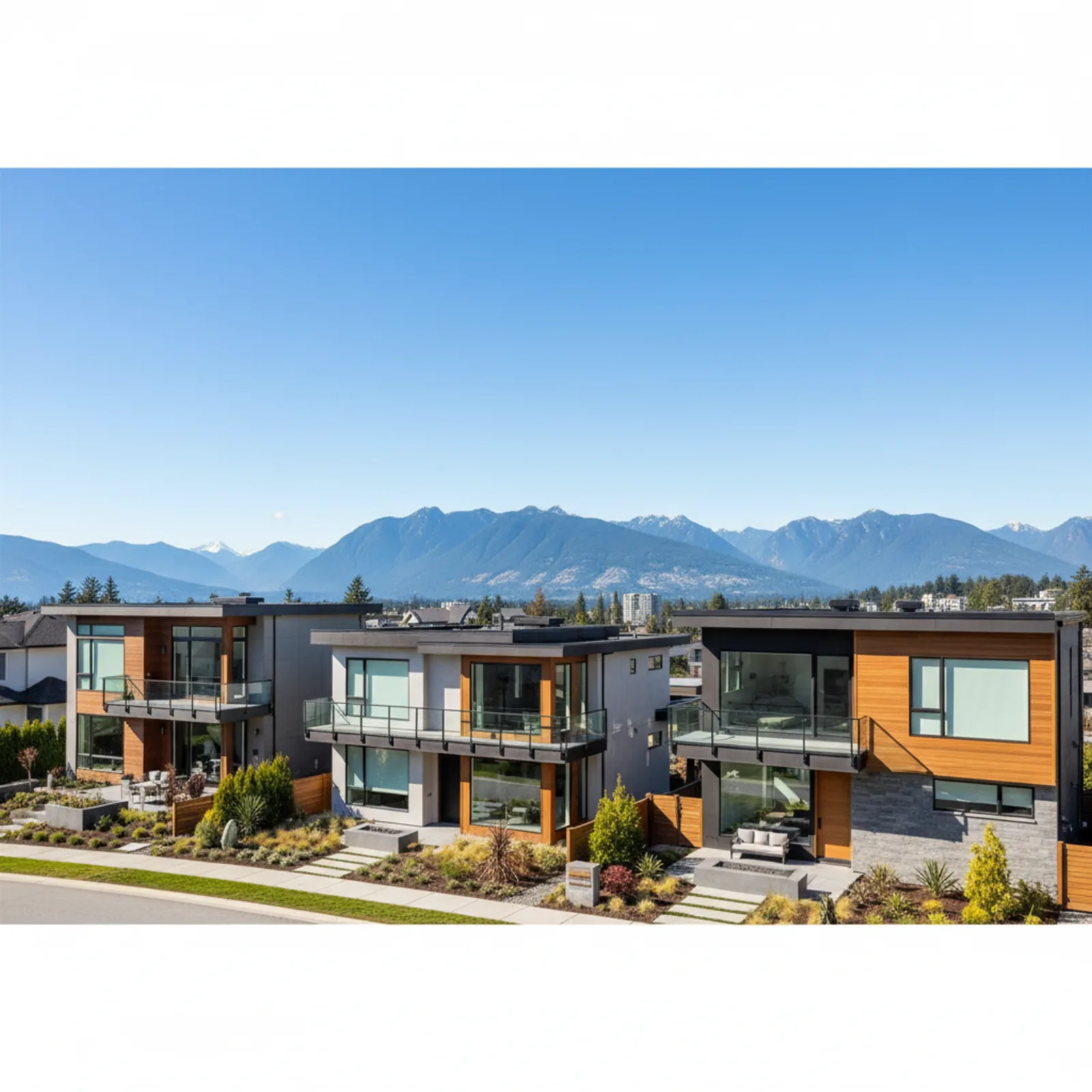
Vancouver cityscape representing strategic multiplex investment opportunities driven by progressive policy framework
Investment Strategy Featured

Future-Proofing Through Policy: Why Multiplex Development Is Emerging as Vancouver's Most Strategic Asset Class

8 min read

Municipal policy rarely reshapes an entire asset class overnight. Yet in Vancouver and Burnaby, the recent shift toward 'missing middle' housing has created a temporary but meaningful disconnect between land values and development potential, giving early entrants an opportunity to secure assets before the market fully recalibrates.

Key takeaway

Analysis of how Vancouver's multiplex policy shift has created a structural investment opportunity through a temporary pricing inefficiency between current land values and future development potential.

Explains first-mover advantages in capturing land value repricing, margin expansion, and enhanced exit optionality.

What this covers

  • policy-driven structural change
  • market pricing lag
  • zoning delta arbitrage
  • first-mover advantage
  • land value repricing
  • exit optionality
  • long-term resilience
policy multiplex vancouver burnaby bill-44 investment-strategy

Municipal policy rarely reshapes an entire asset class overnight. Yet in Vancouver and Burnaby, the recent shift toward gentle density housing — including three-to-six-unit multiplexes approved by right — has done precisely that. What began as a response to affordability and sustainability pressures has evolved into one of the most consequential real estate policy changes in the region’s recent history.

For investors, the implications are significant. The new zoning framework has created a temporary but meaningful disconnect between land values and development potential, giving early entrants an opportunity to secure assets before the market fully recalibrates.

Policy as a Driver of Structural Change

Cities across North America face unprecedented pressures: constrained housing supply, rising construction costs, and the limitations of single-family zoning in urban cores. Vancouver’s approach — replacing traditional single-detached zones with multiplex-friendly R1-1 zoning under Bill 44 — is a strategic response to these challenges.

Unlike incremental rezonings, this is a systemic reclassification of land use. The intent is clear:

  • Increase density in established, transit-accessible neighbourhoods
  • Reduce the reliance on high-rise towers as the primary source of new supply
  • Expand housing options for multi-generational and workforce households
  • Advance long-term sustainability goals through more efficient building forms

This alignment between public policy and urban planning creates conditions in which private capital can operate with greater clarity. The regulatory direction is not speculative; it is already codified into Vancouver’s land-use framework. As a result, multiplex development is positioned not as a transitional policy experiment but as a long-range strategic priority.

The Market Lag: A Pricing Inefficiency Investors Rarely See

Major zoning changes typically trigger rapid repricing. Yet Vancouver’s multiplex initiative has produced a temporary divergence: land that now supports significantly higher density continues to trade at values tied to its former, single-family use case.

Several factors explain this lag:

  • Homeowners remain anchored to legacy valuations
  • Brokers lack standardized multiplex comparables
  • Financial institutions are still adjusting underwriting norms
  • Buyers are cautious in the early phase of regulatory change

This creates a short-term pricing inefficiency—a gap between what land is and what it can become under the new policy. As VanPlex and other early market analysts note, this zoning delta is already visible in several neighbourhoods, but it has not yet been consistently priced into transactions.

For investors, this period represents an uncommon opportunity: the ability to acquire strategically located parcels at pre-policy valuations while benefiting from post-policy development potential.

First-Mover Advantage in a Transforming Market

Investors who enter the multiplex market during this early window are positioned to capture three forms of appreciation:

1. Land Value Repricing

As the market adjusts, lots capable of supporting multiplex development will be revalued based on their expanded density. This uplift is likely to be most pronounced in established low-rise neighbourhoods where supply constraints already exist.

2. Margin Expansion Through Speed and Control

Multiplex projects are smaller, faster, and more predictable than traditional multifamily developments. Reduced permitting timelines and by-right entitlements allow capital to move through the development cycle more efficiently.

3. Enhanced Exit Optionality

Because multiplex units can be stratified, developers can exit through multi-unit sales, individual unit sales, or hold for rental. This flexibility reduces exposure to single-market cycles and strengthens portfolio resilience.

Taken together, these dynamics create a compelling investment thesis grounded in structural, not cyclical, factors.

A Pathway to Long-Term Resilience

The shift toward multiplex housing is more than a real estate opportunity; it is a policy-driven redefinition of how Vancouver intends to grow. This alignment creates several long-term advantages for investors:

  • Policy predictability: Regulatory direction favors medium-density forms for at least the next decade.
  • Demand durability: Demographic and workforce trends point to sustained demand for multi-unit low-rise housing.
  • Risk mitigation: Smaller project scale reduces exposure to construction volatility and regulatory delays.
  • Sustainability alignment: Policy incentives, including potential FSR bonuses for Net Zero builds, strengthen long-term asset competitiveness. The broader SSMUH framework gives investors a decade of regulatory clarity to plan around.

As The Ali Group and other developers have noted, multiplexer models offer a rare combination of policy support, operational efficiency, and market demand.

Conclusion: A Narrow Window With Long-Term Implications

The multiplex market in Vancouver is in the early stages of what may become a decade-long structural transformation. The policy direction is unambiguous, but the market’s pricing response is not yet complete. This creates a brief but meaningful opening for investors who seek to future-proof their portfolios while aligning with long-term municipal priorities.

Those who move early will benefit not only from favourable land economics but also from the stability that comes with operating in lockstep with policy.

The window is open but it will not remain so as the zoning framework becomes normalized and capital flows adjust accordingly.


David Babakaiff Co-Founder, VanPlex.ca

PlexRank™ | Profit with Multiplex
Frequently asked questions

Why does Bill 44's multiplex zoning create a pricing gap between land value and development potential?

Major zoning changes usually trigger fast repricing of land, but Vancouver's multiplex initiative has produced a temporary divergence where land that now supports higher density still trades at values tied to its former single-family use. This gap exists because homeowners remain anchored to legacy valuations, brokers lack standardized multiplex comparables, financial institutions are still adjusting underwriting norms, and buyers are cautious this early in the regulatory change.

What three forms of appreciation can an investor capture by entering the Vancouver multiplex market early?

Early investors are positioned to capture land value repricing as the market adjusts lots to their new expanded density, margin expansion because multiplex projects are smaller, faster, and more predictable than traditional multifamily developments with reduced permitting timelines, and enhanced exit optionality because stratified multiplex units can be sold as a group, sold individually, or held for rental income.

How is Vancouver's R1-1 multiplex zoning different from a typical incremental rezoning?

R1-1 zoning replaces traditional single-detached zones across established neighbourhoods as a systemic reclassification of land use rather than a site-by-site rezoning decision. Because it is already codified into Vancouver's land-use framework rather than a proposed or speculative change, multiplex development is treated as a long-range strategic priority instead of a temporary policy experiment.

What goals is Vancouver's shift to multiplex-friendly zoning designed to achieve?

The zoning shift aims to increase density in established, transit-accessible neighbourhoods, reduce reliance on high-rise towers as the main source of new housing supply, expand housing options for multi-generational and workforce households, and advance sustainability goals through more efficient building forms than sprawling low-density development.

Why do multiplex projects offer more exit flexibility than traditional multifamily developments?

Multiplex units can be stratified, which lets a developer choose to sell the whole building as one transaction, sell individual units separately, or hold the completed units for rental income. That range of exit paths reduces exposure to a single market cycle, since a developer is not locked into one specific sale strategy decided before construction even begins.

What long-term advantages does multiplex-friendly policy give investors beyond the current pricing gap?

Beyond the initial pricing lag, the article points to policy predictability, since regulatory direction is expected to favor medium-density forms for at least the next decade, demand durability from demographic and workforce trends supporting sustained demand for multi-unit low-rise housing, and risk mitigation, because a multiplex project's smaller scale reduces exposure to construction volatility and regulatory delays compared to a large multifamily development.

How can Net Zero construction improve a multiplex project's long-term value under BC policy?

The article notes that potential floor space ratio bonuses for Net Zero construction strengthen a multiplex asset's long-term competitiveness, since a Net Zero-built project can qualify for additional buildable area under the broader small-scale multi-unit housing framework. That framework gives investors a decade of regulatory clarity to plan sustainability-linked construction decisions around.

Why does the article describe the current multiplex investment window as narrow rather than permanent?

The article states that the Vancouver multiplex market is in the early stages of what may become a decade-long structural transformation, but the pricing gap between land's current value and its multiplex development potential will close as the zoning framework becomes normalized and capital flows adjust. Investors who move while that gap still exists benefit from both the land value discount and the stability of operating in line with a policy direction that is already codified rather than speculative.

Free 12-page guide for Vancouver-area homeowners. Build, sell, hold, or partner — side-by-side comparison of the numbers, timeline, and risk on each path.

Verified phone required. We'll text you the link in 60 seconds.

David Babakaiff

David Babakaiff

Co-Founder, VanPlex | 25+ Years BC Construction

David Babakaiff is Co-Founder of VanPlex with 25+ years scaling BC construction. He led Alair Homes Vancouver to the 2024 HAVAN Award for Best Multiplex Unit in the GVRD. VanPlex’s PlexRank™ algorithm scores residential parcels across BC for multiplex conversion potential under Bill 44.

Want insights like this delivered weekly?

Join 2,500+ property owners getting ROI case studies, market data, and exclusive opportunities.

No spam. Unsubscribe anytime.