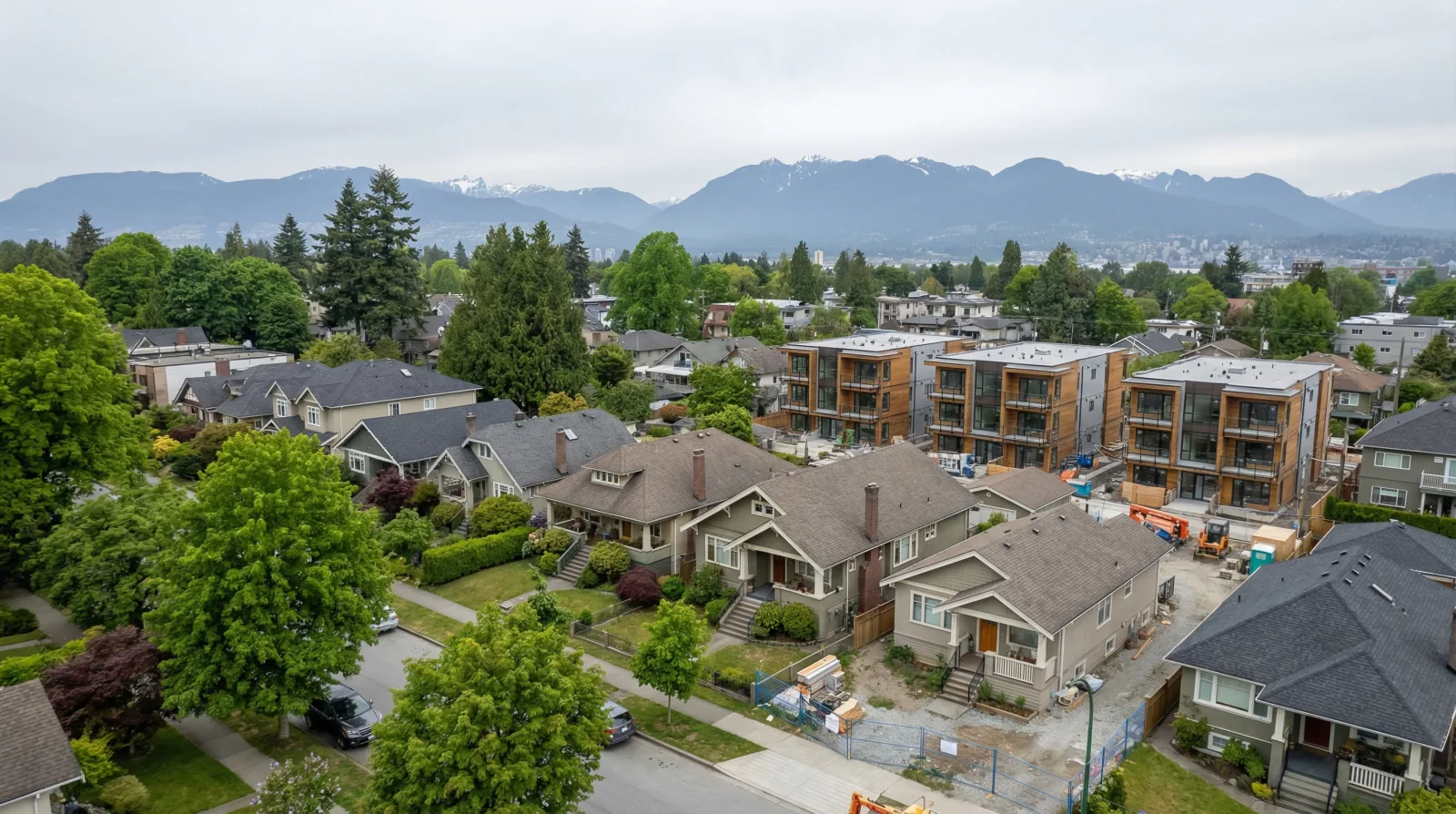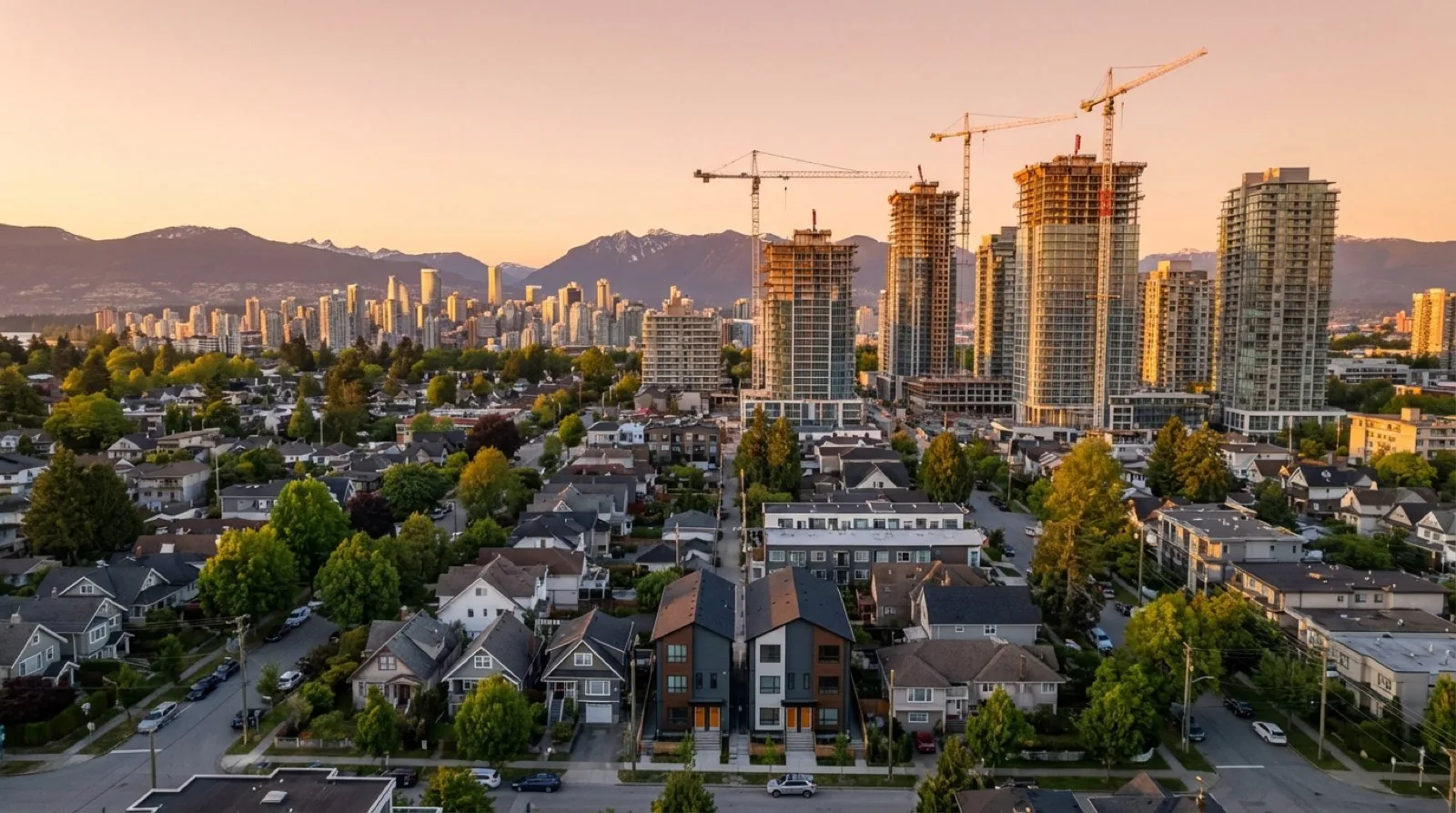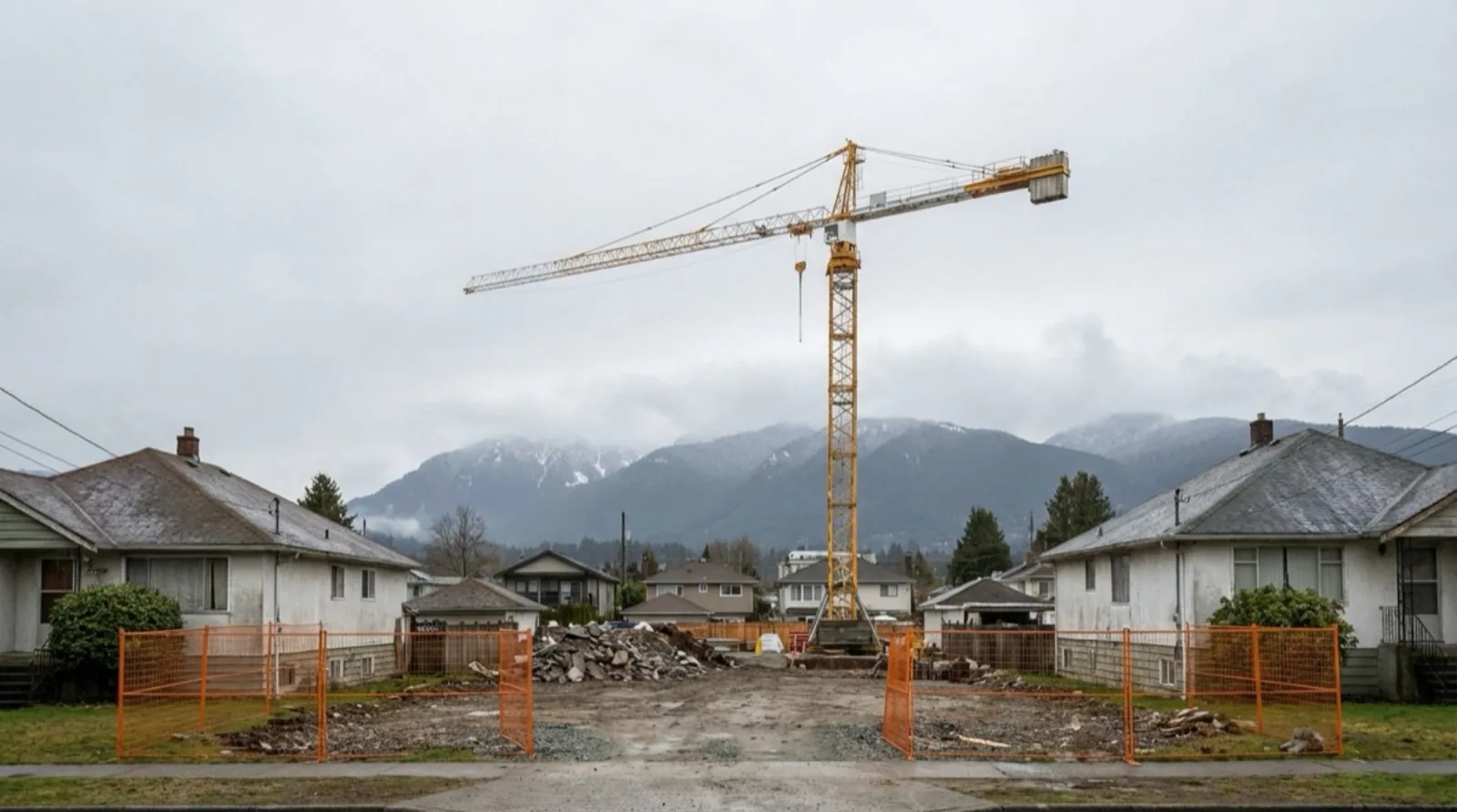

Empty Vancouver construction site with crane idle against North Shore mountains, showing paused residential development
Market Analysis Featured

2026: The Year of Underbuilding

6 min read

Condo launches delayed. Builders pulling back. Multiplex adoption below capacity. BC's supply pipeline is contracting -- and fewer starts now means fewer units in 2027-2028. Here's what that means for your property.

Key takeaway

Analysis of BC's forming supply gap in 2026.

Condo developers delaying launches, builders reducing speculative starts, multiplex adoption far below zoning capacity, investors holding capital. Housing pipeline lag means fewer starts in 2025-2026 produces fewer units in 2027-2028. BC still has population growth and structural undersupply.

Historical pattern: when confidence returns, demand reactivates faster than supply responds, causing sharp transaction increases, rising land values, and margin compression for late entrants. Projects with strong margins built during the pause are positioned to deliver into the next tightening phase.

What this covers

  • supply pipeline contraction
  • condo launch delays BC
  • housing pipeline lag
  • margin of safety development
  • demand vs supply timing
  • disciplined positioning 2026
supply-gap BC-housing underbuilding pipeline-contraction multiplex-timing Vancouver

A supply gap is forming. Most people won’t notice until it’s too late.

Condo developers across BC are delaying launches. Builders are pulling back on spec starts. Homeowners aren’t building multiplexes at anywhere near the scale zoning allows. And investors are sitting on the sidelines, waiting for “clarity.”

Transaction activity has slowed. But the demand underneath it hasn’t gone anywhere.

That disconnect is the story of 2026.

What people miss about a slowdown

When activity slows, two things happen at once. Demand pauses. Supply creation contracts.

The second one is the one most people underestimate.

Housing doesn’t appear overnight. It moves through a pipeline: land acquisition, entitlement, design, financing, construction, delivery. If fewer projects enter that pipeline in 2025-2026, fewer units get delivered in 2027-2028.

That’s not a guess. That’s how construction works. And it creates a future supply gap that takes years to fill.

BC’s specific problem

British Columbia still has population growth — down from peaks, but projected to grow on a net basis through 2024-2028. The province still has structural housing undersupply that predates any recent slowdown.

Yet in early 2026:

  • Major condo launches are being postponed
  • Smaller builders are cautious, pulling back on new projects
  • Multiplex adoption is far below theoretical zoning capacity

That combination doesn’t eliminate demand. It delays fulfillment. And delayed fulfillment, in a market with structural undersupply, creates pressure that builds quietly until it doesn’t.

What typically follows

When confidence returns — whether from rate stability, affordability improvement, or economic recovery — demand reactivates faster than supply can respond.

The historical pattern is consistent:

  • Sharp increases in transaction volume
  • Rising land values
  • Rising construction costs
  • Margin compression for late entrants

By the time the market feels “safe,” costs are higher and spreads are thinner. The window for strong economics closes precisely when most people feel ready to act.

Anyone who’s been through a Vancouver cycle knows this rhythm. 2016-2017. 2020-2021. The setup looks the same every time.

The real question

The strategic question isn’t “are prices down?”

It’s: “will supply be sufficient two years from now?”

If today’s pause results in reduced pipeline delivery, the next expansion phase will face inventory shortages. That’s arithmetic, not speculation.

Those who structure resilient projects today — with strong margins and zoning-driven value — are positioned to sell into that tightening phase. Not because they predicted the future correctly. But because they entered when competition was low and capacity was available.

Why the biggest margins carry the least risk

This sounds counterintuitive, but it’s true: the largest profit margins carry the lowest risk.

Why? Because they can absorb:

  • Further price softness
  • Cost increases beyond projections
  • Slower absorption timelines

Projects built on thin margins can’t survive volatility. One cost overrun, one delayed sale, and the economics collapse. Projects built with a margin of safety can weather all of it and still deliver returns.

That’s the difference between speculative building and disciplined development.

The disciplined move for 2026

2026 may not be the year of acceleration. It may be the year of positioning.

Developers who pause entirely risk entering the next cycle at peak land and labour costs. Developers who build only when headlines turn positive usually build into those same rising costs.

The disciplined move is different: build inventory when pipeline contraction is happening. Deliver into the next demand expansion. Use the quiet period to lock in trades, secure materials, and move through permitting without the backlog pressure that comes with a hot market.

Vancouver’s multiplex pipeline has 518 applications filed and only 16 completions. The gap between what’s approved and what’s built tells you where things stand — and where the opportunity sits.

Where does your property fit?

The question isn’t whether the market will recover. It will. The question is whether your property qualifies as a resilient, margin-protected opportunity in this cycle.

Go to VanPlex and see where your property sits in the PlexRank distribution. Two minutes tells you whether you’re in the top 2% that works in any market — or the 98% that needs perfect conditions.


David Babakaiff, CEO & Co-Founder of VanPlex PlexRank™ | Profit with Multiplex
Frequently asked questions

Why does a slowdown in housing activity create a future supply gap?

Housing moves through a pipeline of land acquisition, entitlement, design, financing, construction, and delivery. If fewer projects enter that pipeline during 2025 and 2026, fewer units get delivered in 2027 and 2028, since a project cannot be completed faster than the pipeline stages it must pass through. The post frames this as a mechanical consequence of how construction works, not a prediction about prices.

What signs point to BC underbuilding in early 2026?

The post lists major condo launches being postponed, smaller builders pulling back on new projects, and multiplex adoption running far below the theoretical capacity that current zoning allows. It notes British Columbia still has population growth projected through 2024 to 2028 and a structural housing undersupply that predates the recent slowdown, meaning underlying demand has not gone away even as new construction activity pauses.

How many multiplex applications has Vancouver approved compared to how many are actually built?

Vancouver's multiplex pipeline has 518 applications filed but only 16 completions, according to the post. It frames the gap between what has been approved and what has actually been built as a sign of how far multiplex adoption remains below the pace zoning would technically allow.

What typically happens to a housing market after a slowdown like this one?

The post describes a consistent historical pattern once confidence returns, whether from interest rate stability, affordability improvement, or economic recovery: transaction volume rises sharply, land values increase, construction costs rise, and profit margins compress for developers who enter late. It points to the 2016 to 2017 and 2020 to 2021 Vancouver cycles as prior examples of this same rhythm.

Why does the post argue that higher-margin projects carry lower risk during a slowdown?

A project built with a larger profit margin can absorb further price softness, cost increases beyond the original projections, and slower unit absorption timelines without the economics collapsing. The post contrasts this with a thin-margin project, where a single cost overrun or delayed sale can be enough to eliminate the expected return, making margin of safety a risk-management tool rather than just a profit target.

What is the 'disciplined move' the post recommends for developers in 2026?

The post recommends building inventory during the current pipeline contraction so the project is ready to deliver into the next demand expansion, rather than pausing entirely or waiting until headlines turn positive, since both of those paths mean building into rising land and labour costs later. It frames the quiet period as an opportunity to lock in trades, secure materials, and move through permitting without the backlog pressure that comes with a hot market.

What is the real strategic question homeowners should ask about the 2026 market slowdown?

The post argues the relevant question is not whether prices are currently down, but whether housing supply will be sufficient two years from now. If the current pause in project starts reduces how much gets delivered, the post reasons that the next demand expansion will run into inventory shortages, which it treats as a matter of pipeline arithmetic rather than a speculative forecast.

How can a homeowner tell if their property is a resilient opportunity in this market?

The post points to VanPlex's PlexRank tool as a way to see where a specific property sits in the distribution of projected returns, distinguishing properties that work in any market condition from those that only work under ideal conditions. It frames checking a property's PlexRank position as a two-minute step before deciding whether to build during the current slowdown or wait for the market to recover.

Free 12-page guide for Vancouver-area homeowners. Build, sell, hold, or partner — side-by-side comparison of the numbers, timeline, and risk on each path.

Verified phone required. We'll text you the link in 60 seconds.

David Babakaiff

David Babakaiff

Co-Founder, VanPlex | 25+ Years BC Construction

David Babakaiff is Co-Founder of VanPlex with 25+ years scaling BC construction. He led Alair Homes Vancouver to the 2024 HAVAN Award for Best Multiplex Unit in the GVRD. VanPlex’s PlexRank™ algorithm scores residential parcels across BC for multiplex conversion potential under Bill 44.

Want insights like this delivered weekly?

Join 2,500+ property owners getting ROI case studies, market data, and exclusive opportunities.

No spam. Unsubscribe anytime.