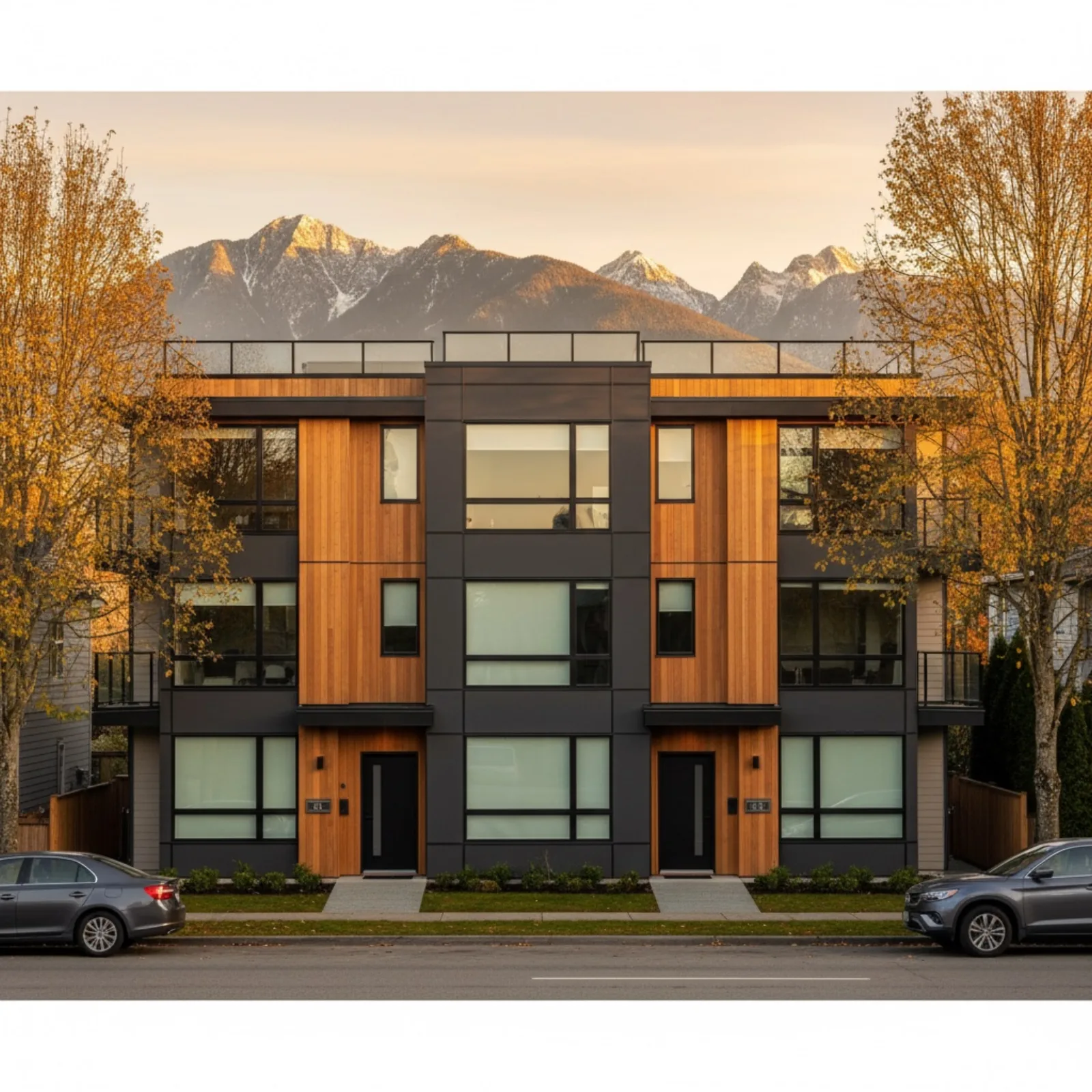
An overhead desk scene with a Canadian passport, a small model house, tax forms, and a calculator, representing the cross-border tax a Canadian expat faces on Vancouver property
Guides

The Tax Traps That Catch Canadian Expats Who Own Vancouver Property

6 min read

You can own Vancouver property from abroad. The cost is the tax: 25% withheld on rent, 25% held back on a sale without a clearance certificate, and two vacancy taxes on an empty home. Here is each trap, and how to avoid it.

Key takeaway

A plain-English guide to the four tax rules that apply to a Canadian non-resident who owns Vancouver property: (1) a 25% withholding on gross rental income that can be reduced to net income by filing Form NR6 and a Section 216 return; (2) a Section 116 clearance certificate, without which a buyer must withhold 25% of the gross sale price, obtained via Form T2062; (3) the BC speculation and vacancy tax, charged at 1% of assessed value for citizens and permanent residents and 3% for foreign owners and satellite families for the 2026 tax year; and (4) the separate City of Vancouver Empty Homes Tax at 3% of assessed value.

It highlights the satellite-family rule, under which a Canadian citizen earning abroad with little Canadian-reported income can face the 3% speculation rate despite being a citizen.

What this covers

  • 25% non-resident rental withholding and Form NR6
  • Section 116 clearance certificate and Form T2062
  • BC speculation and vacancy tax 1% vs 3% for 2026
  • Vancouver Empty Homes Tax 3%
  • satellite-family rule for Canadian citizens abroad
canadians-abroad non-resident-tax section-116 speculation-tax empty-homes-tax expat

You are allowed to own Vancouver property as a Canadian living abroad. The part that catches people is the tax that comes with it. If you are a non-resident for tax purposes, four rules apply that residents rarely think about — on your rent, on your sale, and twice on an empty home. Miss them and they are expensive. Plan for them and they are routine.
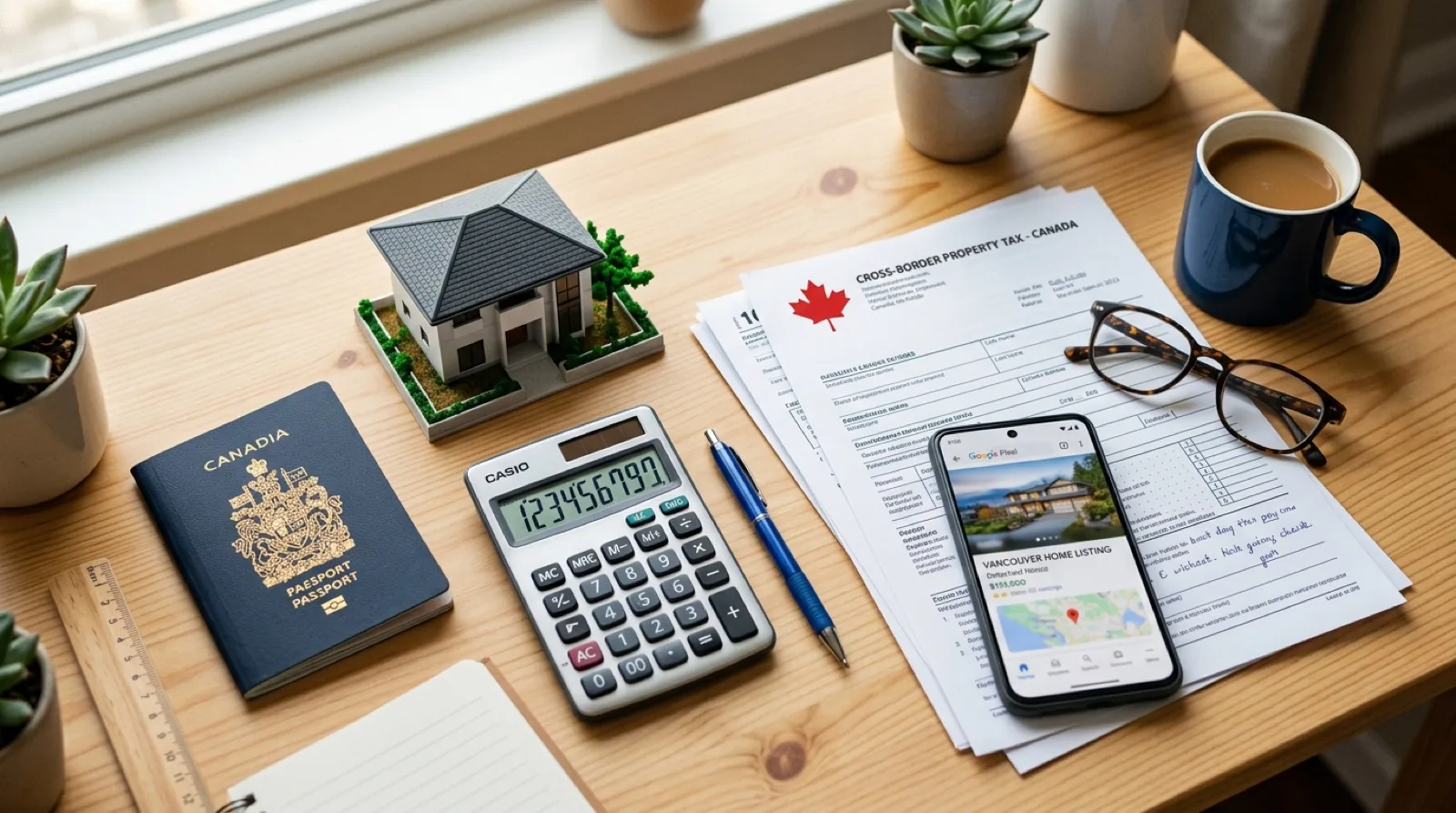
An overhead desk scene with a Canadian passport, a small model house, tax forms, and a calculator, representing the cross-border tax a Canadian expat faces on Vancouver property

The four traps at a glance

  • Rent: 25% of your gross rent is withheld for the CRA by default — unless you elect to be taxed on net income.
  • Sale: without a Section 116 clearance certificate, the buyer holds back 25% of the full sale price.
  • Empty home, twice: the BC speculation tax and the Vancouver Empty Homes Tax can both land on the same vacant home.
  • The satellite-family catch: a citizen abroad can still face the higher speculation rate.

Trap 1: 25% withheld on your rent

If you rent out a Vancouver property as a non-resident, the CRA requires 25% of your gross rent — before any expenses — to be withheld every month and remitted.

The fix is well-worn. File Form NR6 with a Canadian-resident agent, and the 25% applies to your net rent after expenses instead. Then a Section 216 return reconciles the year and often refunds tax over-withheld. The trap is doing nothing and letting 25% of gross leave every month.

Trap 2: the Section 116 certificate when you sell

This one ambushes people at closing. When a non-resident sells Canadian real estate, the buyer is legally required to withhold 25% of the gross sale price — a quarter of the whole price, not your profit — unless you first obtain a Certificate of Compliance under Section 116.

You apply with Form T2062, and the CRA issues the certificate once tax on the actual gain is paid or secured — far less than 25% of the price. The catch is timing: the process takes weeks, so you start before closing, not after.

Trap 3 and 4: two vacancy taxes on one empty home

The most expensive plan for an owner abroad is “leave it empty for now.” In Vancouver, an empty home can be hit by two separate vacancy taxes in the same year:

  • The BC speculation and vacancy tax. For the 2026 tax year, the rate is 1% of assessed value for citizens and permanent residents, and 3% for foreign owners and satellite families. Every owner in a taxable area must declare each year.
  • The City of Vancouver Empty Homes Tax, a separate 3% of assessed value with its own declaration.

The usual way out of both is to actually rent the home to a qualifying tenant. That is one reason building a multiplex and holding the units as rentals can fit an owner abroad — occupied homes do not sit empty.

The catch that surprises citizens

People assume “I am a citizen, so I pay the low 1% speculation rate.” Not always. The 3% rate also applies to a satellite family — broadly, a household that reports the majority of its worldwide income outside Canadian tax returns. A Canadian citizen earning abroad with little income reported in Canada can be pulled into the 3% bracket. Citizenship clears the buyer ban; it does not automatically buy the lower vacancy rate.

Plan it once, then stop worrying

None of these are reasons to avoid owning in Vancouver. They are reasons to set things up early. The full, sourced walkthrough is in our non-resident tax guide, part of the hub for Canadians living abroad.

This post is general information, not tax or legal advice. Rates and rules change. Confirm anything that affects a real decision with a cross-border tax advisor and a BC-licensed real estate lawyer.
Frequently asked questions

Can a Canadian living abroad still own property in Vancouver?

Yes. Canadian citizens living abroad are allowed to own Vancouver property. The part that catches people is not ownership itself but the tax that comes with it once someone becomes a non-resident for tax purposes, since four separate rules apply on rent, on sale, and on an empty home that residents rarely think about.

How much tax is withheld on rental income for a non-resident owner?

The CRA requires 25 percent of gross rent, meaning before any expenses are deducted, to be withheld every month and remitted when a non-resident rents out a Vancouver property. The fix is to file Form NR6 with a Canadian-resident agent, which lets the 25 percent apply to net rent after expenses instead, followed by a Section 216 return that reconciles the year and often refunds tax that was over-withheld.

What happens when a non-resident sells Canadian real estate without a clearance certificate?

When a non-resident sells Canadian real estate, the buyer is legally required to withhold 25 percent of the gross sale price, a quarter of the entire price rather than just the profit, unless the seller first obtains a Certificate of Compliance under Section 116. The seller applies using Form T2062, and the CRA issues the certificate once tax on the actual gain is paid or secured, which is far less than 25 percent of the price.

How long does it take to get a Section 116 clearance certificate?

The Section 116 certificate process takes weeks, so a non-resident seller needs to start the application before closing, not after. Missing this step means the buyer withholds 25 percent of the gross sale price at closing regardless of the actual gain on the property.

Can an empty home in Vancouver be taxed twice for being vacant?

Yes. An empty home in Vancouver can be hit by two separate vacancy taxes in the same year: the BC speculation and vacancy tax, and the City of Vancouver Empty Homes Tax, a separate 3 percent of assessed value with its own declaration. The usual way to avoid both is to actually rent the home to a qualifying tenant.

What is the BC speculation and vacancy tax rate for 2026?

For the 2026 tax year, the BC speculation and vacancy tax rate is 1 percent of assessed value for citizens and permanent residents, and 3 percent for foreign owners and satellite families. Every owner in a taxable area must declare each year regardless of which rate applies to them.

Can a Canadian citizen still be charged the higher 3 percent speculation tax rate?

Yes. The 3 percent rate also applies to a satellite family, broadly defined as a household that reports the majority of its worldwide income outside Canadian tax returns. A Canadian citizen earning abroad with little income reported in Canada can be pulled into the 3 percent bracket even though citizenship clears the ban on foreign buyers, since citizenship does not automatically qualify an owner for the lower 1 percent vacancy rate.

Why might building a multiplex suit a Canadian owner living abroad?

Building a multiplex and holding the units as rentals is one way an owner abroad can avoid both the BC speculation and vacancy tax and the Vancouver Empty Homes Tax, since occupied homes do not sit empty. Renting to a qualifying tenant is the usual way out of both vacancy taxes, and multiple rental units on one property give an owner more than one chance to keep the property occupied.

Free 12-page guide for Vancouver-area homeowners. Build, sell, hold, or partner — side-by-side comparison of the numbers, timeline, and risk on each path.

Verified phone required. We'll text you the link in 60 seconds.

David Babakaiff

David Babakaiff

Co-Founder, VanPlex | 25+ Years BC Construction

David Babakaiff is Co-Founder of VanPlex with 25+ years scaling BC construction. He led Alair Homes Vancouver to the 2024 HAVAN Award for Best Multiplex Unit in the GVRD. VanPlex’s PlexRank™ algorithm scores residential parcels across BC for multiplex conversion potential under Bill 44.

Want insights like this delivered weekly?

Join 2,500+ property owners getting ROI case studies, market data, and exclusive opportunities.

No spam. Unsubscribe anytime.