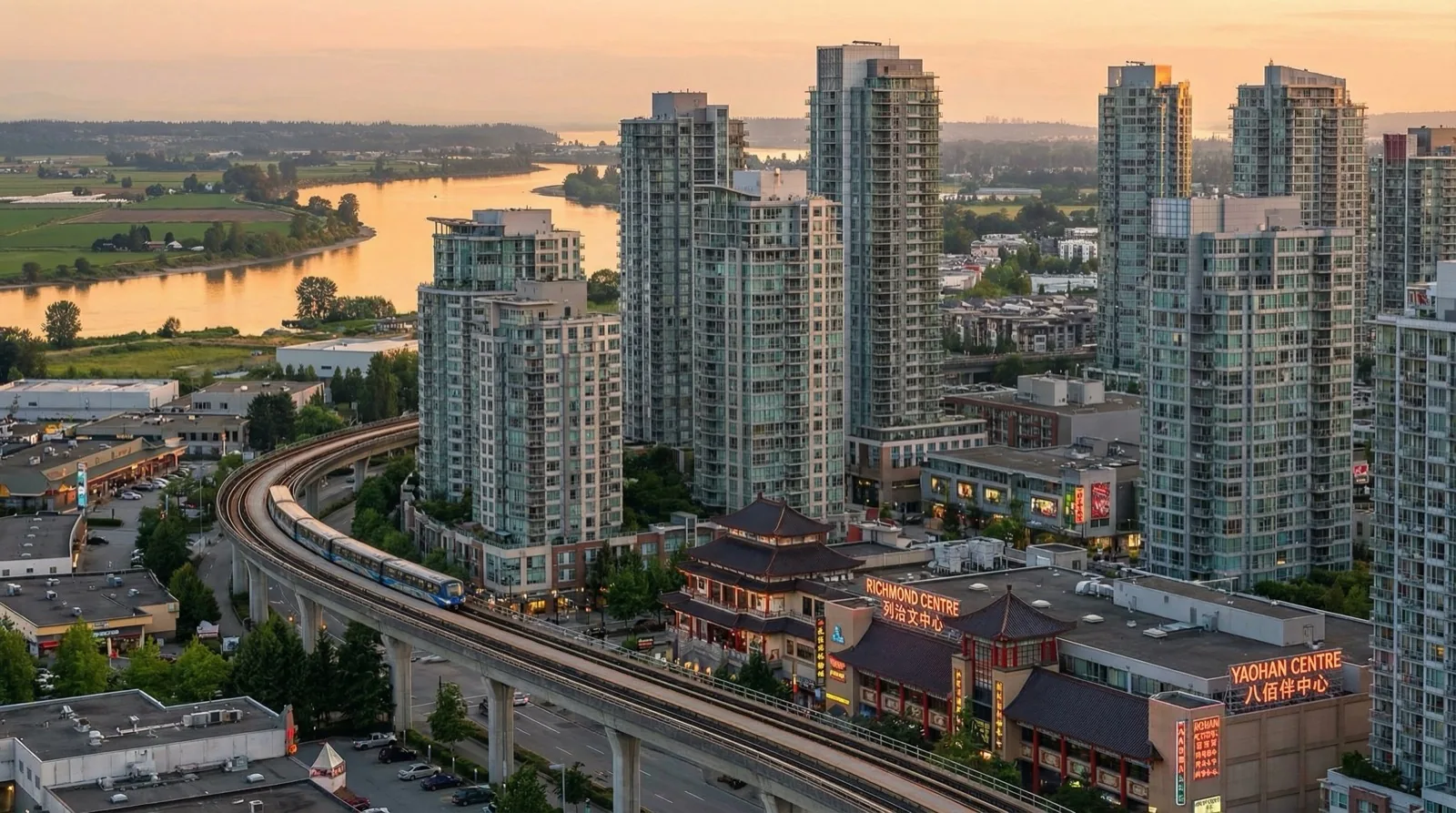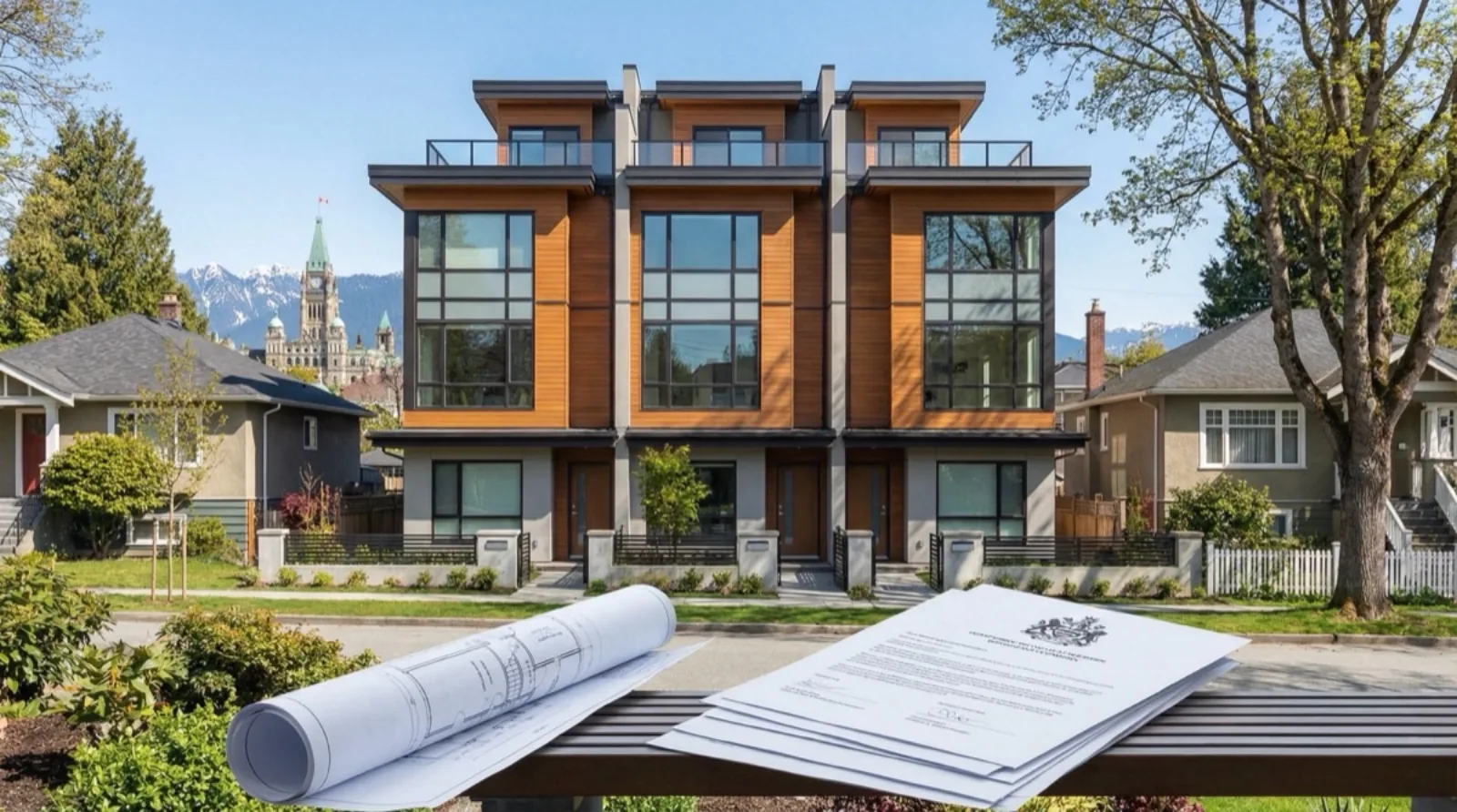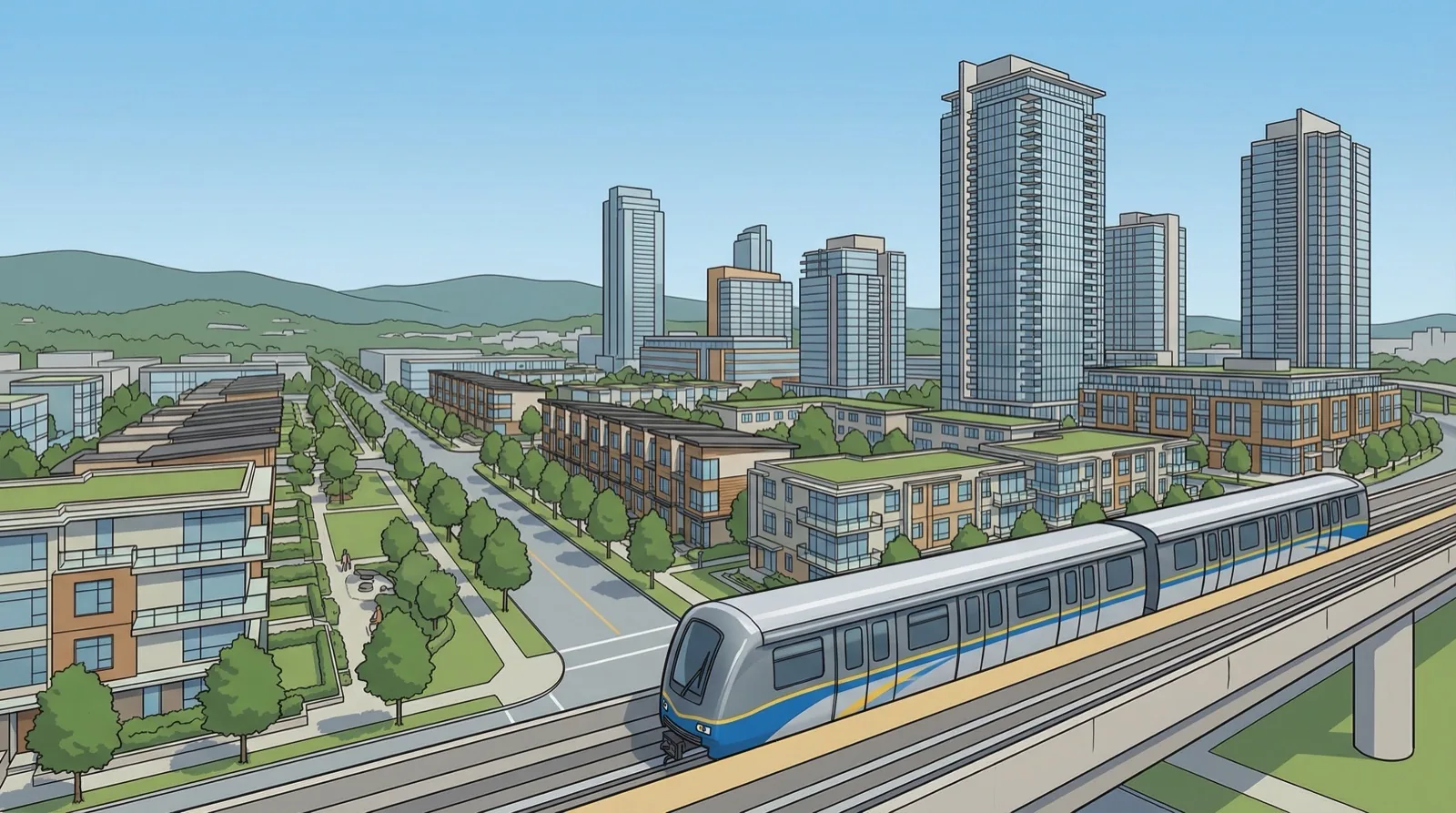

Surrey cityscape with SkyTrain and residential development potential
Policy Analysis Featured

Surrey SSMUH 2026: What Homeowners Need to Know

7 min read

BC's largest city by land area faces the June 2026 Bill 25 deadline. With expanding SkyTrain access and lower land costs, Surrey presents compelling multiplex opportunities.

Key takeaway

Guide to Surrey's SSMUH compliance requirements and multiplex opportunities.

Covers June 2026 Bill 25 deadline, SkyTrain station 6-unit eligibility zones (Surrey Central, King George, Gateway, Scott Road), future Surrey-Langley SkyTrain expansion impact, and development economics showing 35-40% lower costs than Vancouver.

What this covers

  • Surrey Bill 25 compliance
  • SkyTrain transit zones
  • Surrey-Langley expansion
  • Surrey development economics
  • timeline expectations
surrey ssmuh bill-25 skytrain surrey-langley-skytrain transit-oriented

Surrey is British Columbia’s largest city by land area and second-largest by population. With the June 2026 Bill 25 compliance deadline approaching, Surrey homeowners are asking: what does SSMUH mean for my property?

Surrey’s Unique Position in Metro Vancouver

Surrey presents a compelling multiplex opportunity for several reasons:

FactorSurrey Advantage
Average Lot SizeLarger than Vancouver/Burnaby
Land Costs30-40% lower than Vancouver
Transit AccessExpanding SkyTrain network
Population GrowthFastest-growing city in BC
Zoning TimelineMust comply by June 2026

The combination of larger lots, lower land costs, and expanding transit infrastructure positions Surrey as a high-potential market for multiplex development once compliance is achieved.

What Bill 25 Requires from Surrey

The Province’s SSMUH policy manual sets clear minimums that Surrey must permit:

Small Lots (≤280 m² / 3,014 sq ft)

  • Minimum 3 dwelling units
  • Applies throughout urban areas

Standard Lots (>280 m²)

  • Minimum 4 dwelling units
  • Most common Surrey lot configuration

Near Frequent Transit (>280 m², within 400m)

  • Minimum 6 dwelling units
  • SkyTrain stations: Surrey Central, King George, Gateway, Scott Road
  • Frequent bus routes qualifying for 15-minute service

Surrey’s Transit Network: The 6-Unit Opportunity

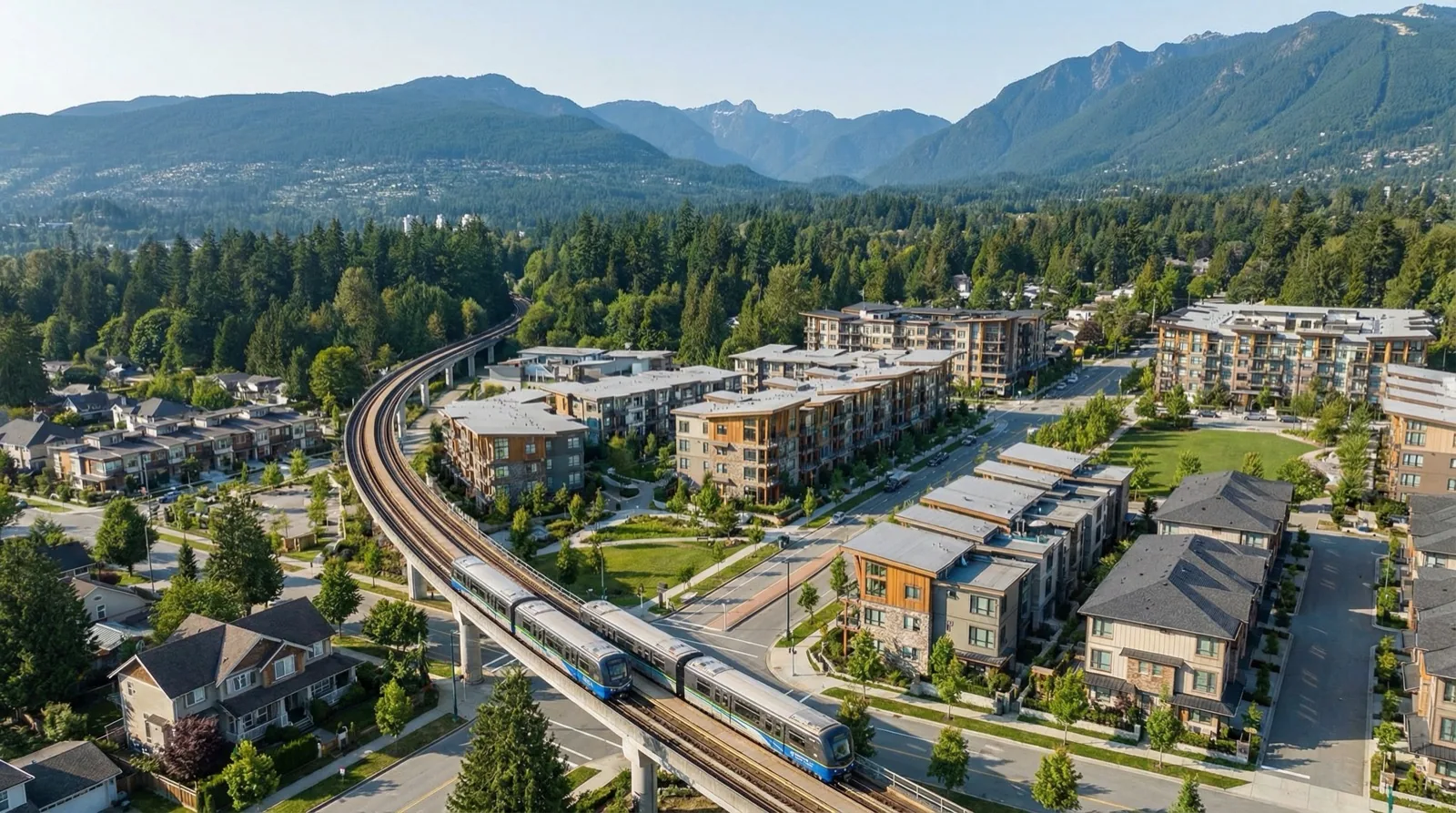
Surrey’s expanding transit infrastructure creates significant opportunities:

Current SkyTrain Stations (400m radius = 6-unit zone):

  • Surrey Central Station
  • King George Station
  • Gateway Station
  • Scott Road Station

Future SkyTrain Extension (Surrey-Langley SkyTrain):

  • Fleetwood
  • Clayton
  • Cloverdale
  • Langley City Centre

Properties near future stations represent strategic acquisition opportunities. Once the line opens, these areas will qualify for maximum 6-unit density under provincial rules.

The Surrey Cost Advantage

Development economics favor Surrey over more expensive markets:

Cost ComponentVancouverSurreyDifference
Typical Lot$2.5-3.5M$1.2-1.8M50-60% less
Construction$450-500/sf$400-450/sf10-15% less
DCCs per unit$35-45K$25-35K20-30% less
Total Project$5-6M$3-4M35-40% less

Lower input costs translate to stronger returns and broader viability across more properties.

Timeline: What to Expect

Now - June 2026

  • Surrey drafting SSMUH-compliant bylaws
  • Homeowners can begin feasibility analysis
  • Land assembly opportunities available

June 30, 2026

  • Bill 25 compliance deadline
  • Surrey must permit minimum unit counts
  • Development applications accepted

2026-2027

  • First wave of Surrey multiplex permits
  • Market testing of new product type
  • Pricing discovery phase

Why Surrey Matters for Regional Housing

Surrey is projected to add 300,000+ residents by 2050. The current housing stock—predominantly single-family—cannot absorb this growth. SSMUH compliance will unlock thousands of lots for gentle density development.

For homeowners currently sitting on larger lots near transit, the value proposition is clear: land zoned for 1 unit today will be zoned for 4-6 units by mid-2026.

Your Next Steps

For Surrey Homeowners:

  1. Check your lot’s proximity to SkyTrain stations and frequent bus routes
  2. Understand your lot size relative to the 280m² threshold
  3. Run a preliminary feasibility analysis
  4. Monitor City of Surrey’s bylaw development process

For Investors:

  1. Identify properties within 400m of current and future SkyTrain stations
  2. Analyze lot configurations for optimal unit counts
  3. Consider land assembly opportunities before June 2026
  4. Build relationships with Surrey-experienced builders and designers

Visit vanplex.ca to check if your Surrey property qualifies and see projected returns under the new zoning framework. The for homeowners guide also explains what questions to ask before moving forward.


David Babakaiff, Co-Founder of VanPlex

PlexRank™ | Profit with Multiplex
Frequently asked questions

What unit counts does Bill 25 require Surrey to permit?

The province's SSMUH policy manual requires Surrey to permit a minimum of 3 dwelling units on lots of 280 square metres or less, 4 dwelling units on standard lots over 280 square metres, which the article describes as the most common Surrey lot configuration, and 6 dwelling units on lots over 280 square metres within 400 metres of frequent transit.

Which Surrey SkyTrain stations create 6-unit eligibility zones today?

The article names four current SkyTrain stations whose 400-metre radius creates a 6-unit zone: Surrey Central, King George, Gateway, and Scott Road. It also names frequent bus routes qualifying for 15-minute service as another path to 6-unit eligibility, since the province's 6-unit tier applies to any lot over 280 square metres within 400 metres of frequent transit, not only SkyTrain stations.

How will the Surrey-Langley SkyTrain extension affect future multiplex eligibility?

The article identifies four future stations on the Surrey-Langley SkyTrain extension: Fleetwood, Clayton, Cloverdale, and Langley City Centre. It describes properties near these future stations as strategic acquisition opportunities, since once the line opens those areas will qualify for the maximum 6-unit density under provincial rules.

How much cheaper is multiplex development in Surrey compared to Vancouver?

The article's cost comparison shows a typical Surrey lot at $1.2 million to $1.8 million versus $2.5 million to $3.5 million in Vancouver, a 50 to 60 percent difference. Construction runs $400 to $450 per square foot in Surrey versus $450 to $500 in Vancouver, development cost charges per unit run $25,000 to $35,000 versus $35,000 to $45,000, and total project cost runs $3 million to $4 million versus $5 million to $6 million, a 35 to 40 percent difference overall.

What is the timeline for Surrey's Bill 25 compliance and multiplex development?

Surrey was drafting SSMUH-compliant bylaws in the period before the June 30, 2026 Bill 25 compliance deadline, after which Surrey must permit the minimum unit counts and accept development applications. The article projects the first wave of Surrey multiplex permits and market pricing discovery happening in 2026 and 2027.

Why does Surrey matter for regional housing supply?

The article states Surrey is projected to add more than 300,000 residents by 2050, and its current housing stock, predominantly single-family, cannot absorb this growth. SSMUH compliance is described as unlocking thousands of lots for gentle density development, turning land zoned for 1 unit today into land zoned for 4 to 6 units by mid-2026.

What advantages does Surrey have as a multiplex market beyond lower costs?

Beyond 30 to 40 percent lower land costs than Vancouver, the article lists a larger average lot size than Vancouver or Burnaby, an expanding SkyTrain network, and the fastest population growth of any city in BC as factors combining to position Surrey as a high-potential multiplex market once compliance is achieved.

What should a Surrey homeowner do first to check their multiplex eligibility?

The article's action plan for homeowners starts with checking the lot's proximity to SkyTrain stations and frequent bus routes, then understanding the lot size relative to the 280-square-metre threshold, running a preliminary feasibility analysis, and monitoring the City of Surrey's bylaw development process as the June 2026 deadline approaches.

Free 12-page guide for Vancouver-area homeowners. Build, sell, hold, or partner — side-by-side comparison of the numbers, timeline, and risk on each path.

Verified phone required. We'll text you the link in 60 seconds.

David Babakaiff

David Babakaiff

Co-Founder, VanPlex | 25+ Years BC Construction

David Babakaiff is Co-Founder of VanPlex with 25+ years scaling BC construction. He led Alair Homes Vancouver to the 2024 HAVAN Award for Best Multiplex Unit in the GVRD. VanPlex’s PlexRank™ algorithm scores residential parcels across BC for multiplex conversion potential under Bill 44.

Want insights like this delivered weekly?

Join 2,500+ property owners getting ROI case studies, market data, and exclusive opportunities.

No spam. Unsubscribe anytime.