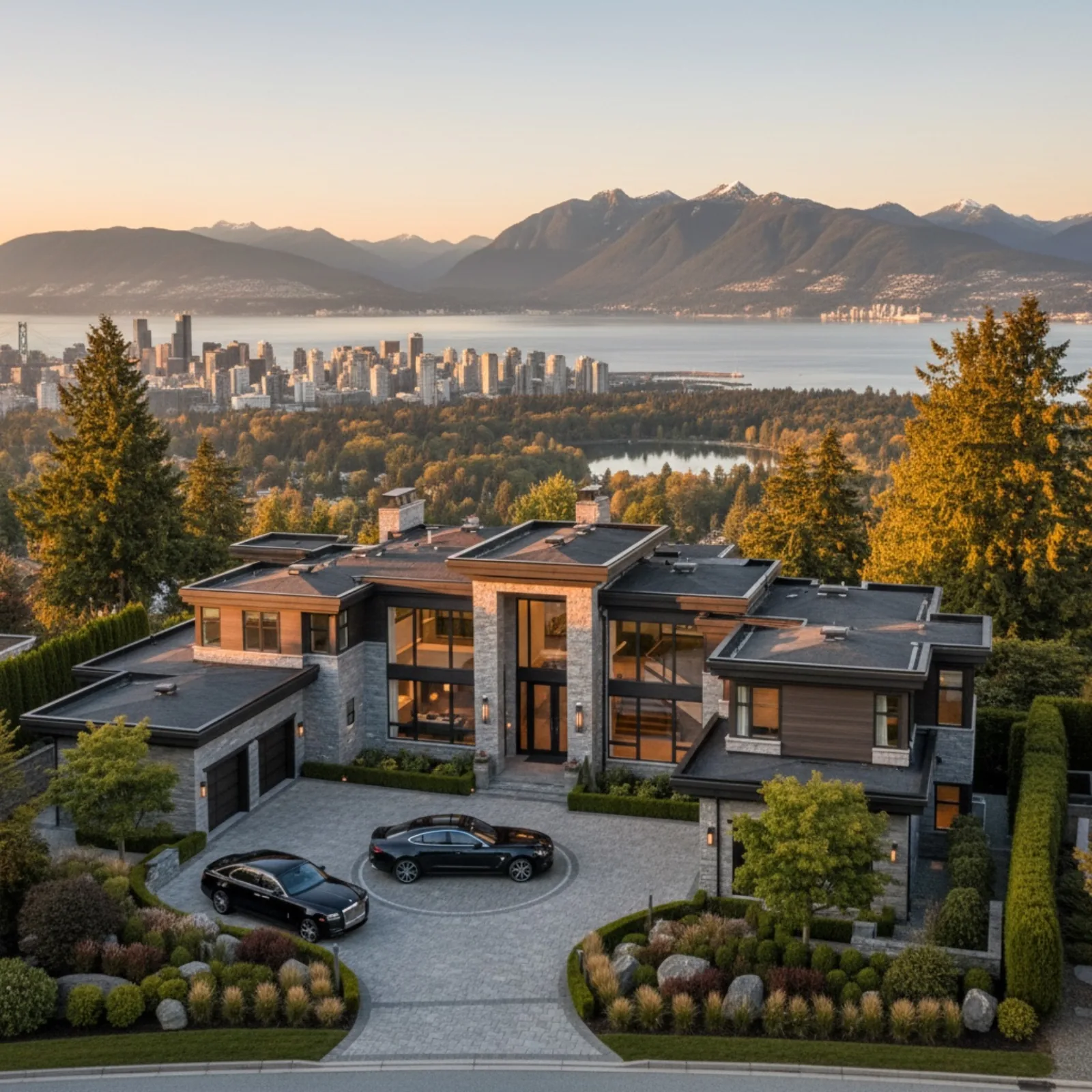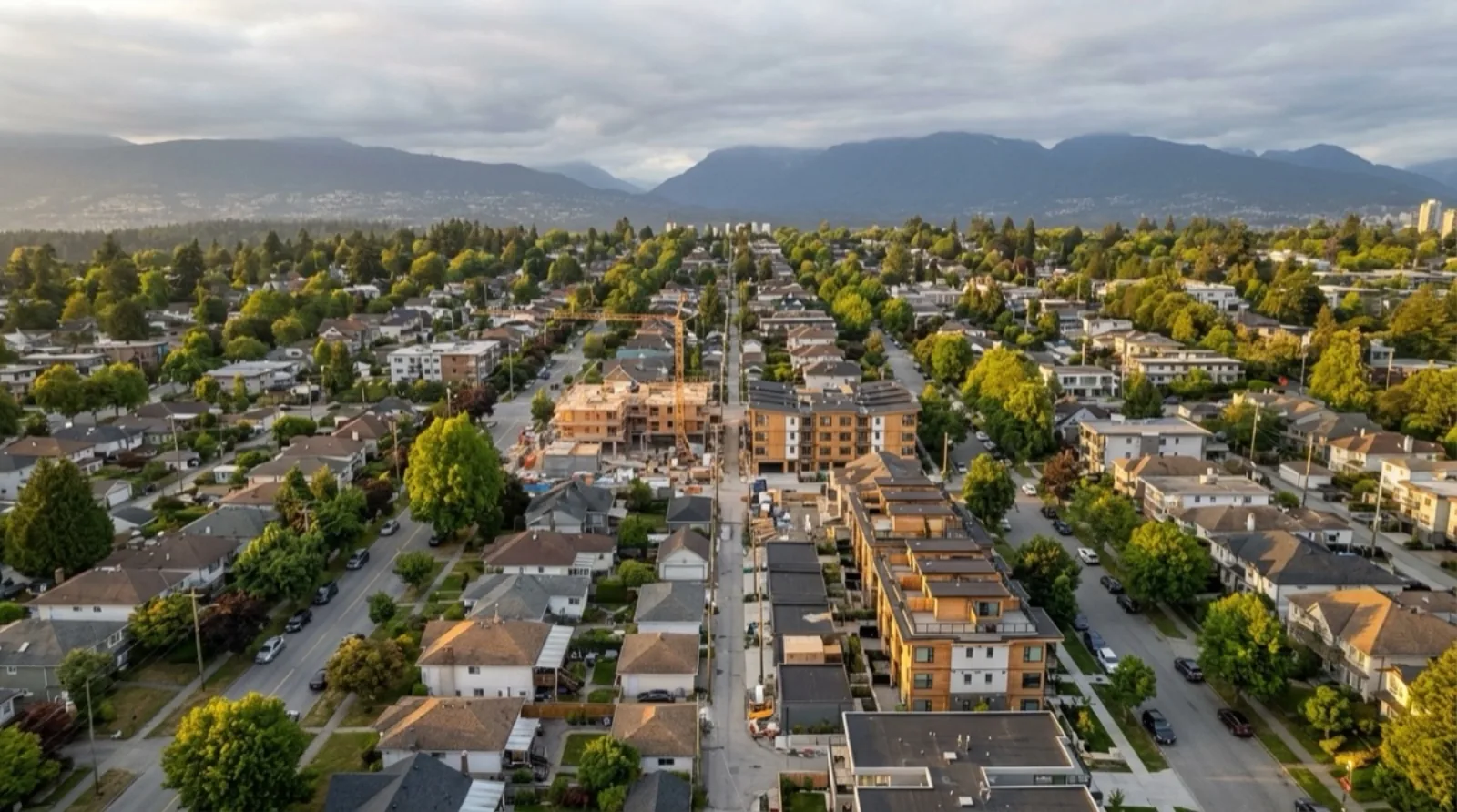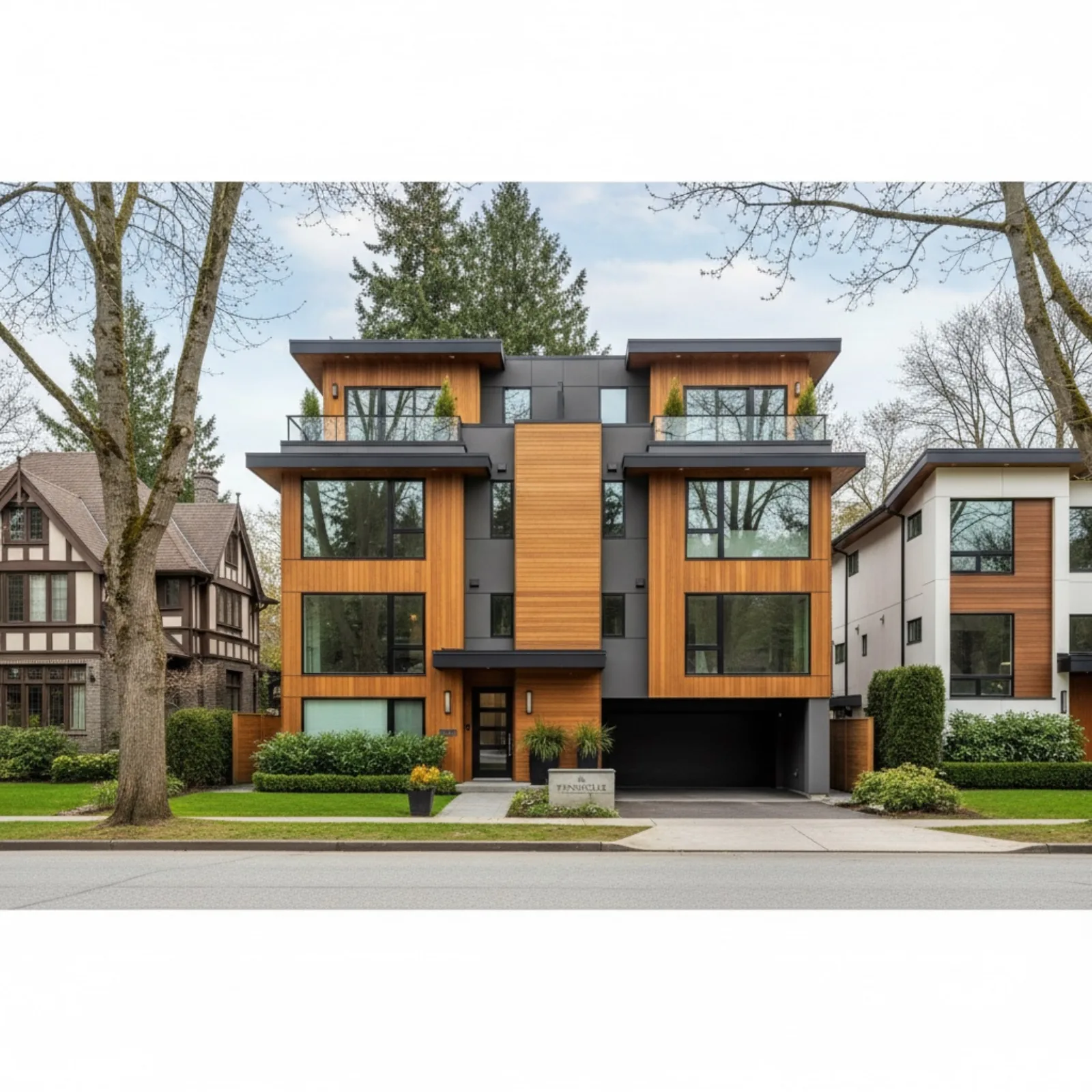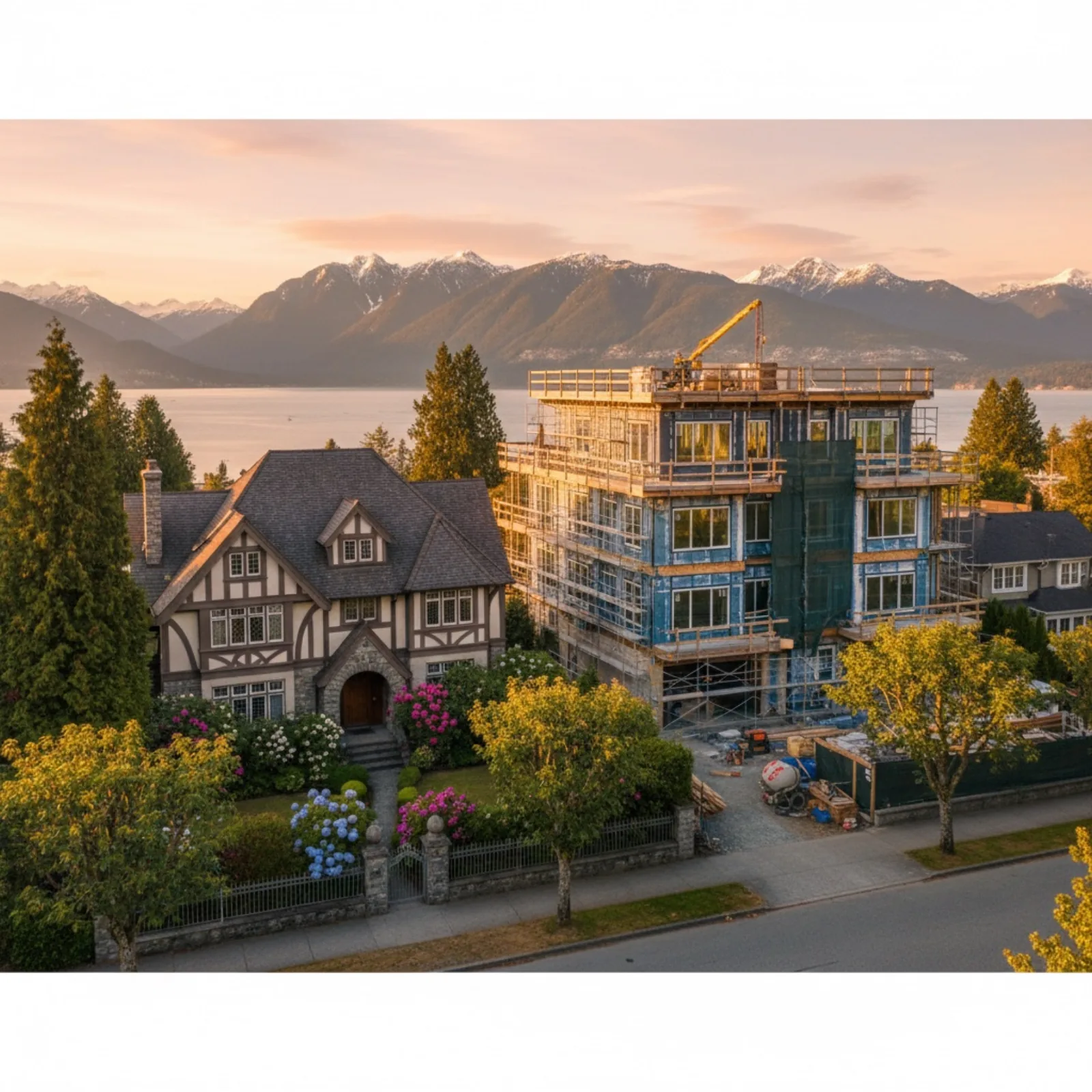

If you live in Kitsilano, Point Grey, or parts of the City of Vancouver, you’ve likely felt it: a strange “chill” in the single-family market. High-end listings are sitting longer. Sales-to-active ratios in Shaughnessy hit 0.05, Point Grey 0.11, and West Vancouver 0.08 (Q4 2025 data). The culprit isn’t just interest rates—it’s Multiplex Anxiety.
The Fear Driving Luxury Buyers Away
The psychology is simple: “If I buy this $5M character home, will the lot next door become a construction zone for two years only to end up blocking my sun with a 6-unit multiplex?”
This fear is creating a “Buyer’s Freeze.” According to BC Real Estate Association data (December 2025), luxury transaction volume in these areas remains 10-15% below the 10-year average, versus 20-25% below for the broader market. Inventory is accumulating, days on market are extending, and traditional luxury buyers are hesitating.
But here’s what the scared money is missing: for the savvy homeowner, this anxiety is hiding a massive financial “floor.”
The “Aesthetic Dip” vs. The “Asset Floor”
Let’s acknowledge reality. In the short term, being next to a construction site is a headache. If a massive 6-plex goes up next door, the “luxury appeal” of your single-family residence might take a 5-10% hit in the eyes of a traditional family buyer.
But here’s the 2026 Bill 44 reality: Your property is no longer just a “house.” It is a development parcel with a by-right entitlement.
While the residential buyer worries about shadows from the 6-plex and extra cars on the street, the institutional and small-scale developer is looking at your lot and thinking: “If that guy built a 6-plex, I can build a 6-plex too.”
| Buyer Type | What They See | What They Pay For |
|---|---|---|
| Lifestyle Buyer | Character home, neighborhood charm | The house ($3-5M) |
| Yield Buyer | Development parcel, by-right entitlement | The dirt ($2-3M land value + $5-6M completed value) |
| Combined Market | Two types of bidders | Price support from both pools |
Why This Creates a “Safety Net”
In the “old days” (2023 and earlier), if the luxury market crashed, your house value crashed with it. There was no alternative use for the land. Your $5M character home in Point Grey was worth whatever a luxury buyer would pay—nothing more.
In 2026, thanks to the full implementation of Bill 44 across the GVRD:
1. The Floor: Even if luxury buyers disappear entirely, your land value is now “tethered” to the revenue potential of 4-6 units. A typical Point Grey lot can support a multiplex selling for $5.5-7M total across all units. That’s your floor.
2. The Comparable Effect: When your neighbor finishes that 6-plex and sells those units for $1,300/sqft, they aren’t just bringing “density” to the block—they’re establishing a high-value “price per square foot” comparable that appraisers will use for the whole street.
3. The De-Risking: The “first mover” neighbor did the hard work. They proved the utility connections work. They navigated the 2026 permit bottlenecks. They “normalized” the density for the street. Your future development path just got easier.
The Math Behind the Floor
Let’s run the numbers for a typical Kitsilano property (you can model your own with VanPlex’s advanced proforma calculator):
| Scenario | Current Value | Land Value | Development Potential | Exit Value |
|---|---|---|---|---|
| Single-Family (Status Quo) | $3.2M | $2.4M | N/A | $3.2M |
| Multiplex Development | $3.2M | $2.4M | 4,500 sqft buildable | $5.8M |
| Net Equity Created | — | — | — | +$2.6M |
Even if the “house premium” drops 10% due to neighboring density, your floor is protected by the development potential. The $2.4M land value doesn’t disappear—it gets enhanced by the proven neighborhood density.
According to VanPlex analysis of 86,000+ Vancouver properties, lots in R1-1 zones adjacent to completed multiplexes show an average 8-12% increase in assessed land value within 18 months of the neighboring project’s completion.
The Playbook: What Smart Homeowners Do
If you’re sitting next to a new multiplex development—or worried one is coming—don’t panic. You aren’t losing value; you are gaining an exit strategy. Your property now has two types of buyers:
- The Lifestyle Buyer: Who might pay for the “house”
- The Yield Buyer: Who will pay for the “dirt”
In a volatile market, having two different types of bidders is the ultimate insurance policy.
Your three options:
- Hold and wait: Let neighbors de-risk the street, benefit from comparable sales
- Partner for development: Work with VanPlex to convert your property without fronting capital
- Sell to a developer: Cash out at land value plus premium for by-right entitlement
The Exception: New Luxury Construction
One important caveat: if your property already has a “new” luxury house built recently—say construction cost over $3M—then it will be quite some time before that house value depreciates enough for a multiplex to pencil.
The math is simple: a developer needs to demolish and rebuild. If the existing structure represents $3M+ in value, the total acquisition cost makes multiplex economics unfavorable. Your property will remain a luxury house for the next decade or more.
This is actually good news for recent luxury home buyers: your investment is protected by the very economics that make redevelopment unattractive.
The Bottom Line
Multiplex Anxiety is real, but it’s creating opportunity. The luxury market freeze is a sentiment problem, not a value problem. Bill 44 didn’t destroy your property’s worth—it added a floor that didn’t exist before.
The question isn’t whether your neighborhood will see multiplex development. It will. The question is whether you’ll be a spectator watching neighbors capture that value, or whether you’ll understand the new rules and play accordingly.
Ready to see what your property’s “floor” looks like? Visit VanPlex.ca to run your address through our feasibility tool and see both your lifestyle value and your development potential—in under 60 seconds.
David Babakaiff, Co-Founder of VanPlex
PlexRank | Profit with Multiplex