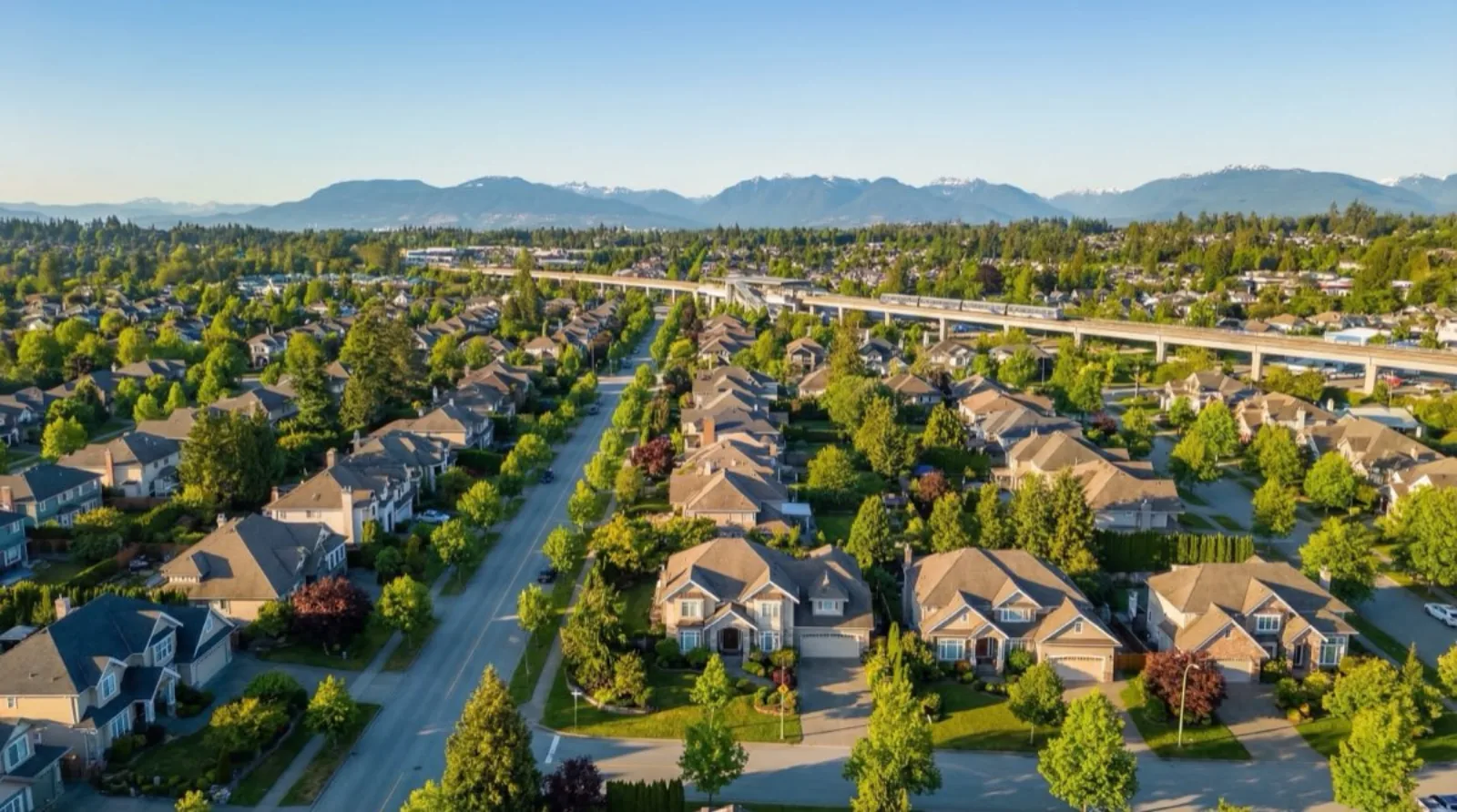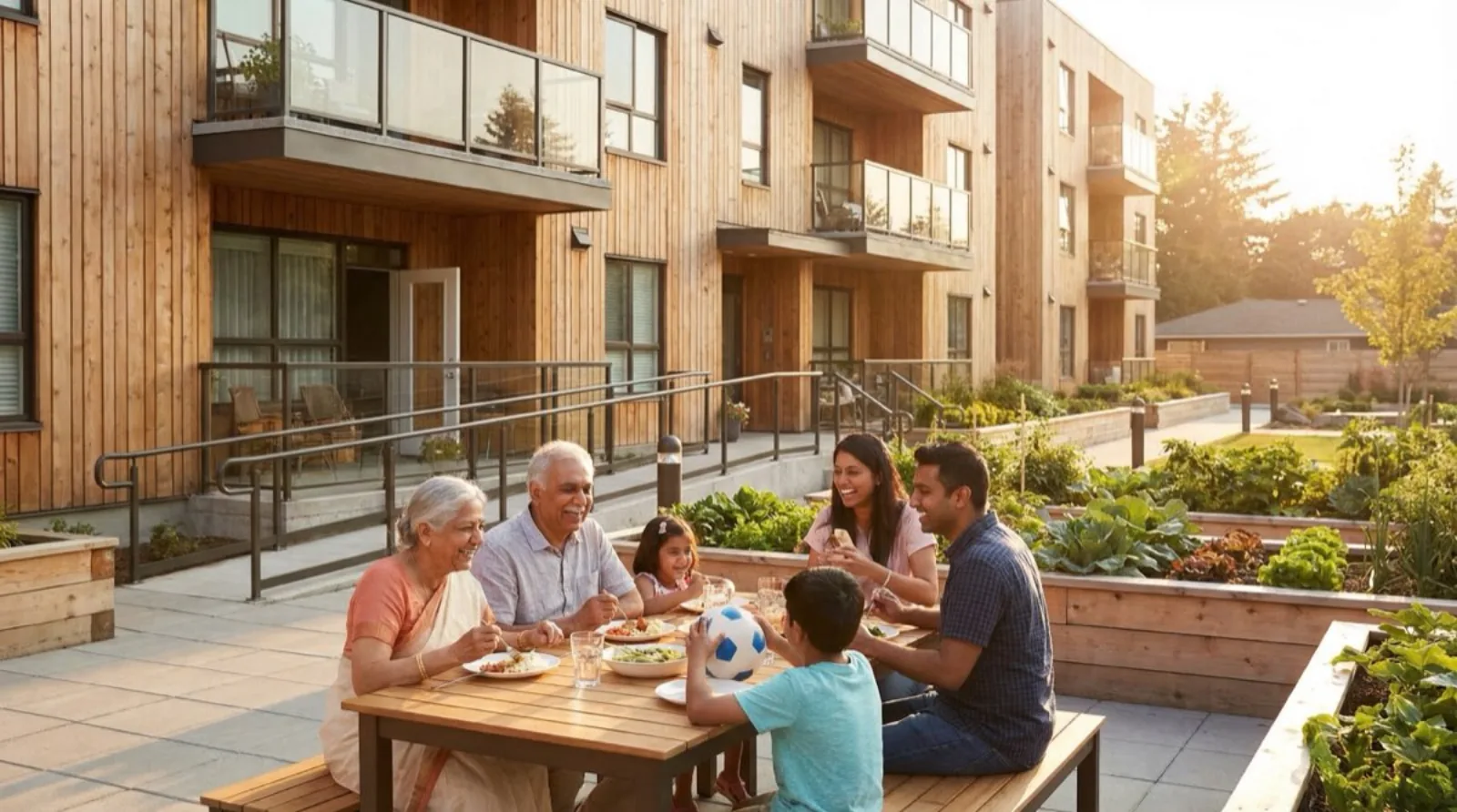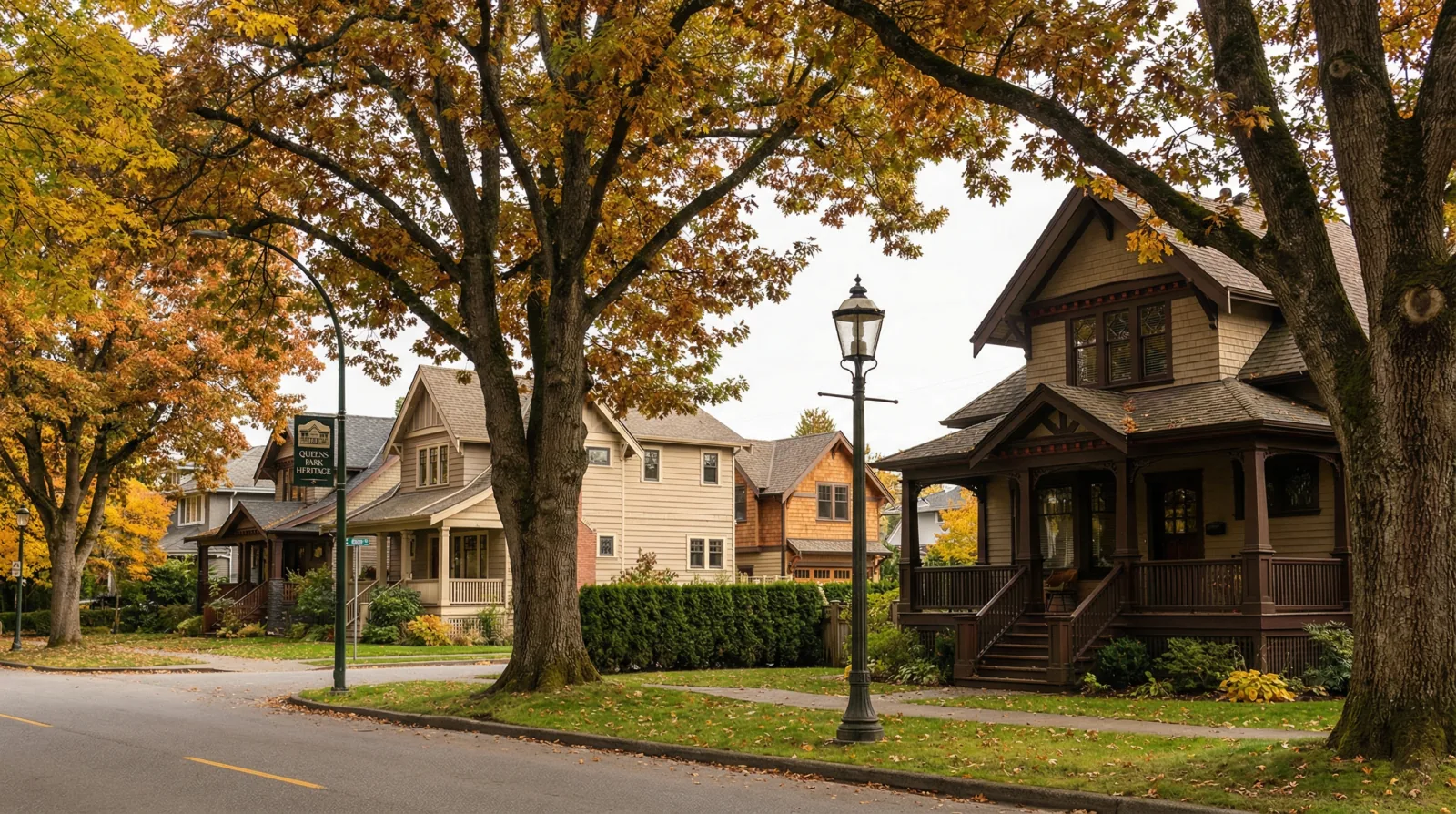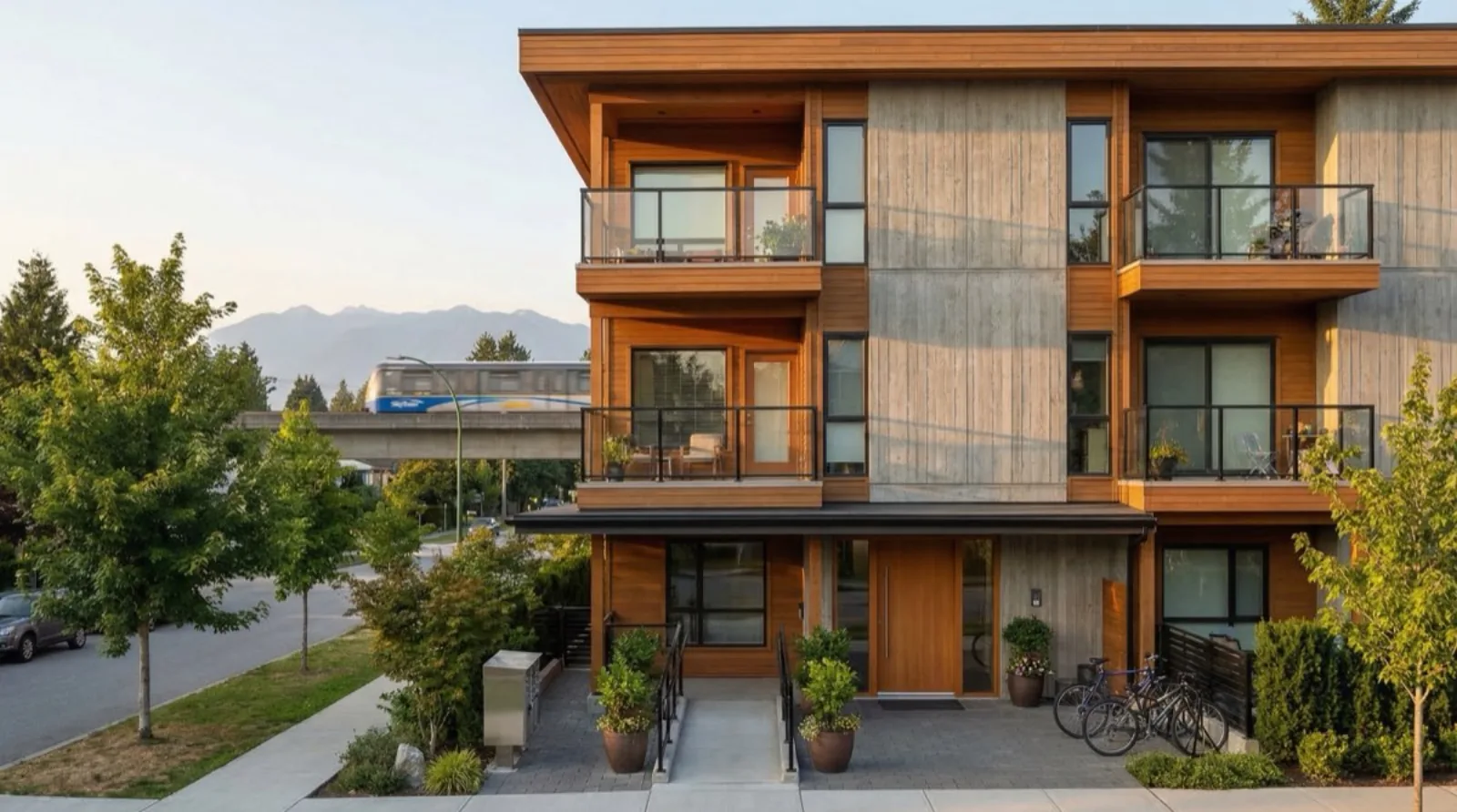

Burnaby quietly became the best city in Metro Vancouver for multigenerational multiplex development. The R1 SSMUH zoning that consolidated all residential districts has no FSR maximum, permits full stratification of primary dwelling units, and allows 3-6 units based on lot size. For families who want to live together and build wealth, Burnaby offers what Vancouver cannot: the ability to strata-title individual units and sell some to offset development costs. Here is the neighbourhood-by-neighbourhood breakdown.
TL;DR (Key Takeaways)
- R1 SSMUH zoning: consolidated all Burnaby R districts, no FSR maximum
- Full stratification permitted: sell individual units as strata condos, unique in Metro Vancouver
- Unit allowances: 3 units on lots under 280 m2, 4 on standard lots, 6 near frequent transit or 650+ m2
- Typical proforma: $2.2M lot + $1.9M build = $6.1M end value, $2.0M equity created
- Transit advantage: Millennium and Expo SkyTrain lines create large 6-unit eligibility zones
- Multigenerational rate: 7.2%, third highest in Metro Vancouver (Stats Canada, 2021 Census)
Why Burnaby Wins for Multigenerational Families
Every Metro Vancouver municipality is implementing SSMUH multiplex zoning. But the details differ, and those details determine whether a multigenerational family project pencils out or falls short. See Burnaby’s full zoning overview for the rules that apply to your lot. Burnaby’s implementation stands apart on three structural advantages.
No FSR Maximum
Vancouver caps Floor Space Ratio for Bill 44 multiplexes at 0.75-1.2 depending on lot size and unit count. This limits buildable area and constrains unit sizes. Burnaby removed FSR limits entirely for R1 SSMUH projects. The practical impact: you can build larger units on the same lot size, which is critical for multigenerational families who need 1,000-1,200 sf units rather than 700-800 sf.
Full Stratification Rights
This is Burnaby’s defining advantage. Under R1 SSMUH, primary dwelling units can be stratified, meaning each unit gets its own title and can be sold independently. Vancouver does not permit this for standard Bill 44 multiplexes.
For multigenerational families, stratification creates a powerful financial strategy:
- Build a fourplex on your Burnaby lot
- Keep two units for family (grandparents and adult child)
- Sell two units as strata at market value
- Use sale proceeds to eliminate or reduce the construction mortgage
Financial impact of stratification:
| Scenario | Without Stratification | With Stratification |
|---|---|---|
| Total development cost | $4,100,000 | $4,100,000 |
| Units kept by family | 2 | 2 |
| Units sold | 0 | 2 at $1,450,000 each |
| Sale proceeds | $0 | $2,900,000 |
| Net family cost for 2 units | $4,100,000 | $1,200,000 |
| Effective cost per family unit | $2,050,000 | $600,000 |
Stratification reduces the effective cost of family housing by 71% in this scenario. No other Metro Vancouver municipality offers this combination.
Consolidated Zoning Simplicity
Before SSMUH, Burnaby had multiple residential zone designations (R1, R2, R3, R4, R5, R9, R10, R11, R12). The R1 SSMUH consolidation simplified this into a single zone with clear rules. Homeowners do not need to decode complex zone-specific bylaws. If your property was in any R district, it is now R1 SSMUH with the same rules as every other residential lot in the city.
Burnaby vs Vancouver: The Multigenerational Comparison
For families deciding between cities, the differences are material:
| Factor | Burnaby (R1 SSMUH) | Vancouver (R1-1) |
|---|---|---|
| FSR Limit | None | 0.75-1.2 |
| Stratification | Yes (primary units) | No |
| Max Units (standard lot) | 4-6 | 4-6 |
| Lot Size for 6 Units | 650 m2 or FTNA | 671 m2 (7,225 sf) |
| Average Lot Price | $2.2M | $2.8M |
| Average Build Cost | $1.9M | $2.0M |
| End Value (4-plex) | $6.1M | $5.8M |
| Net Equity Created | $2.0M | $1.0M |
| Permit Timeline | 6-10 months | 8-14 months |
| Multigenerational Rate | 7.2% | 6.1% |
Sources: Burnaby Zoning Bylaw amendments (2024), Vancouver R1-1 zoning schedule, REBGV February 2026 data, VanPlex proforma analysis
Burnaby generates nearly double the net equity of an equivalent Vancouver project, primarily because of stratification and lower land costs. The permit timeline is also shorter: Burnaby’s consolidated zoning reduces the complexity of development permit applications.
The Burnaby Neighbourhood Guide for Multigenerational Lots
Not all Burnaby neighbourhoods offer the same opportunity. VanPlex has analyzed over 14,000 Burnaby residential properties and scored them on multigenerational suitability factors: lot size, transit proximity, neighbourhood services, and development economics.
Tier One: Best for Multigenerational Multiplexes
| Neighbourhood | Avg Lot Size | Transit Access | Avg Land Value | Six-Unit Eligible | Notes |
|---|---|---|---|---|---|
| Edmonds | 6,400 sf | Edmonds SkyTrain (Expo) | $1.9M | Yes | Family-oriented, diverse, strong schools |
| Stride Hill | 6,800 sf | Edmonds/Royal Oak adjacent | $1.8M | Yes | Quieter, larger lots, value pricing |
| Maywood | 6,200 sf | Royal Oak SkyTrain (Expo) | $2.0M | Yes | Central location, walkable amenities |
| Sperling-Duthie | 7,000 sf | Sperling SkyTrain (Millennium) | $1.7M | Yes | Best value in Burnaby, large lots |
Tier Two: Strong Multigenerational Potential
| Neighbourhood | Avg Lot Size | Transit Access | Avg Land Value | Six-Unit Eligible | Notes |
|---|---|---|---|---|---|
| Brentwood | 5,800 sf | Brentwood SkyTrain (Millennium) | $2.4M | Yes (transit) | Urban village, premium amenities |
| Metrotown Adjacent | 5,500 sf | Metrotown SkyTrain (Expo) | $2.6M | Yes (transit) | Highest density area, premium values |
| Government Road | 6,500 sf | Lake City Way SkyTrain | $1.9M | Yes | Growing area, good schools |
| Parkcrest | 6,600 sf | Holdom SkyTrain (Millennium) | $2.1M | Yes | Quiet residential, mountain views |
Tier Three: Solid Options with Trade-offs
| Neighbourhood | Avg Lot Size | Transit Access | Avg Land Value | Six-Unit Eligible | Notes |
|---|---|---|---|---|---|
| Capitol Hill | 5,400 sf | Moderate (bus to SkyTrain) | $2.3M | Some lots | Hillside views, smaller lots |
| Burnaby Heights | 5,200 sf | Moderate (bus network) | $2.2M | Limited | Character neighbourhood, premium feel |
| Deer Lake | 7,200 sf | Limited | $2.5M | By lot size only | Park-adjacent, scenic, car-dependent |
The Burnaby Multigenerational Proforma
Here is a detailed proforma for a typical Tier One neighbourhood project. This scenario assumes a family in Edmonds building a fourplex, keeping two units, and selling two as strata.
Scenario: Edmonds fourplex, multigenerational family with stratification
| Component | Amount |
|---|---|
| Existing property value (6,400 sf lot) | $1,900,000 |
| Demolition | $65,000 |
| Construction (4,800 sf at $420/sf) | $2,016,000 |
| Design and permits | $140,000 |
| Development cost levies | $85,000 |
| Contingency (5%) | $115,000 |
| Total Project Cost | $4,321,000 |
Revenue and equity analysis:
| Outcome | Amount |
|---|---|
| Appraised value (4-unit strata) | $6,100,000 |
| Sale of 2 strata units (at $1,500,000 each) | $3,000,000 |
| Remaining mortgage after sales | $1,321,000 |
| Value of 2 retained family units | $3,100,000 |
| Family equity (net of mortgage) | $1,779,000 |
| Monthly rental alternative cost saved | $6,000 (2 units at $3,000) |
| Annual housing cost savings | $72,000 |
The family ends up with two owned units worth $3.1M combined, a manageable $1.3M mortgage (serviceable from the $72,000 in housing cost savings alone), and generational housing security. If they later rent one family unit, the income covers the entire mortgage payment with surplus.
Transit Makes the Difference: Burnaby’s SkyTrain Advantage
Burnaby has more SkyTrain stations per capita than any other Metro Vancouver municipality. The Expo Line runs through Metrotown, Edmonds, and New Westminster border areas. The Millennium Line serves Brentwood, Holdom, Sperling, Lake City Way, and Production Way.
Under SSMUH rules, lots within 400 metres of a frequent transit network stop qualify for maximum density (6 units). In Burnaby, this frequent transit network includes:
- Expo Line stations: Metrotown, Patterson, Royal Oak, Edmonds
- Millennium Line stations: Brentwood, Holdom, Sperling, Lake City Way, Production Way, Lougheed
- Frequent bus routes: Hastings (R5), Kingsway (19), Lougheed Highway, Canada Way
VanPlex estimates that approximately 8,200 of Burnaby’s 14,000+ residential lots fall within the frequent transit catchment for 6-unit eligibility. That is 58% of all residential properties qualifying for maximum density, the highest proportion in any Metro Vancouver municipality.
Burnaby’s Diverse Multigenerational Community
Burnaby’s 7.2% multigenerational household rate reflects the city’s demographic diversity. Unlike Surrey, where South Asian families dominate multigenerational arrangements, Burnaby’s multigenerational population spans multiple communities:
- Chinese families: 34.3% of Burnaby’s population (Statistics Canada, 2021 Census), with strong multigenerational traditions particularly among recent immigrants
- South Asian families: 14.2% of population, concentrated in Edmonds and SE Burnaby
- Filipino families: 5.8% of population, high multigenerational rates (12.1% nationally)
- Korean families: 4.1% of population, growing presence near Metrotown and Brentwood
This diversity means that multiplex designs in Burnaby need to be culturally flexible rather than targeted to a single community. Universal design principles, separate entrances, and adaptable floor plans serve all multigenerational families regardless of cultural background.
How Much Does a Burnaby Multiplex Cost to Build?
Construction costs in Burnaby averaged $400-$450/sf in Q1 2026 (VanPlex builder survey, January 2026). This is comparable to Vancouver but with better economics because Burnaby’s lack of FSR maximum means more buildable square footage per lot.
Cost breakdown for a typical 4,800 sf Burnaby fourplex:
| Category | Cost | Per SF |
|---|---|---|
| Foundation and structure | $528,000 | $110 |
| Mechanical (HVAC, plumbing) | $432,000 | $90 |
| Electrical | $192,000 | $40 |
| Exterior envelope | $336,000 | $70 |
| Interior finishing | $288,000 | $60 |
| Site work and landscaping | $120,000 | $25 |
| General conditions and profit | $120,000 | $25 |
| Total Construction | $2,016,000 | $420/sf |
These costs assume standard wood-frame construction with energy-efficient building envelope, which is the most common approach for 3-storey multiplexes in Burnaby. Step Code Level 3 compliance adds approximately 3-5% to base construction costs but is required under current Burnaby building bylaws.
The Window of Opportunity
Burnaby’s R1 SSMUH zoning is already in effect. Unlike Surrey and other municipalities still drafting compliance bylaws, Burnaby families can apply for permits today. The first wave of Burnaby SSMUH multiplexes are already in the permit pipeline, with VanPlex tracking 47 active applications as of February 2026. For context on how Bill 44 created these rights, the Bill 44 guide covers the legislation in plain language.
For multigenerational families, the advantage of moving now is threefold:
- Contractor availability: Early movers have wider choice of builders before demand peaks
- Land pricing: Market softness in Q1 2026 (Burnaby detached prices down 4.2% YoY per REBGV) creates buying opportunity
- Stratification premium: As awareness grows, strata multiplex values will reflect the premium of this rare product type
Analyze Your Burnaby Property
Visit VanPlex.ca to enter your Burnaby address and see your property’s full multiplex potential. The analysis includes unit count eligibility, transit proximity scoring, stratification options, estimated construction costs, projected strata values, and ROI projections. Over 14,000 Burnaby properties have been analyzed with neighbourhood-specific data.
Burnaby gave multigenerational families the best toolkit in Metro Vancouver. The question is whether you will use it.
VanPlex Team PlexRank™ | Profit with Multiplex