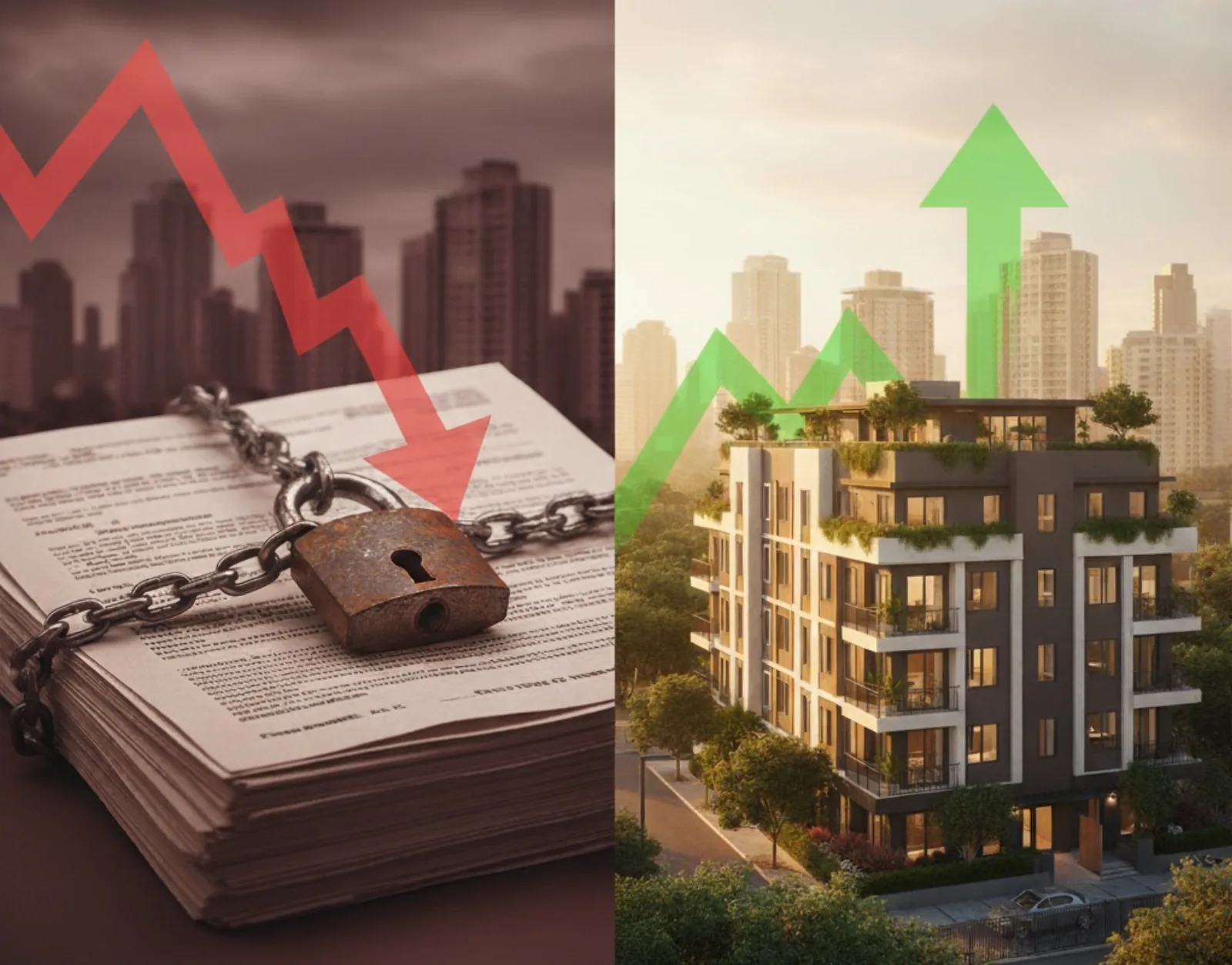

Bank of Canada rate cut impact on Vancouver multiplex development market psychology
Market Analysis Featured

The Bank of Canada's 2.25% Rate Cut: Why It Matters More to Psychology Than to Borrowing Costs

6 min read

The Bank of Canada's October 29 move to 2.25% grabbed headlines, but for multiplex development, this isn't about cheaper debt—it's about belief. Discover why psychological shifts matter more than overnight rates in small-scale development.

Key takeaway

Analysis of how the Bank of Canada's October 29 rate cut to 2.25% impacts multiplex development through psychological shifts rather than direct financing cost changes, with data showing 20-30% inquiry spikes following rate announcements.

What this covers

  • rate cut psychology
  • multiplex financing
  • market sentiment
  • private debt vs bank rates
  • developer confidence
  • homeowner decision-making
rate-cut bank-of-canada psychology multiplex financing investment

A Headline Shift—Not a Financing One

The Bank of Canada’s October 29 move to 2.25 percent grabbed headlines. For most Canadians, it felt like good news: finally, rates are easing.

But in the multiplex category, this change isn’t about cheaper debt. It’s about belief—because the small-scale development economy runs more on confidence than on the overnight rate.

What the Rate Cut Really Does (and Doesn’t)

The overnight rate is the short-term rate the Bank of Canada charges commercial banks when they lend to one another. It shapes the base cost of credit across the economy, but it doesn’t instantly make construction loans or mortgages cheaper.

Variable mortgages / HELOCs: Lenders usually adjust their prime rate shortly after a BoC move, so variable-rate borrowers may see a modest drop.

Fixed mortgages: These follow Government of Canada bond yields, which respond to market expectations, not the policy rate itself.

Private multiplex debt: Most small-scale infill projects rely on private or bridge financing. Those rates—typically 7–10 percent—are tied to project risk and exit certainty, not central-bank policy.

So no, your construction interest reserve won’t shrink overnight. But the story changes, and in real estate, story drives motion.

Psychology Is Liquidity

When homeowners read “rates cut to 2.25%,” it releases pressure. People feel permission to act again—even when their financing cost hasn’t moved a dollar.

That perception shift shows up fast:

  • More homeowners run feasibility reports.
  • REALTORS® start new conversations.
  • Accredited investors revisit paused pro formas.

At VanPlex, our PlexRank analytics track engagement across 56,000 modeled properties. Every rate-cut announcement sparks a 20–30 percent spike in homeowner inquiries—even though private-debt pricing is unchanged.

That’s psychology turning into pipeline.

Why Multiplex Assets Sit in the Sweet Spot

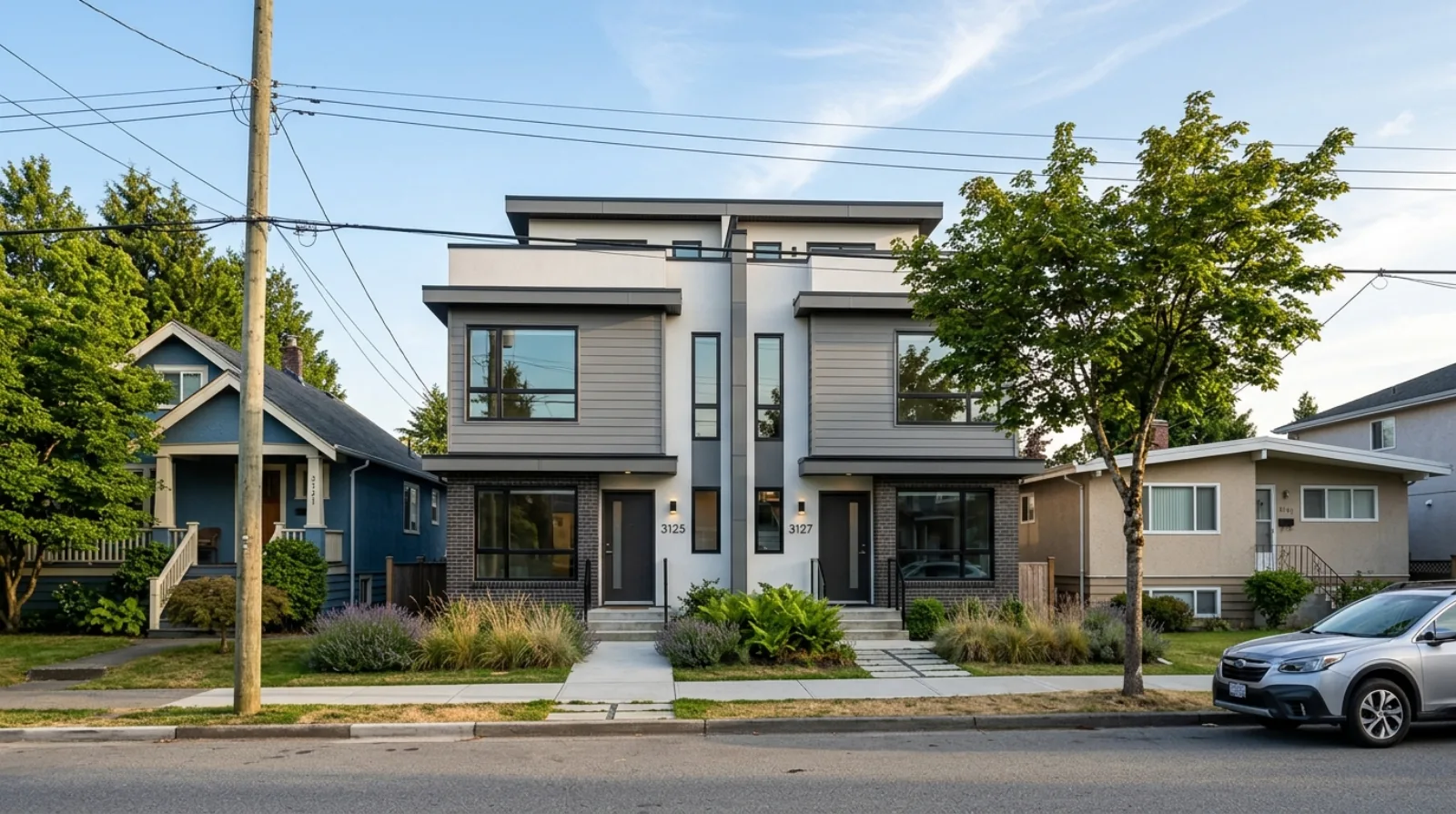
With Bill 44 in British Columbia—and similar zoning reforms spreading eastward—the multiplex category has become a national wealth-creation tool. It balances end-user demand with developer flexibility:

  • Ground-oriented housing that families actually want.
  • Policy-backed zoning certainty.
  • Shorter cycles and clearer exits than condo towers.

When sentiment improves, this middle ground gets flooded first: owners unlock projects, investors deploy capital, and communities gain new housing supply.

For Homeowners

If you own a $2–3 million lot in Vancouver or Burnaby, the question isn’t “will rates fall further?”

It’s “will I let my land work for me while the market feels safe again?”

Bill 44 already made your zoning more valuable. The 2.25 percent rate simply makes the environment feel calmer. That’s often all the catalyst you need to turn locked-up equity into retirement flexibility.

For Investors

Institutional money waits for spreads; smart capital moves on sentiment.

The “rates are normalizing” narrative compresses the bid-ask spread on good multiplex lots and makes joint-venture conversations easier.

If you wait for bank debt to cheapen, you’ll miss the early cycle—where belief lifts margins before cost does.

The VanPlex View

Our Multiplex Index™ and PlexRank System reveal that every psychological inflection produces measurable increases in project starts.

This moment isn’t a financial turning point—it’s an emotional one.

And emotions move dirt.

Bottom Line

The Bank of Canada’s cut to 2.25 percent won’t lower your private-loan rate. But it does lower hesitation.

In development, that’s the variable that counts.


Explore the Data

Discover how VanPlex identifies investor-grade multiplex potential: 👉 vanplex.ca

For related analysis, read: 👉 Unlock Retirement Wealth Through Bill 44 Multiplex Development

David Babakaiff

Co-Founder, VanPlex.ca

Vancouver Multiplex Index™ | Profit with Multiplex
Frequently asked questions

What did the Bank of Canada announce on October 29, and does it lower multiplex construction loan rates?

On October 29, the Bank of Canada cut its overnight rate to 2.25 percent. The overnight rate is the short-term rate the Bank of Canada charges commercial banks when they lend to one another, and it shapes the base cost of credit across the economy, but it does not instantly make construction loans or mortgages cheaper. Most small-scale multiplex projects rely on private or bridge financing at rates of 7 to 10 percent, which are tied to project risk and exit certainty rather than the central bank's policy rate.

Does the Bank of Canada rate cut affect variable mortgages and HELOCs differently than fixed mortgages?

Yes. Lenders usually adjust their prime rate shortly after a Bank of Canada move, so variable-rate mortgage and HELOC borrowers may see a modest drop. Fixed mortgages instead follow Government of Canada bond yields, which respond to market expectations rather than to the policy rate itself, so a fixed-rate borrower does not see the same immediate change.

How much does homeowner inquiry volume spike after a Bank of Canada rate cut announcement?

VanPlex's PlexRank analytics, which track engagement across 56,000 modeled properties, show every rate-cut announcement sparks a 20 to 30 percent spike in homeowner inquiries, even though private-debt pricing for multiplex construction remains unchanged. The post describes this as psychology turning into pipeline, since the increase in inquiries happens before any actual change in borrowing cost.

Why does a rate cut change homeowner behavior even when private multiplex loan rates stay the same?

When homeowners read that rates were cut to 2.25 percent, it releases psychological pressure and people feel permission to act again, even though their actual financing cost has not moved. That perception shift shows up as more homeowners running feasibility reports, REALTORS® starting new conversations, and accredited investors revisiting pro formas they had paused.

What makes multiplex projects a national wealth-creation tool according to this analysis?

With Bill 44 in British Columbia and similar zoning reforms spreading eastward, multiplex development balances end-user demand with developer flexibility through ground-oriented housing that families actually want, policy-backed zoning certainty, and shorter development cycles with clearer exits than condo towers. When market sentiment improves, this category is described as getting flooded first with owners unlocking projects and investors deploying capital.

What should a homeowner with a $2 to $3 million lot in Vancouver or Burnaby take from the rate cut?

The post reframes the relevant question from whether rates will fall further to whether the homeowner will let their land work for them while the market feels safer. Bill 44 already increased the value of that zoning, and the 2.25 percent rate cut mainly makes the environment feel calmer, which the post describes as often enough of a catalyst to turn locked-up equity into retirement flexibility.

Why might investors move on multiplex deals before institutional money does?

Institutional money tends to wait for financing spreads to narrow before acting, while the post argues smart capital moves on sentiment instead. A narrative that rates are normalizing compresses the bid-ask spread on good multiplex lots and makes joint-venture conversations easier, and an investor who waits for bank debt to get cheaper risks missing the early cycle where belief lifts margins before actual costs change.

What is the main takeaway from the Bank of Canada's cut to 2.25 percent for multiplex development?

The Bank of Canada's cut to 2.25 percent does not lower the 7 to 10 percent private-loan rates typical of multiplex construction financing, but it does lower hesitation among homeowners and investors. The post frames this hesitation, not the interest rate itself, as the variable that actually determines whether a small-scale development project moves forward.

Free 12-page guide for Vancouver-area homeowners. Build, sell, hold, or partner — side-by-side comparison of the numbers, timeline, and risk on each path.

Verified phone required. We'll text you the link in 60 seconds.

David Babakaiff

David Babakaiff

Co-Founder, VanPlex | 25+ Years BC Construction

David Babakaiff is Co-Founder of VanPlex with 25+ years scaling BC construction. He led Alair Homes Vancouver to the 2024 HAVAN Award for Best Multiplex Unit in the GVRD. VanPlex’s PlexRank™ algorithm scores residential parcels across BC for multiplex conversion potential under Bill 44.

Want insights like this delivered weekly?

Join 2,500+ property owners getting ROI case studies, market data, and exclusive opportunities.

No spam. Unsubscribe anytime.